Mahavira — "Do not be led by the senses, but lead the senses."
Do not be led by the senses, but lead the senses.
Do not be led by the senses, but lead the senses.
Click any product to generate a realistic preview. Up to 3 at a time.
* Initial load can take up to 90 seconds — revising the preview in another color is nearly instant.
"The senses are the enemies of the soul."
"The soul is the same in all living creatures, although the body is different."
"The wise man is free from all attachments."
"The greatest wisdom is to know oneself."
"The soul is the only reality; everything else is transient."
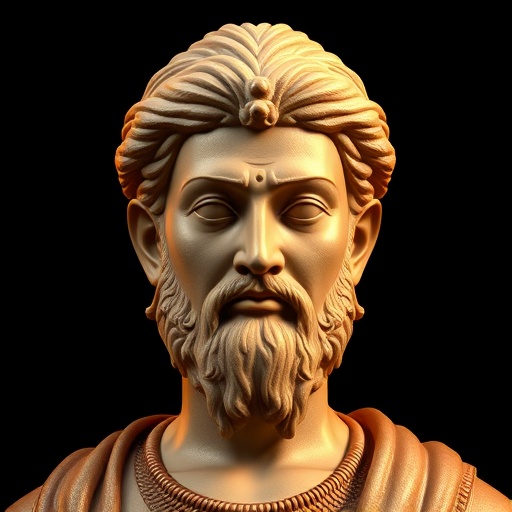
24th and last Tirthankara of Jainism, whose teachings of strict ahimsa (non-violence), aparigraha (non-attachment), and karma reshaped ancient Indian religion. Closely associated with The Buddha (near-contemporary moral revolutionary, also reacting against Vedic ritualism). For an intellectual contrast, see Vedic Brahmanical ritual sacrifice, the animal-sacrifice-centered Vedic religion of his era — Mahavira's ahimsa demanded total non-violence, including not eating root vegetables that kill the plant — a maximum-distance ethical move from the Vedic priestly tradition that ritually sacrificed cattle and horses. The two cleanest poles of ancient Indian religious ethics.
Found in 1 providers: grok
1 source checked
You are not at the mercy of what you see, hear, taste, feel, or desire. Real freedom comes from choosing how you respond to sensory input rather than reacting automatically. When hunger, lust, anger, or comfort dictate your actions, you are a slave to biology. Mahavira is saying: develop the inner discipline to observe your senses without being commanded by them — govern your appetites rather than serve them.
Mahavira renounced his noble life at 30, stripped himself of possessions, pulled out his own hair by hand, and walked naked for twelve years enduring heat, cold, and attacks without complaint. He fasted for months at a stretch. His five great vows — non-violence, truth, non-stealing, celibacy, non-attachment — each require overriding a bodily impulse. His entire ascetic career was the lived proof of this principle: the will can master the body.
Mahavira lived in the 6th and 5th centuries BCE along the Gangetic plains during India's Axial Age, a period of intense philosophical upheaval. Vedic Brahminism dominated through elaborate rituals and animal sacrifices. Urbanization and growing merchant wealth fed hedonism and sensory excess. The rival Shramana movement arose in direct protest, championing personal austerity over priestly ceremony. His call for sense-mastery was a radical counter to a culture where caste determined duty and ritual consumption marked status.
AI-generated insights based on extensive research and information for context. Factual errors? Email [email protected].
Your cart is empty