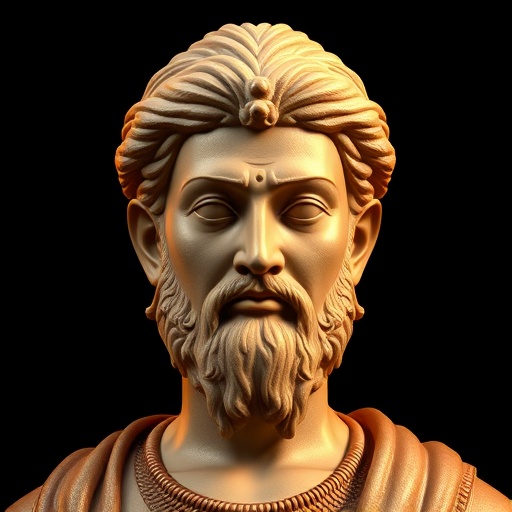
Mahavira — "All things are impermanent, and the soul is eternal."
All things are impermanent, and the soul is eternal.
All things are impermanent, and the soul is eternal.
Click any product to generate a realistic preview. Up to 3 at a time.
* Initial load can take up to 90 seconds — revising the preview in another color is nearly instant.
"One who has conquered himself is truly a hero."
"The real spiritual path is not in rituals, but in inner purity."
"He who neglects the present moment, loses both future and past."
"Live and allow others to live; hurt no one; life is dear to all living beings."
"The first step towards liberation is non-violence."
24th and last Tirthankara of Jainism, whose teachings of strict ahimsa (non-violence), aparigraha (non-attachment), and karma reshaped ancient Indian religion. Closely associated with The Buddha (near-contemporary moral revolutionary, also reacting against Vedic ritualism). For an intellectual contrast, see Vedic Brahmanical ritual sacrifice, the animal-sacrifice-centered Vedic religion of his era — Mahavira's ahimsa demanded total non-violence, including not eating root vegetables that kill the plant — a maximum-distance ethical move from the Vedic priestly tradition that ritually sacrificed cattle and horses. The two cleanest poles of ancient Indian religious ethics.
Found in 1 providers: grok
1 source checked
The physical world — bodies, possessions, relationships, civilizations — is constantly changing and will eventually cease. But the soul within each being is indestructible and persists beyond any single life. True wisdom means releasing attachment to what is fleeting and recognizing what is genuinely permanent. This motivates renunciation: why cling to what cannot last when your essential nature endures forever?
Mahavira renounced royal privilege at age 30, enduring 12 years of extreme asceticism — no clothing, shelter, or comfort — to purify his soul from karmic matter. This quote encapsulates Jain metaphysics' central axis: jiva (eternal soul) versus ajiva (transient matter). His entire life was a lived demonstration that material existence is a temporary burden, and the soul's liberation, moksha, is the only goal worth pursuing.
6th-century BCE India's Gangetic plains were undergoing radical social upheaval: new merchant classes, iron-age kingdoms displacing tribal societies, and growing discontent with Vedic Brahmanical authority demanding costly rituals and animal sacrifice for salvation. Mahavira's claim that the soul is self-sufficient and eternal directly undermined priestly intermediaries. The same era produced the Buddha — both offered internal spiritual paths to individuals regardless of caste or ritual access.
AI-generated insights based on extensive research and information for context. Factual errors? Email [email protected].
Your cart is empty