What it means
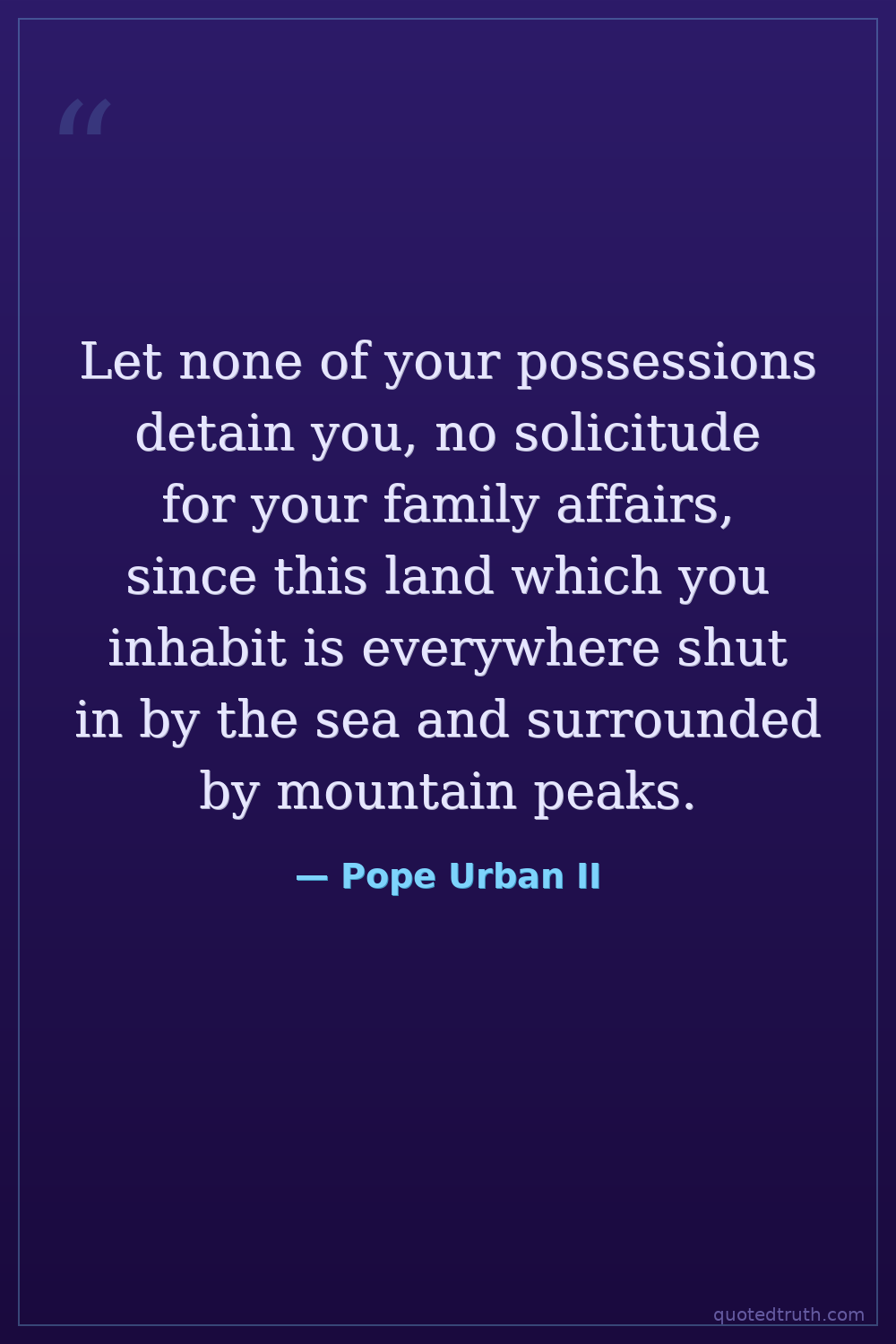
This quote urges listeners to abandon material possessions and family obligations for a sacred cause. Urban frames attachment to property and kin as obstacles to divine service, then adds a practical argument: Europe itself — hemmed in by seas and mountain ranges — is cramped and offers diminishing opportunity. Leave what confines you for something greater. Detachment from worldly things is both spiritual duty and rational self-interest for those with little to lose by leaving.
Relevance to Pope Urban II
Urban II was a Cluniac monk before becoming pope, trained in voluntary poverty and renunciation of worldly goods. His entire reform agenda — the Gregorian Reform — centered on freeing the Church from secular, material entanglements. He spent years in exile from Rome under antipope Clement III, living without stable home or possession. Urging others to abandon property echoed his own biography. His monastic formation made detachment a lived principle, lending these words authentic moral weight rather than mere rhetorical strategy.
The era
Medieval Europe in 1095 faced genuine land pressure: primogeniture left younger noble sons landless, population growth strained agricultural capacity, and feudal hierarchy tightly controlled ownership. The Seljuk Turks had seized Jerusalem and disrupted Christian pilgrimages, generating spiritual outrage across Christendom. Byzantine Emperor Alexios I had formally appealed to Rome for military aid. Urban's Clermont speech channeled these converging anxieties — economic frustration, religious fervor, geographic claustrophobia — into a single mobilization toward the Holy Land.
AI-generated insights based on extensive research and information for context. Factual errors? Email [email protected].