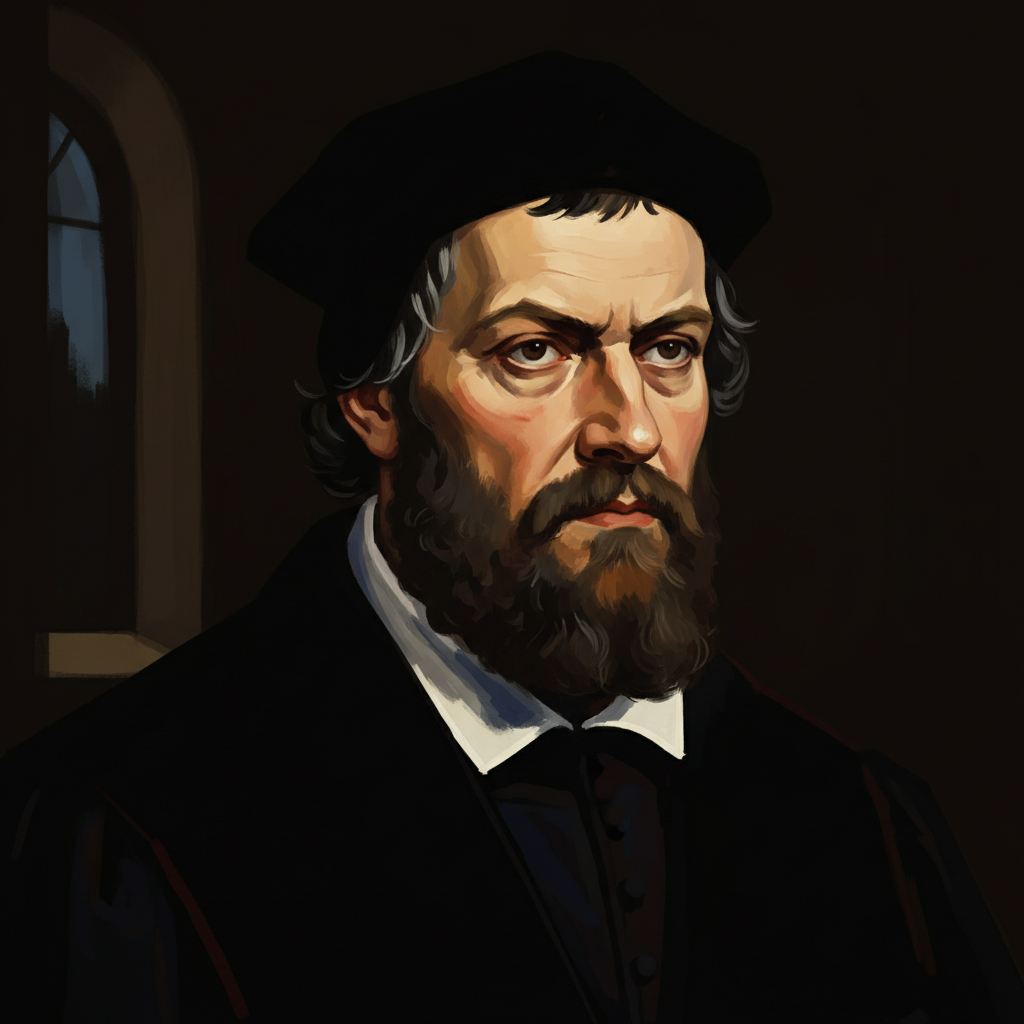
Martin Luther — "I'm like a ripe stool and the world's like a gigantic anus, and we're about to l…"
I'm like a ripe stool and the world's like a gigantic anus, and we're about to let go of each other.
I'm like a ripe stool and the world's like a gigantic anus, and we're about to let go of each other.
Click any product to generate a realistic preview. Up to 3 at a time.
* Initial load can take up to 90 seconds — revising the preview in another color is nearly instant.
"If the earth is fit for laughter, then surely heaven is filled with it. Heaven is the birthplace of laughter."
"You have as much laughter as you have faith."
"I resist the devil, and often it is with a fart that I chase him away. When he tempts me with silly sins I say, 'Devil, yesterday I broke wind too. Have you written it down on your list?'"
"Kill them all, God will know his own."
"You owe nothing to God except faith and confession. In all other things He lets you do whatever you like. You may do as you please, without any danger of conscience whatsoever."
German theologian whose 95 Theses (1517) launched the Protestant Reformation and broke the Catholic Church's monopoly on Western Christianity. Closely associated with Philipp Melanchthon (Lutheran systematizer) and John Calvin (later Reformer who built on Luther's break). For an intellectual contrast, see Pope Leo X, Renaissance pope (1513-1521) — Leo X's indulgence sales triggered Luther's break and Leo excommunicated him in 1521 — Luther's entire Reformation is structured as a direct answer to the indulgence-funded Vatican Leo represented.
Reported as said shortly before his death to his wife Katie, also in 'Table Talk'.
Date: c. 1546
GeneralFound in 1 providers: gemini
1 source checked
Luther compares himself to waste ready to be expelled from the world, which he pictures as a giant anus. He's saying he's worn out, done with earthly life, and expects to die soon. The crude image captures his sense that both he and his era have finished with each other, and separation is imminent and natural, like a bodily release that can no longer be held back.
Luther was famous for shockingly scatological language, using toilet humor against the Pope, the Devil, and opponents throughout his writings and Table Talk. He reportedly experienced his breakthrough insight on justification while on the latrine and suffered chronic constipation and bowel illness. By his final years he was physically broken, exhausted from decades of conflict, and openly longed for death, making this vulgar self-description entirely characteristic of the man.
In early modern Europe, bodily and scatological imagery was common in polemic, sermons, and even theology, far less taboo than today. Luther lived through the violent Reformation he ignited in 1517, peasant revolts, plague outbreaks, and brutal Catholic-Protestant pamphlet wars. Life expectancy was short, death was ever-present, and medicine was crude. Speaking plainly about bowels, decay, and dying fit a culture steeped in mortality and unafraid of earthy metaphor.
AI-generated insights based on extensive research and information for context. Factual errors? Email [email protected].
Your cart is empty