Martin Luther — "A man remains foolish until his 40th year, when he begins to recognize his fooli…"
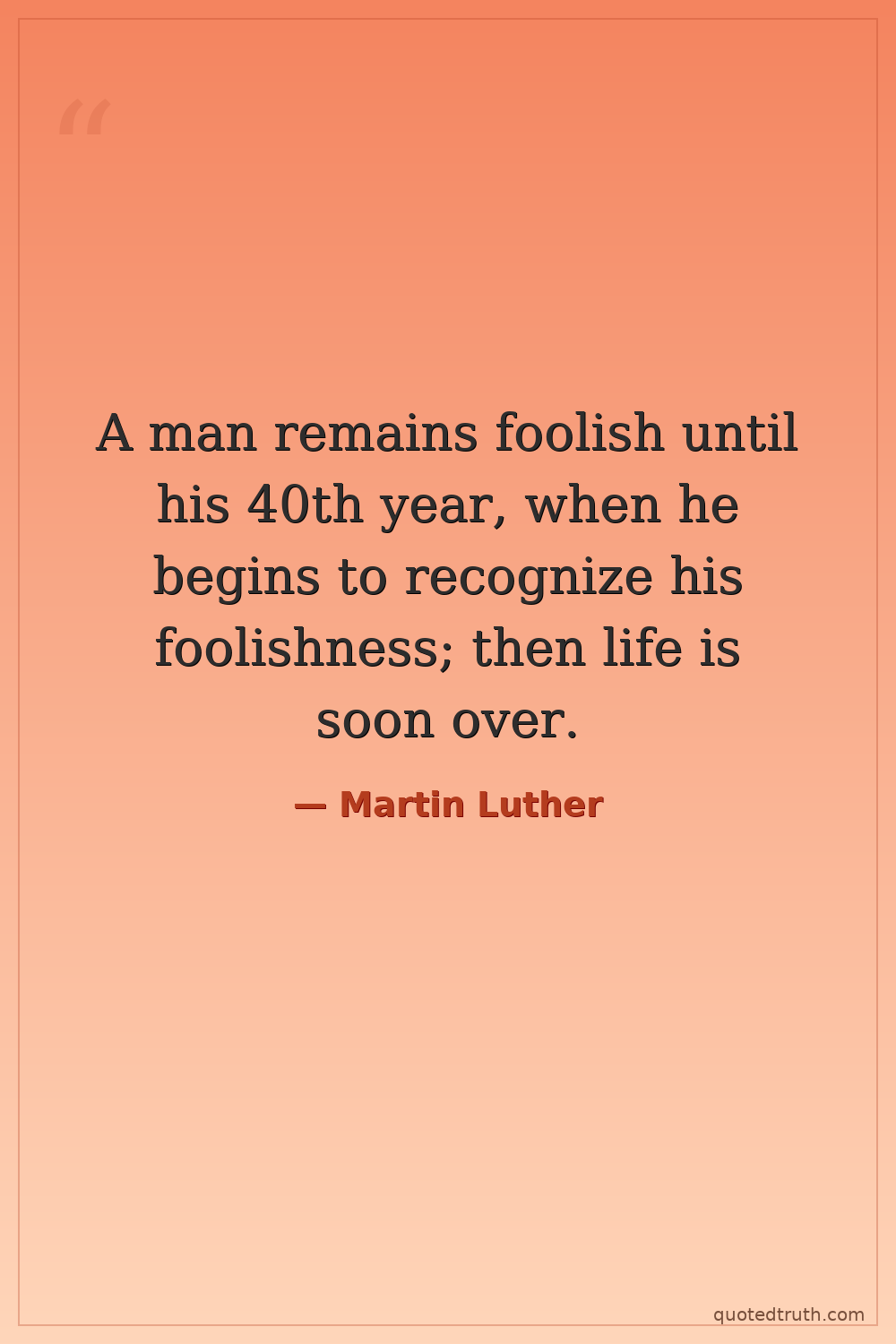
A man remains foolish until his 40th year, when he begins to recognize his foolishness; then life is soon over.
A man remains foolish until his 40th year, when he begins to recognize his foolishness; then life is soon over.
Click any product to generate a realistic preview. Up to 3 at a time.
* Initial load can take up to 90 seconds — revising the preview in another color is nearly instant.
"The Pope is a mere tormentor of conscience."
"Reason is the greatest enemy that faith has."
"Sometimes it is necessary to commit some sin out of hatred and contempt for the Devil."
"Reason is the Devil's greatest whore; by nature and manner of being she is a noxious whore; she is a prostitute, the Devil's appointed whore; whore eaten by scab and leprosy who should be trodden unde…"
"You are an extraordinary creature, being neither God nor man. Perhaps you are the devil himself."
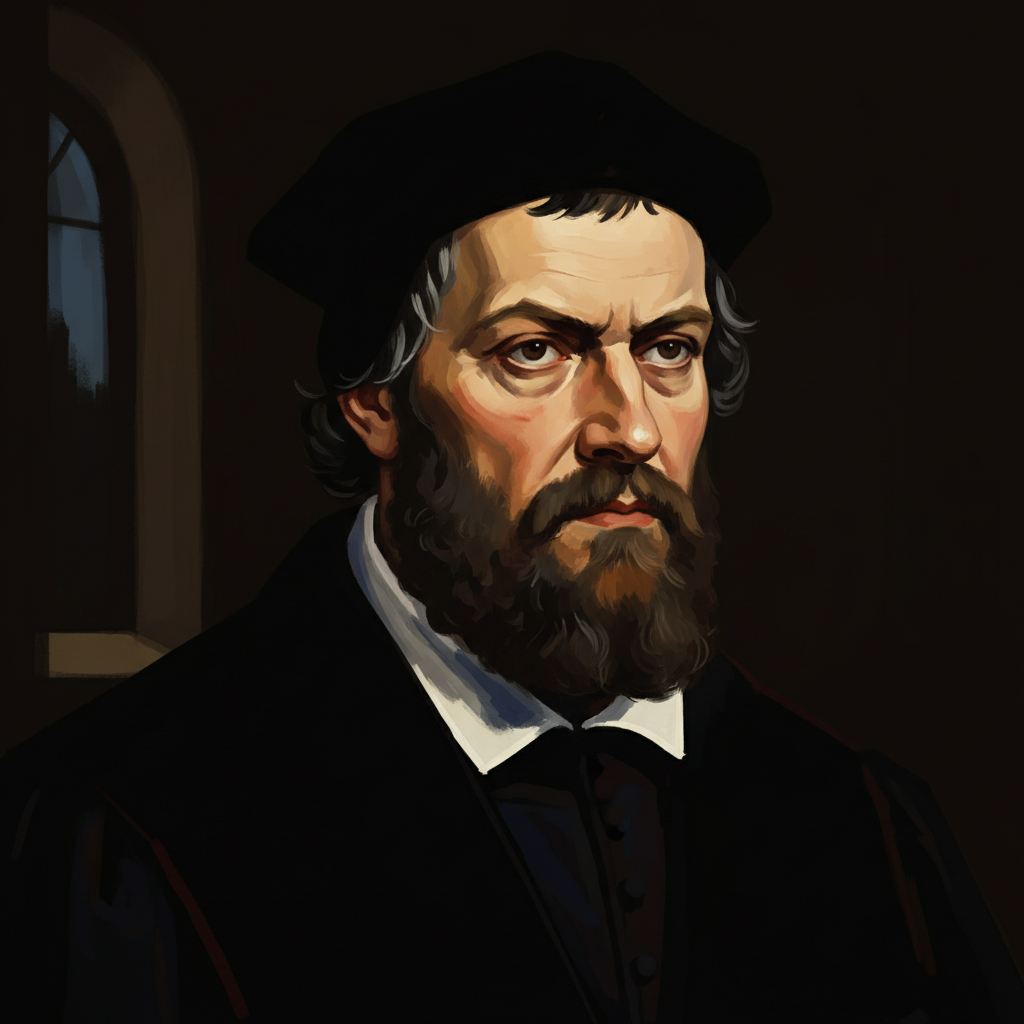
German theologian whose 95 Theses (1517) launched the Protestant Reformation and broke the Catholic Church's monopoly on Western Christianity. Closely associated with Philipp Melanchthon (Lutheran systematizer) and John Calvin (later Reformer who built on Luther's break). For an intellectual contrast, see Pope Leo X, Renaissance pope (1513-1521) — Leo X's indulgence sales triggered Luther's break and Leo excommunicated him in 1521 — Luther's entire Reformation is structured as a direct answer to the indulgence-funded Vatican Leo represented.
Found in 1 providers: gemini
1 source checked
Most people spend the first four decades of life making mistakes without realizing it. Only around age forty does a person gain enough self-awareness to see how immature, shortsighted, or misguided their earlier choices were. But by the time that insight finally arrives, the remaining years are few. Wisdom comes late, and the window to actually use it is painfully short, making genuine maturity a bittersweet achievement rather than a lasting reward.
Luther posted his Ninety-Five Theses at thirty-four and spent his remaining decades wrestling with theological opponents, political princes, and his own scruples. By his forties he had survived excommunication, the Diet of Worms, and the Peasants' War, gaining hard-earned perspective on human frailty. As a pastor who preached original sin and constant repentance, he saw self-recognition of foolishness as the beginning of real faith, mirroring his doctrine that honest self-knowledge precedes grace.
In the early 1500s, average life expectancy hovered near forty, so reaching that age genuinely meant confronting mortality. Luther lived through plague outbreaks, religious upheaval, and the printing revolution that spread ideas faster than any generation could digest them. Educated Europeans were rediscovering classical thought on wisdom and aging, while Reformation debates forced laypeople to examine beliefs they had inherited unquestioned. A saying about belated self-awareness resonated powerfully in a culture where old certainties were collapsing.
AI-generated insights based on extensive research and information for context. Factual errors? Email [email protected].
Your cart is empty