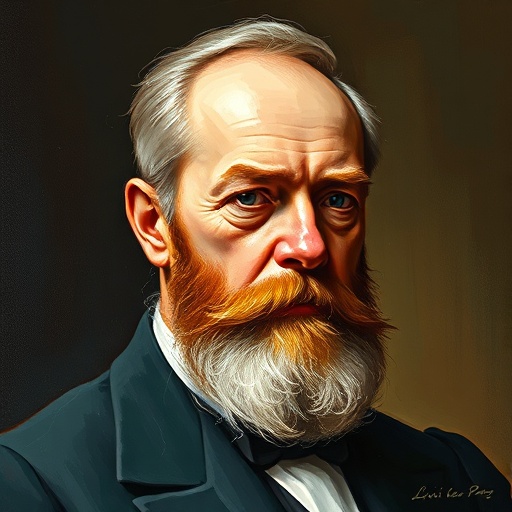
Louis Pasteur — "The greatest victory is that over oneself."
The greatest victory is that over oneself.
The greatest victory is that over oneself.
Click any product to generate a realistic preview. Up to 3 at a time.
* Initial load can take up to 90 seconds — revising the preview in another color is nearly instant.
"Chance only favors the prepared mind."
"A bottle of wine contains more philosophy than all the books in the world."
"I am unable to find any experimental evidence that supports the doctrine of spontaneous generation."
"I have great hopes that the vaccine against rabies will be a success."
"I am often scolded by Madame Pasteur, but I tell her I shall lead her to fame."
Attributed, a general philosophical statement.
Date: Late 19th Century (approx.)
War & ConflictFound in 1 providers: grok
1 source checked
True triumph comes from mastering your own weaknesses, impulses, fears, and bad habits rather than defeating external opponents. The hardest battles happen internally, against laziness, doubt, temptation, and ego. Anyone can try to win against rivals or circumstances, but conquering yourself requires constant discipline and honest self-examination. This inner victory is rarer and more meaningful because it produces lasting character, while external wins fade or depend on luck.
Pasteur embodied this through decades of grinding laboratory work, refusing shortcuts even when germ theory was mocked by surgeons and physicians. He pushed past personal tragedy, losing three daughters to illness, and channeled grief into vaccine research. A devout, disciplined Catholic who worked through a partial stroke at age 46, he prized perseverance and self-control, famously saying fortune favors the prepared mind, which depends on mastering one's own focus.
Nineteenth-century France was transforming through industrialization, Napoleon III's reign, and bitter defeat in the Franco-Prussian War of 1870. Science was displacing religious authority, yet doctors still dismissed handwashing and believed in spontaneous generation. Cholera, rabies, and puerperal fever killed routinely. Pasteur worked amid fierce academic rivalries and nationalist pride, where self-discipline and rigorous method were seen as virtues capable of rescuing both individuals and a wounded nation.
AI-generated insights based on extensive research and information for context. Factual errors? Email [email protected].
Your cart is empty