Mahavira — "There is no quality of soul more subtile than non-attachment."
There is no quality of soul more subtile than non-attachment.
There is no quality of soul more subtile than non-attachment.
Click any product to generate a realistic preview. Up to 3 at a time.
* Initial load can take up to 90 seconds — revising the preview in another color is nearly instant.
"As a great warrior is not afraid of a battle, so should a monk not be afraid of death."
"All men who are ignorant are miserable; all who are wise are happy."
"One should not be negligent even for a moment."
"The soul is the perceiver, the knower, the agent, the enjoyer, and the sufferer."
"Do not injure, abuse, oppress, enslave, insult, torment, torture, or kill any creature or living being."
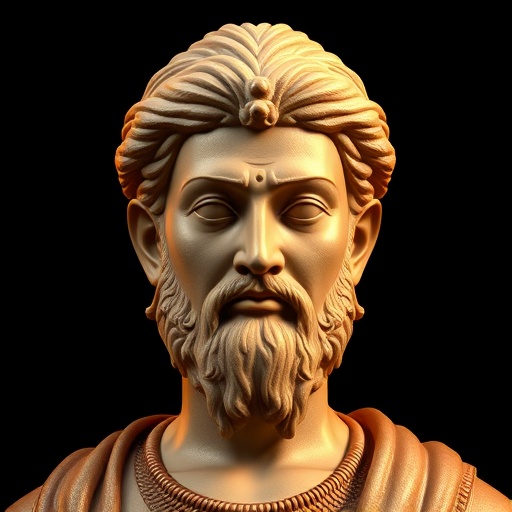
24th and last Tirthankara of Jainism, whose teachings of strict ahimsa (non-violence), aparigraha (non-attachment), and karma reshaped ancient Indian religion. Closely associated with The Buddha (near-contemporary moral revolutionary, also reacting against Vedic ritualism). For an intellectual contrast, see Vedic Brahmanical ritual sacrifice, the animal-sacrifice-centered Vedic religion of his era — Mahavira's ahimsa demanded total non-violence, including not eating root vegetables that kill the plant — a maximum-distance ethical move from the Vedic priestly tradition that ritually sacrificed cattle and horses. The two cleanest poles of ancient Indian religious ethics.
Found in 1 providers: deepseek
1 source checked
Non-attachment means releasing possessive desire for people, objects, and outcomes. The soul's highest refinement isn't strength or intelligence but the capacity to exist without clinging — to act, relate, and experience without ownership. This subtlety distinguishes it from mere renunciation; it is an internal freedom from craving that purifies consciousness at its deepest, most irreducible level.
Mahavira abandoned royal wealth and family at 30, practicing extreme asceticism for 12 years — no possessions, no clothing, no fixed shelter. Aparigraha (non-possessiveness) became one of his Five Great Vows and a cornerstone of Jain ethics. His life literally enacted this principle: he shed every attachment to achieve moksha, making non-attachment not abstract philosophy but lived, embodied biography.
Sixth-century BCE India saw the Śramaṇa movement challenging Vedic ritual hierarchy. Mahavira and the Buddha emerged from this revolt against priestly materialism. In an era where kings hoarded wealth, caste fixed destiny, and Brahmin sacrifice required costly offerings, Mahavira's insistence that liberation came through releasing rather than accumulating was a radical counter-cultural manifesto aimed at the dominant religious economy.
AI-generated insights based on extensive research and information for context. Factual errors? Email [email protected].
Your cart is empty