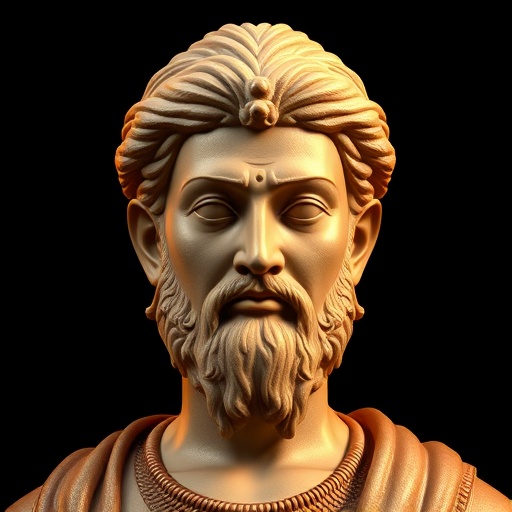
Mahavira — "As a great warrior is not afraid of a battle, so should a monk not be afraid of …"
As a great warrior is not afraid of a battle, so should a monk not be afraid of death.
As a great warrior is not afraid of a battle, so should a monk not be afraid of death.
Click any product to generate a realistic preview. Up to 3 at a time.
* Initial load can take up to 90 seconds — revising the preview in another color is nearly instant.
"By sincerity, a man gains knowledge, by knowledge, liberation."
"The soul is born alone and dies alone; no one shares another’s karma."
"The soul is the only thing worth knowing."
"The purpose of life is to realize one's true self."
"He who neglects the present moment, loses both future and past."
24th and last Tirthankara of Jainism, whose teachings of strict ahimsa (non-violence), aparigraha (non-attachment), and karma reshaped ancient Indian religion. Closely associated with The Buddha (near-contemporary moral revolutionary, also reacting against Vedic ritualism). For an intellectual contrast, see Vedic Brahmanical ritual sacrifice, the animal-sacrifice-centered Vedic religion of his era — Mahavira's ahimsa demanded total non-violence, including not eating root vegetables that kill the plant — a maximum-distance ethical move from the Vedic priestly tradition that ritually sacrificed cattle and horses. The two cleanest poles of ancient Indian religious ethics.
Found in 1 providers: deepseek
1 source checked
True courage means accepting death without fear, just as a skilled warrior faces combat without hesitation. This urges monks and spiritual practitioners to confront mortality with calm equanimity rather than dread. Death is not an enemy to flee but a reality to meet with steady resolve. Spiritual discipline demands the same unflinching bravery that warriors display on battlefields, applied inward toward life's ultimate certainty.
Mahavira renounced royal life, endured twelve years of extreme ascetic hardship, and faced physical attacks without retaliation. He taught that the soul survives death and achieves liberation through non-attachment. His entire life modeled fearless detachment—he gave up wealth, family, and bodily comfort. This quote directly reflects his personal discipline and his core teaching that liberation requires conquering inner fear, not external enemies.
Sixth-century BCE India saw the rise of wandering ascetic movements challenging Vedic orthodoxy. The Kshatriya warrior class dominated social prestige, making battlefield courage the era's highest virtue. Mahavira reframed that cultural ideal: true heroism meant conquering the self, not opponents. In a society where death rituals and caste determined spiritual fate, his message that any monk could achieve fearless liberation regardless of birth was revolutionary.
AI-generated insights based on extensive research and information for context. Factual errors? Email [email protected].
Your cart is empty