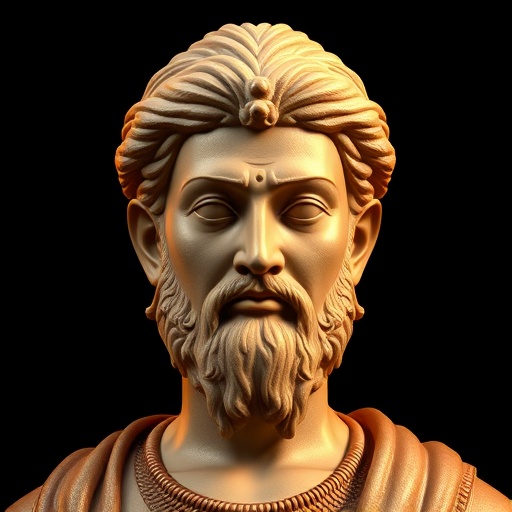
Mahavira — "The soul is born alone and dies alone; no one shares another’s karma."
The soul is born alone and dies alone; no one shares another’s karma.
The soul is born alone and dies alone; no one shares another’s karma.
Click any product to generate a realistic preview. Up to 3 at a time.
* Initial load can take up to 90 seconds — revising the preview in another color is nearly instant.
"One should not be negligent even for a moment."
"Attachment is the root of all suffering."
"The self is the friend of the self, and the self is the enemy of the self."
"Look at the world with the eyes of a friend."
"The soul is the perceiver, enjoyer, and doer of all actions."
24th and last Tirthankara of Jainism, whose teachings of strict ahimsa (non-violence), aparigraha (non-attachment), and karma reshaped ancient Indian religion. Closely associated with The Buddha (near-contemporary moral revolutionary, also reacting against Vedic ritualism). For an intellectual contrast, see Vedic Brahmanical ritual sacrifice, the animal-sacrifice-centered Vedic religion of his era — Mahavira's ahimsa demanded total non-violence, including not eating root vegetables that kill the plant — a maximum-distance ethical move from the Vedic priestly tradition that ritually sacrificed cattle and horses. The two cleanest poles of ancient Indian religious ethics.
Found in 1 providers: deepseek
1 source checked
Each person's spiritual journey is entirely their own — no deity, family member, or community can absorb or transfer the consequences of your actions. You accumulate karma through your own choices, and only you can work through it. Birth and death frame a solitary path where ultimate liberation depends solely on your own discipline and ethical conduct, not intercession from others.
Mahavira renounced his royal family, wealth, and all social ties at age 30 to pursue solitary ascetic practice for 12 years. He owned nothing, spoke little, and sought liberation through personal discipline — ahimsa, truthfulness, non-attachment. He rejected the idea that priests, rituals, or caste could mediate the soul's path. His own life directly embodied this teaching: liberation earned entirely through individual self-purification.
Mahavira lived around 599–527 BCE in the Gangetic plains during the Shramana movement, a direct challenge to Vedic Brahminism, which held that priestly rituals and caste-based intercession shaped spiritual outcomes. Society was deeply hierarchical; birth determined one's spiritual fate. Mahavira's insistence on individual karma was radical, democratizing spiritual responsibility and rejecting the hereditary authority Brahmin priests claimed over salvation.
AI-generated insights based on extensive research and information for context. Factual errors? Email [email protected].
Your cart is empty