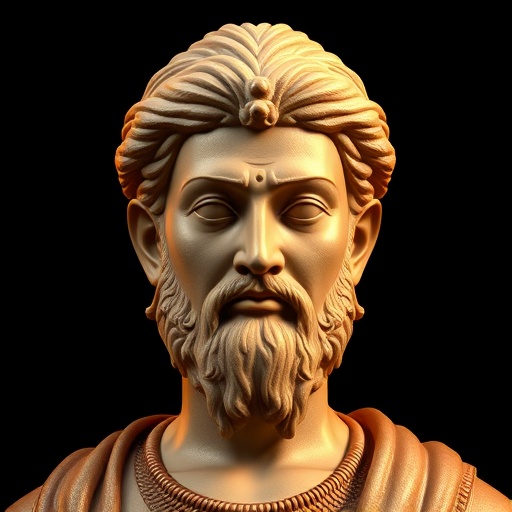
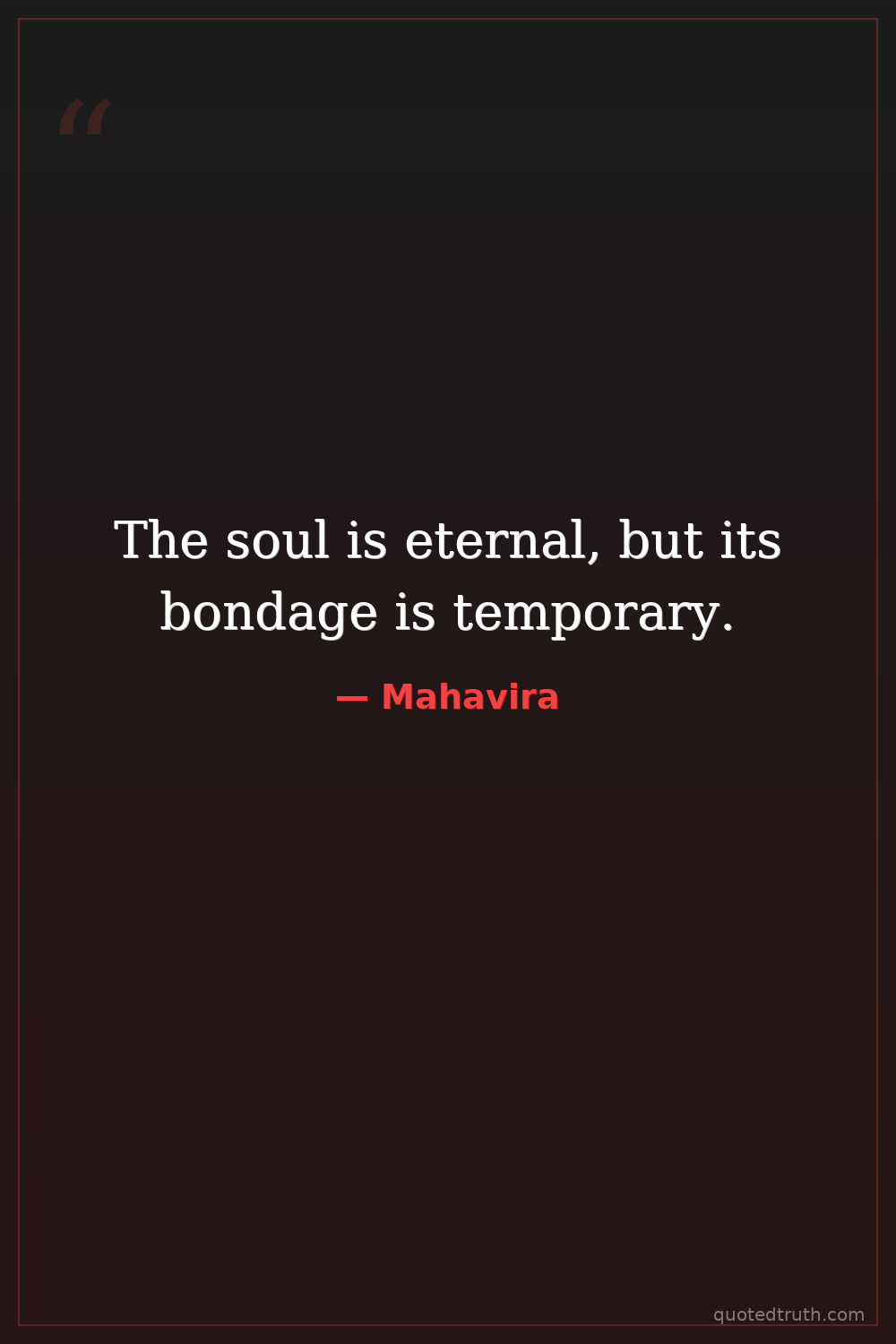
Mahavira — "The soul is eternal, but its bondage is temporary."
The soul is eternal, but its bondage is temporary.
The soul is eternal, but its bondage is temporary.
Click any product to generate a realistic preview. Up to 3 at a time.
* Initial load can take up to 90 seconds — revising the preview in another color is nearly instant.
"Have compassion towards all living beings. Hatred leads to destruction."
"The greatest mistake of a soul is non-restraint."
"The highest form of worship is to serve humanity."
"The soul is the only thing that is blissful; everything else is sorrowful."
"Purity of mind is the supreme dharma."
24th and last Tirthankara of Jainism, whose teachings of strict ahimsa (non-violence), aparigraha (non-attachment), and karma reshaped ancient Indian religion. Closely associated with The Buddha (near-contemporary moral revolutionary, also reacting against Vedic ritualism). For an intellectual contrast, see Vedic Brahmanical ritual sacrifice, the animal-sacrifice-centered Vedic religion of his era — Mahavira's ahimsa demanded total non-violence, including not eating root vegetables that kill the plant — a maximum-distance ethical move from the Vedic priestly tradition that ritually sacrificed cattle and horses. The two cleanest poles of ancient Indian religious ethics.
Found in 1 providers: deepseek
1 source checked
Your true self has no beginning or end — it cannot be created or destroyed. But the suffering, confusion, and limitation you experience right now is not permanent. Whatever traps you — bad habits, painful circumstances, ignorance — can be escaped. Consciousness itself is indestructible, and freedom from whatever binds you is genuinely achievable if you pursue it deliberately.
Mahavira renounced royal wealth at 30, endured twelve years of extreme asceticism, and attained kevala jnana — omniscient liberation. His entire teaching system, Jainism, is built on this precise claim: the atman is pure and eternal, but karma — understood as literal subtle matter — clings to it and causes rebirth. Liberation means shedding that karma entirely, which Mahavira demonstrated was humanly possible.
Sixth-century BCE India was an era of intense philosophical ferment — the same period produced the Buddha, the Upanishads, and challenges to Vedic brahminical authority. Caste hierarchy taught that your spiritual fate was largely fixed by birth. Mahavira's assertion that bondage is temporary and liberation universally accessible — regardless of caste or gender — was a direct, radical challenge to that fatalistic social order.
AI-generated insights based on extensive research and information for context. Factual errors? Email [email protected].
Your cart is empty