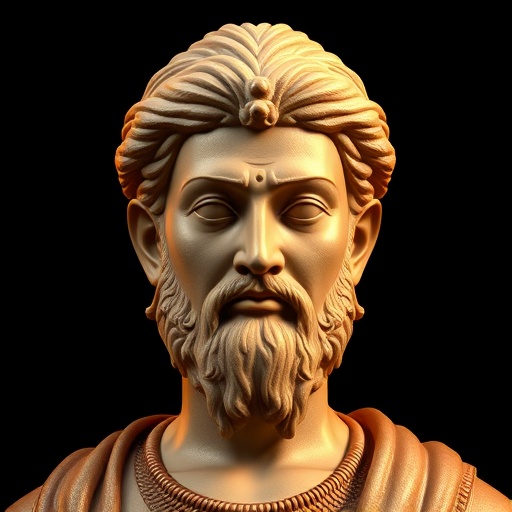
Mahavira — "The highest form of worship is to serve humanity."
The highest form of worship is to serve humanity.
The highest form of worship is to serve humanity.
Click any product to generate a realistic preview. Up to 3 at a time.
* Initial load can take up to 90 seconds — revising the preview in another color is nearly instant.
"The soul is permanent and eternal, while the body is temporary and perishable."
"One who neglects the supreme art of living, which is self-knowledge, knows nothing of life."
"The soul is the only thing that is eternal; everything else is temporary."
"One who is pure in thought, word, and deed is truly happy."
"Know then that the truth is eternal, pure, and unchanging."
24th and last Tirthankara of Jainism, whose teachings of strict ahimsa (non-violence), aparigraha (non-attachment), and karma reshaped ancient Indian religion. Closely associated with The Buddha (near-contemporary moral revolutionary, also reacting against Vedic ritualism). For an intellectual contrast, see Vedic Brahmanical ritual sacrifice, the animal-sacrifice-centered Vedic religion of his era — Mahavira's ahimsa demanded total non-violence, including not eating root vegetables that kill the plant — a maximum-distance ethical move from the Vedic priestly tradition that ritually sacrificed cattle and horses. The two cleanest poles of ancient Indian religious ethics.
Found in 1 providers: grok
1 source checked
True devotion is not expressed through ritual, prayer, or ceremony alone — it is fulfilled through actively serving other people. Reducing suffering, helping the vulnerable, and treating all beings with dignity constitutes the highest religious act. Abstract piety disconnected from compassion is incomplete. The divine is honored most fully not inside temples or through recitation, but through concrete, selfless actions that alleviate pain and elevate the lives of fellow human beings.
Mahavira renounced royal privilege at thirty to live as an ascetic, teaching ahimsa — non-violence toward all living beings — as Jainism's foundation. He rejected caste hierarchy and priestly intermediaries, insisting liberation comes through ethical conduct, not ceremony. His entire life was structured around minimizing harm and serving others through self-discipline and compassion. This quote distills his core conviction: moksha, spiritual liberation, is achieved through righteous action toward others, not ritual performance.
Mahavira lived in 6th–5th century BCE India, when Vedic Brahmanism dominated through elaborate rituals, animal sacrifice, and priestly authority. The era simultaneously produced the Shramana movement — wandering ascetics questioning ritual orthodoxy — and saw Buddhism emerge nearby. Declaring service to humanity superior to sacrifice was socially radical: it directly challenged Brahmin authority, redirected spiritual merit from costly ceremonies to ethical conduct, and offered a path to liberation accessible to all castes, not only the wealthy or priestly class.
AI-generated insights based on extensive research and information for context. Factual errors? Email [email protected].
Your cart is empty