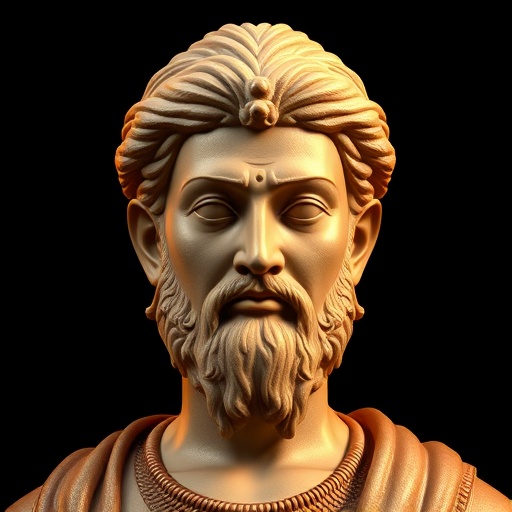
Mahavira — "The soul is the only reality; everything else is transient."
The soul is the only reality; everything else is transient.
The soul is the only reality; everything else is transient.
Click any product to generate a realistic preview. Up to 3 at a time.
* Initial load can take up to 90 seconds — revising the preview in another color is nearly instant.
"The greatest austerity is self-control."
"He who conquers himself conquers the world."
"The soul is the same in all living creatures, although the body is different."
"Every soul is pure in its origin."
"The soul is born alone and dies alone; no one shares another’s karma."
24th and last Tirthankara of Jainism, whose teachings of strict ahimsa (non-violence), aparigraha (non-attachment), and karma reshaped ancient Indian religion. Closely associated with The Buddha (near-contemporary moral revolutionary, also reacting against Vedic ritualism). For an intellectual contrast, see Vedic Brahmanical ritual sacrifice, the animal-sacrifice-centered Vedic religion of his era — Mahavira's ahimsa demanded total non-violence, including not eating root vegetables that kill the plant — a maximum-distance ethical move from the Vedic priestly tradition that ritually sacrificed cattle and horses. The two cleanest poles of ancient Indian religious ethics.
Found in 1 providers: deepseek
1 source checked
The soul is the one permanent, unchanging reality. Material possessions, physical bodies, social status, and relationships are all temporary — they arise, shift, and dissolve. In modern terms: stop attaching yourself to things that will not last. Your wealth, your reputation, even your body will fade. Only the conscious self persists across time and lifetimes, making it the only anchor worth orienting your entire life around.
Mahavira lived this principle literally. Born a Kshatriya prince around 599 BCE, he renounced wealth, family, and royal comfort at thirty to pursue liberation through radical asceticism. He owned nothing, ate sparingly, and endured extreme physical hardship for twelve years. His central teaching — that the jīva (soul) accumulates karma through attachment to transient things — made this quote the philosophical foundation of everything he deliberately walked away from.
Mahavira lived during the Axial Age in the Gangetic plains of ancient India, where Vedic Brahmanism dominated through elaborate sacrificial rituals and rigid caste hierarchies. Identity and religious duty were tied to birth, ritual purity, and material observance. Declaring the soul — not ritual, lineage, or wealth — as the only reality directly challenged this social order and helped Jainism gain traction among merchants and others marginalized by Brahmin-controlled religious structures.
AI-generated insights based on extensive research and information for context. Factual errors? Email [email protected].
Your cart is empty