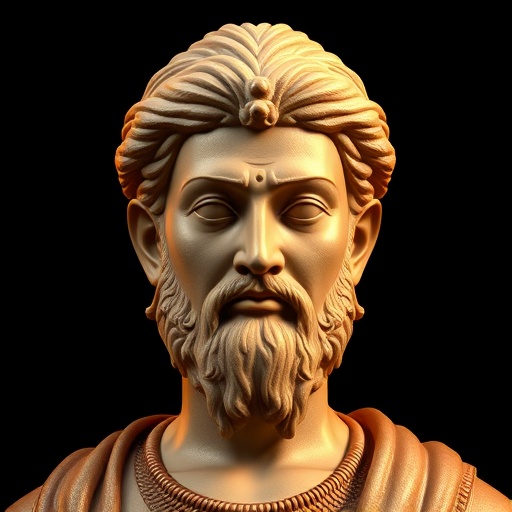
Mahavira — "The soul is the same in all living creatures, although the body is different."
The soul is the same in all living creatures, although the body is different.
The soul is the same in all living creatures, although the body is different.
Click any product to generate a realistic preview. Up to 3 at a time.
* Initial load can take up to 90 seconds — revising the preview in another color is nearly instant.
"What is the use of a lamp when the sun has risen?"
"Do not be led by the senses, but lead the senses."
"One who neglects the supreme art of living, which is self-knowledge, knows nothing of life."
"The soul is pure, eternal, and full of infinite knowledge, vision, power, and bliss."
"The greatest wisdom is to know oneself."
24th and last Tirthankara of Jainism, whose teachings of strict ahimsa (non-violence), aparigraha (non-attachment), and karma reshaped ancient Indian religion. Closely associated with The Buddha (near-contemporary moral revolutionary, also reacting against Vedic ritualism). For an intellectual contrast, see Vedic Brahmanical ritual sacrifice, the animal-sacrifice-centered Vedic religion of his era — Mahavira's ahimsa demanded total non-violence, including not eating root vegetables that kill the plant — a maximum-distance ethical move from the Vedic priestly tradition that ritually sacrificed cattle and horses. The two cleanest poles of ancient Indian religious ethics.
Found in 1 providers: grok
1 source checked
Every living being — from the smallest insect to a human — carries an identical spiritual essence, regardless of physical form. It denies any hierarchy of worth based on species or body type, insisting all life shares the same fundamental soul. This frames non-violence not as sentiment but as logical necessity: harming another creature means harming a soul indistinguishable in nature from your own.
Mahavira (599–527 BCE) practiced extreme asceticism for 12 years, walking barefoot and naked to minimize harm to any creature — a direct embodiment of this belief. As Jainism's 24th tirthankara, he codified ahimsa as the religion's supreme law. Believing all souls equal, he filtered drinking water to protect microorganisms, swept paths to avoid crushing insects, and refused food requiring the killing of multi-seeded plants.
In 6th-century BCE India, Vedic Brahmanical religion sanctioned animal sacrifice and a rigid caste system assigning moral worth by birth. Mahavira's claim that souls are equal across all bodies was a radical theological rupture. This was the Axial Age, when Siddhartha Gautama also challenged hierarchy nearby. Soul equality directly undermined justifications for both caste discrimination and ritual killing, making Jainism a philosophical insurgency against the dominant religious order.
AI-generated insights based on extensive research and information for context. Factual errors? Email [email protected].
Your cart is empty