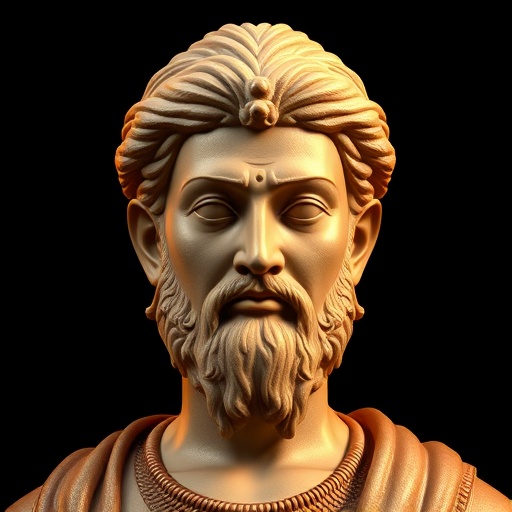
Mahavira — "The soul is the only thing worth knowing."
The soul is the only thing worth knowing.
The soul is the only thing worth knowing.
Click any product to generate a realistic preview. Up to 3 at a time.
* Initial load can take up to 90 seconds — revising the preview in another color is nearly instant.
"Do not be proud of wealth, people, relations, or youth; time takes all away in a moment."
"Conquer anger by forgiveness, pride by humility, deceit by straightforwardness, and greed by contentment."
"All breathing, existing, living, sentient creatures should not be slain, nor treated with violence, nor abused, nor tormented, nor driven away."
"A living body is not merely an accumulation of flesh and bones, but it is the abode of the soul."
"Look at the world in the way it is, and do not try to rearrange it to suit your desires."
24th and last Tirthankara of Jainism, whose teachings of strict ahimsa (non-violence), aparigraha (non-attachment), and karma reshaped ancient Indian religion. Closely associated with The Buddha (near-contemporary moral revolutionary, also reacting against Vedic ritualism). For an intellectual contrast, see Vedic Brahmanical ritual sacrifice, the animal-sacrifice-centered Vedic religion of his era — Mahavira's ahimsa demanded total non-violence, including not eating root vegetables that kill the plant — a maximum-distance ethical move from the Vedic priestly tradition that ritually sacrificed cattle and horses. The two cleanest poles of ancient Indian religious ethics.
Found in 1 providers: deepseek
1 source checked
True knowledge isn't found in mastering external sciences, accumulating wealth, or memorizing facts — it resides in understanding the self. The soul is the one constant reality; everything else is transient. By knowing the soul — its nature, its entanglements with karma, its capacity for liberation — a person gains the only understanding that genuinely matters. All other learning is secondary unless it serves that deeper self-inquiry.
Mahavira abandoned a princely life at 30, renounced all possessions, and spent 12 years in severe asceticism pursuing self-understanding. Jain philosophy centers on the jīva — the eternal, conscious soul — as distinct from matter. His entire doctrine, the Three Jewels of right knowledge, right faith, and right conduct, aimed at freeing the soul from karmic bondage. He reportedly achieved kevala jñāna, complete omniscient self-knowledge, making this quote essentially autobiographical.
Mahavira lived in 6th–5th century BCE India during the Axial Age, when Buddha, Confucius, and Socrates were contemporaries. Brahminic religion dominated, with priests controlling divine access through elaborate ritual sacrifice and caste hierarchy. The Upanishads were emerging, questioning the soul's nature. Mahavira radically democratized spiritual knowledge: no priests required, no gods to appease — only direct soul-inquiry through personal discipline, a culturally explosive claim in a society built on ritual mediation.
AI-generated insights based on extensive research and information for context. Factual errors? Email [email protected].
Your cart is empty