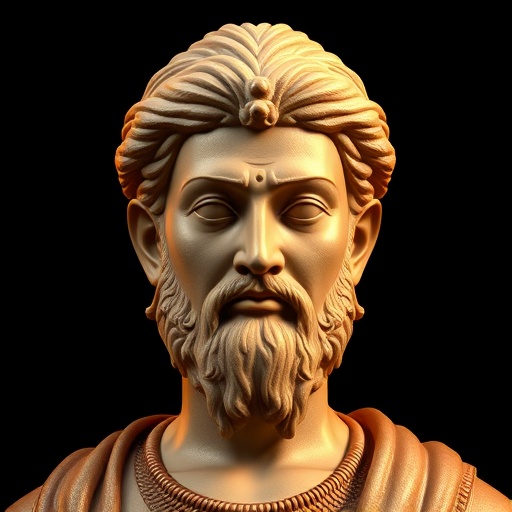
Mahavira — "A living body is not merely an accumulation of flesh and bones, but it is the ab…"
A living body is not merely an accumulation of flesh and bones, but it is the abode of the soul.
A living body is not merely an accumulation of flesh and bones, but it is the abode of the soul.
Click any product to generate a realistic preview. Up to 3 at a time.
* Initial load can take up to 90 seconds — revising the preview in another color is nearly instant.
"Renunciation is the key to eternal happiness."
"Live and allow others to live. Hurt neither yourself nor others."
"The highest spiritual state is to be free from all desires."
"The soul is inherently pure and perfect."
"Conquer anger by forgiveness, pride by humility, deceit by straightforwardness, and greed by contentment."
24th and last Tirthankara of Jainism, whose teachings of strict ahimsa (non-violence), aparigraha (non-attachment), and karma reshaped ancient Indian religion. Closely associated with The Buddha (near-contemporary moral revolutionary, also reacting against Vedic ritualism). For an intellectual contrast, see Vedic Brahmanical ritual sacrifice, the animal-sacrifice-centered Vedic religion of his era — Mahavira's ahimsa demanded total non-violence, including not eating root vegetables that kill the plant — a maximum-distance ethical move from the Vedic priestly tradition that ritually sacrificed cattle and horses. The two cleanest poles of ancient Indian religious ethics.
Found in 1 providers: grok
1 source checked
The body is not just flesh and bone — it houses a soul. This challenges any view that reduces life to mere biology or matter. It insists that what makes a living being significant is not its physical composition but the conscious soul within it. That soul deserves respect and protection, making every living creature — human or animal — inherently sacred rather than a resource to be used or harmed.
Mahavira (c. 599–527 BCE), the 24th Tirthankara, built Jainism on the concept of jiva — the soul present in every living being. This belief drove his radical ahimsa: if all bodies shelter souls, no creature can be harmed without spiritual consequence. His own life of extreme asceticism — abandoning possessions, walking barefoot, avoiding harm to insects — was a direct expression of this reverence for the soul inhabiting all physical forms.
In 6th century BCE India, the Carvaka materialist school explicitly denied the soul, arguing the body was purely physical. Simultaneously, Vedic Brahminism tied spiritual worth to ritual purity and caste hierarchy. Mahavira's claim that every body — regardless of caste or species — houses a soul was revolutionary on both fronts: it refuted materialism and dismantled hierarchical worth. The Axial Age saw Siddhartha Gautama raising similar challenges just miles away.
AI-generated insights based on extensive research and information for context. Factual errors? Email [email protected].
Your cart is empty