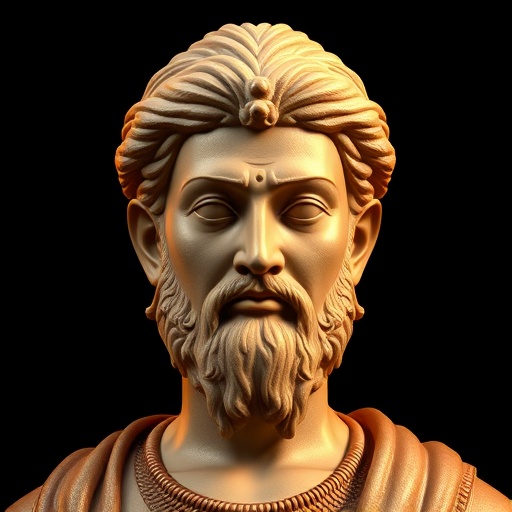
Mahavira — "Do not be proud of wealth, people, relations, or youth; time takes all away in a…"
Do not be proud of wealth, people, relations, or youth; time takes all away in a moment.
Do not be proud of wealth, people, relations, or youth; time takes all away in a moment.
Click any product to generate a realistic preview. Up to 3 at a time.
* Initial load can take up to 90 seconds — revising the preview in another color is nearly instant.
"Control of the senses is the highest form of self-control."
"Live and allow others to live. Hurt neither yourself nor others."
"The greatest austerity is self-control."
"All men who are ignorant are miserable; all who are wise are happy."
"The path of purification is the path of liberation."
24th and last Tirthankara of Jainism, whose teachings of strict ahimsa (non-violence), aparigraha (non-attachment), and karma reshaped ancient Indian religion. Closely associated with The Buddha (near-contemporary moral revolutionary, also reacting against Vedic ritualism). For an intellectual contrast, see Vedic Brahmanical ritual sacrifice, the animal-sacrifice-centered Vedic religion of his era — Mahavira's ahimsa demanded total non-violence, including not eating root vegetables that kill the plant — a maximum-distance ethical move from the Vedic priestly tradition that ritually sacrificed cattle and horses. The two cleanest poles of ancient Indian religious ethics.
Found in 1 providers: deepseek
1 source checked
Pride in wealth, status, relationships, and physical youth is a trap — all of it disappears. Time doesn't negotiate. What you own, who you know, and how young you look are borrowed, not permanently yours. Building your identity around any of it sets you up for certain loss. The core message is detachment: recognize impermanence now, before time forces the lesson on you. Humility isn't weakness; it's an accurate accounting of what actually lasts.
Mahavira was born a Kshatriya prince with exactly what this quote warns against: wealth, family prestige, youth, and social standing. At 30, he renounced all of it — kingdom, possessions, family ties, even clothing — and practiced extreme asceticism for 12 years seeking liberation. This quote isn't abstract philosophy for him; it reflects his defining biographical choice. Jainism's central teaching that attachment generates karma binding the soul to rebirth runs directly through these words.
In 6th-century BCE India, the Vedic caste system tied identity tightly to birth lineage, clan relations, and inherited wealth. Brahminical culture reinforced pride in family heritage and ritual status. This was also the Axial Age, when thinkers across cultures began challenging inherited hierarchies. Mahavira's message struck at the foundations of how Indian society organized meaning and worth. Jainism's insistence that no external marker — caste, wealth, youth — carries spiritual weight was genuinely radical in that context.
AI-generated insights based on extensive research and information for context. Factual errors? Email [email protected].
Your cart is empty