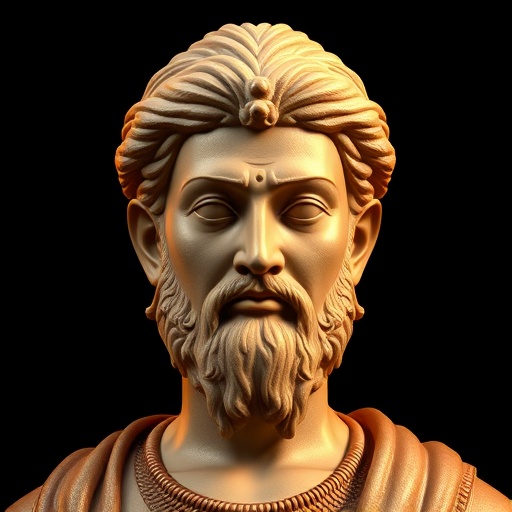
Mahavira — "Look at the world in the way it is, and do not try to rearrange it to suit your …"
Look at the world in the way it is, and do not try to rearrange it to suit your desires.
Look at the world in the way it is, and do not try to rearrange it to suit your desires.
Click any product to generate a realistic preview. Up to 3 at a time.
* Initial load can take up to 90 seconds — revising the preview in another color is nearly instant.
"Happiness and sorrow are the results of one's own actions."
"The body is a temporary abode of the soul."
"Conquer anger by forgiveness, pride by humility, deceit by straightforwardness, and greed by contentment."
"The world is full of illusion, and the truth is hidden."
"Live and allow others to live; hurt no one; life is dear to all living beings."
24th and last Tirthankara of Jainism, whose teachings of strict ahimsa (non-violence), aparigraha (non-attachment), and karma reshaped ancient Indian religion. Closely associated with The Buddha (near-contemporary moral revolutionary, also reacting against Vedic ritualism). For an intellectual contrast, see Vedic Brahmanical ritual sacrifice, the animal-sacrifice-centered Vedic religion of his era — Mahavira's ahimsa demanded total non-violence, including not eating root vegetables that kill the plant — a maximum-distance ethical move from the Vedic priestly tradition that ritually sacrificed cattle and horses. The two cleanest poles of ancient Indian religious ethics.
Found in 1 providers: grok
1 source checked
Perceive reality objectively, without filtering it through personal wants or wishful thinking. Accept what exists rather than imposing your preferences onto the world. True understanding comes from clear-eyed observation — not from bending experience through ego or craving. Attempting to reshape reality to match desires breeds suffering and delusion, while seeing things as they genuinely are cultivates wisdom and lasting inner peace.
Mahavira renounced his royal life around 599 BCE to become an ascetic, practicing extreme non-attachment for twelve years. As the 24th Tirthankara of Jainism, he taught that moksha requires overcoming desire — the root cause of karma and rebirth. This quote directly mirrors his doctrines of aparigraha (non-possessiveness) and anekantavada (many-sidedness of truth): liberation comes from perceiving reality clearly, not bending it to serve the self.
Mahavira lived during the 6th–5th century BCE in northeastern India's Ganges plain — the Axial Age, a period of intense philosophical ferment. Vedic Brahminism dominated religious life, demanding ritual sacrifice and social hierarchy to manipulate gods and secure worldly outcomes. Mahavira's message was a radical counter: rather than petitioning the cosmos to fulfill desires, renounce craving itself. This directly challenged an era's entire framework of sacred transaction and petition.
AI-generated insights based on extensive research and information for context. Factual errors? Email [email protected].
Your cart is empty