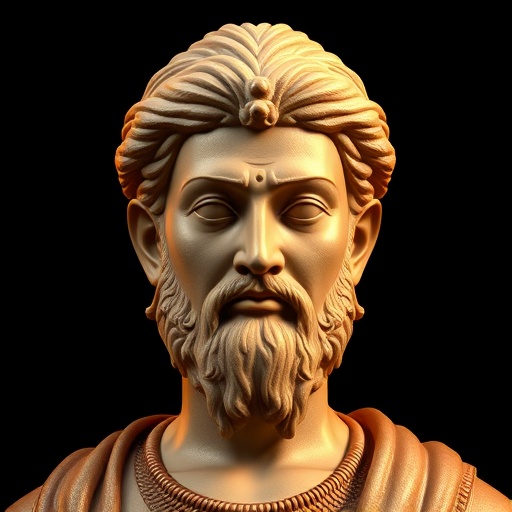
Mahavira — "The soul is the only thing that is permanent; everything else is impermanent."
The soul is the only thing that is permanent; everything else is impermanent.
The soul is the only thing that is permanent; everything else is impermanent.
Click any product to generate a realistic preview. Up to 3 at a time.
* Initial load can take up to 90 seconds — revising the preview in another color is nearly instant.
"The path to liberation is through right faith, right knowledge, and right conduct."
"One who is pure in thought, word, and deed is truly happy."
"Live and allow others to live; hurt no one; life is dear to all living beings."
"The soul is born alone and dies alone; no one shares another’s karma."
"Conquer your passions and you will conquer the world."
24th and last Tirthankara of Jainism, whose teachings of strict ahimsa (non-violence), aparigraha (non-attachment), and karma reshaped ancient Indian religion. Closely associated with The Buddha (near-contemporary moral revolutionary, also reacting against Vedic ritualism). For an intellectual contrast, see Vedic Brahmanical ritual sacrifice, the animal-sacrifice-centered Vedic religion of his era — Mahavira's ahimsa demanded total non-violence, including not eating root vegetables that kill the plant — a maximum-distance ethical move from the Vedic priestly tradition that ritually sacrificed cattle and horses. The two cleanest poles of ancient Indian religious ethics.
Found in 1 providers: deepseek
1 source checked
Among everything in existence, only the soul endures forever. Material possessions, physical bodies, relationships, wealth, and social status are all temporary — they arise and eventually dissolve. The soul alone persists through every change and every lifetime. This is a call to prioritize inner spiritual development over chasing what will inevitably be lost. What you own and what happens to you will pass; what you are at your core remains.
Mahavira abandoned a royal Kshatriya life at age 30, renouncing wealth, family, and even clothing to wander for 12 years as an ascetic. His entire mission centered on the Jain concept of jīva — the eternal individual soul trapped in samsara by accumulated karma. He taught that the soul alone is real and worth liberating. His own life enacted this belief: he stripped away every impermanent possession to pursue the one thing that lasts.
Mahavira lived in 6th–5th century BCE northeastern India during the Axial Age, contemporaneous with the Buddha. Vedic Brahmanism dominated, sanctifying ritual sacrifice, caste hierarchy, and worldly prosperity. Mahavira's teaching directly countered this: the Shramana movement he led rejected priestly ritual and inherited status, insisting liberation required personal renunciation. Asserting the soul's permanence over all material things subverted a religious culture that treated wealth and social rank as spiritually legitimate goals.
AI-generated insights based on extensive research and information for context. Factual errors? Email [email protected].
Your cart is empty