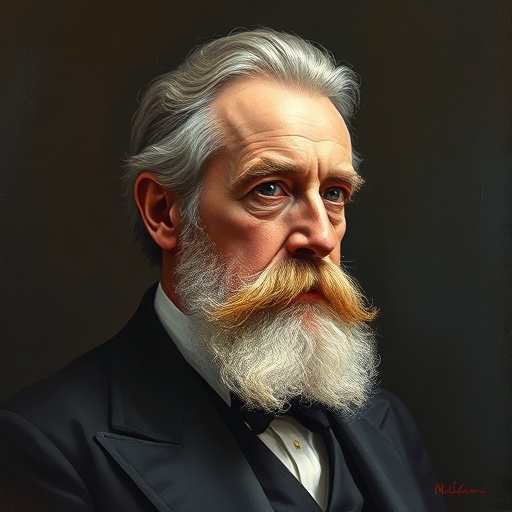
Alexander Graham Bell — "Concentrate all your thoughts upon the work at hand. The sun's rays do not burn …"
Concentrate all your thoughts upon the work at hand. The sun's rays do not burn until brought to a focus.
Concentrate all your thoughts upon the work at hand. The sun's rays do not burn until brought to a focus.
Click any product to generate a realistic preview. Up to 3 at a time.
* Initial load can take up to 90 seconds — revising the preview in another color is nearly instant.
"Environment counts for a great deal. A man's particular idea may have no chance for growth or encouragement in his community. Real success is denied that man, until he finds a proper environment."
"Man is the result of slow growth; that is why he occupies the position he does in animal life. What does a pup amount to that has gained its growth in a few days or weeks, beside a man who only attain…"
"The greatest minds are capable of the greatest vices as well as of the greatest virtues."
"The greatest discovery of my life was the discovery of the value of hard work."
"Every man has a right to his own opinion, but no man has a right to be wrong in his facts."
Found in 2 providers: grok,gemini
2 sources checked
Scattered attention wastes your potential. When you diffuse your mental energy across multiple concerns, you accomplish nothing meaningful. But direct everything you have toward one task at a time, and that concentrated force becomes transformative. Sunlight spread across a field is merely pleasant warmth, but focused through a lens it generates enough heat to ignite. Human effort works exactly the same way — focus is what converts raw capability into real results.
Bell spent years in obsessive focus on a single challenge: transmitting the human voice over electrical wire. His mother and wife were both deaf, making sound and speech his lifelong fixation. He taught the deaf by day and ran laboratory experiments by night, yet succeeded where competitors failed precisely because he refused to scatter his efforts. The telephone's invention on March 10, 1876, was the direct product of that relentless, singular concentration he preached.
Bell lived through the fiercest era of American invention — the 1870s–1880s patent races pitted him directly against Elisha Gray, who filed a telephone caveat the same day Bell filed his patent in February 1876. The industrial revolution created enormous commercial pressure on inventors to multitask and chase multiple ventures simultaneously. In that frantic scramble, Bell's philosophy of singular focus was a deliberate counter-strategy — and it gave him the decisive edge that made the telephone his, not Gray's.
AI-generated insights based on extensive research and information for context. Factual errors? Email [email protected].
Your cart is empty