What it means
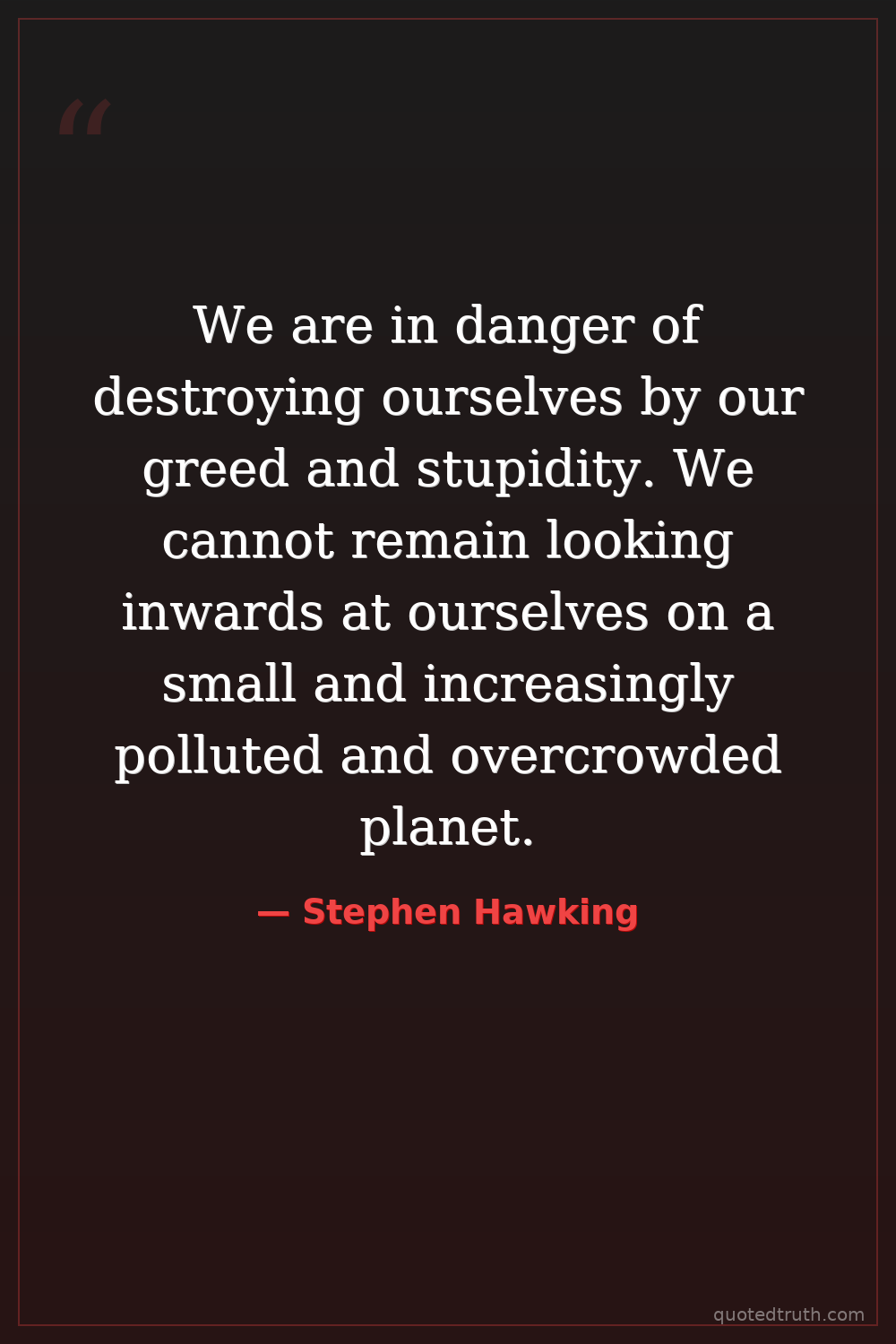
Humanity's short-sighted selfishness and collective foolishness pose an existential threat to our survival. We consume and pollute without restraint, trapped in local thinking while our planet buckles under the weight of overpopulation and environmental damage. Survival demands that we look outward, expanding beyond Earth rather than exhausting the only home we have ever known.
Relevance to Stephen Hawking
Hawking spent his career mapping the universe's grandest scales — black holes, the Big Bang, the nature of time itself. A man confined to a wheelchair yet mentally inhabiting the cosmos, he consistently urged space colonization as humanity's insurance policy. His own physical limitations sharpened his conviction that intelligence must transcend constraints rather than surrender to them.
The era
Hawking made such warnings during decades of accelerating climate change consensus, Cold War nuclear anxiety, and explosive population growth crossing six then seven billion people. The 1970s–2010s saw ozone depletion, rainforest destruction, and carbon emissions setting records, while geopolitical tribalism blocked coordinated global response, making his call to transcend planetary parochialism both urgent and politically charged.
AI-generated insights based on extensive research and information for context. Factual errors? Email [email protected].