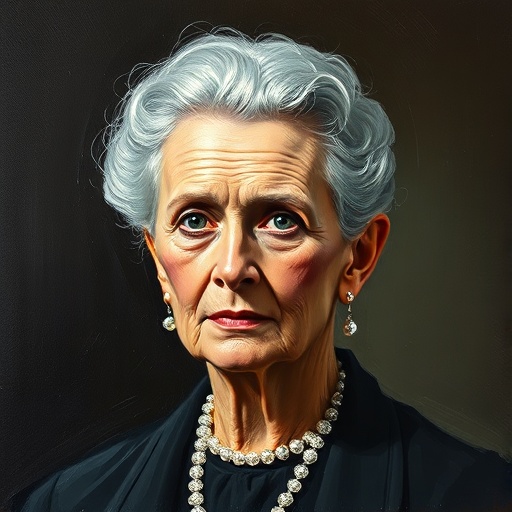
Marie Curie — "I was taught that the way of progress was neither swift nor easy."
I was taught that the way of progress was neither swift nor easy.
I was taught that the way of progress was neither swift nor easy.
Click any product to generate a realistic preview. Up to 3 at a time.
* Initial load can take up to 90 seconds — revising the preview in another color is nearly instant.
"I would like to think that the discoveries we have made will one day prove to be of benefit to humanity."
"I am a scientist. I am a researcher. I am a discoverer. I am all of these things. And I am proud of it."
"We must not forget that when radium was discovered no one knew that it would prove useful in hospitals. The work was one of pure science. And this is a proof that scientific work must not be considere…"
"Be less curious about people and more curious about ideas."
"My husband and I were so closely united by our affection and our common work that we passed almost our whole time together."
Found in 2 providers: deepseek,grok
2 sources checked
Real progress demands patience and hard work. Meaningful achievements rarely come quickly or without struggle. Whether advancing knowledge, building a career, or changing society, expect a long road filled with setbacks, failures, and slow incremental gains. Anyone hoping for instant results will be disappointed, because genuine growth requires sustained effort, persistence through difficulty, and acceptance that breakthroughs emerge only after years of steady, often frustrating labor.
Curie lived this truth. She spent four grueling years processing tons of pitchblende in a leaky shed to isolate one gram of radium, enduring poverty, sexism in academia, and eventual radiation sickness from her own discoveries. Denied university education in Russian-occupied Poland, she studied secretly before earning degrees in Paris. Two Nobel Prizes came only after decades of relentless, physically punishing work that ultimately cost her life.
Curie worked from the 1890s through the 1930s, when women were barred from most European universities and scientific societies. The French Academy of Sciences rejected her membership in 1911 despite her Nobel Prizes. Science itself was transitioning from gentleman-amateur pursuits to rigorous institutional research, requiring expensive equipment and long experimental timelines. Industrialization and two world wars reshaped Europe, while radioactivity research literally redefined matter, atoms, and medicine.
AI-generated insights based on extensive research and information for context. Factual errors? Email [email protected].
Your cart is empty