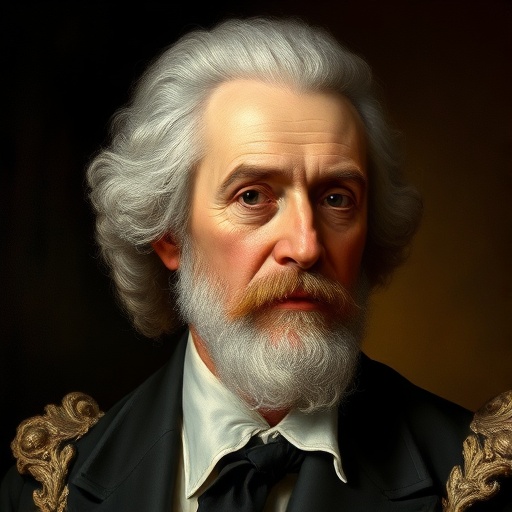
Antoine Lavoisier — "The art of concluding from experience and observation consists in evaluating pro…"
The art of concluding from experience and observation consists in evaluating probabilities.
The art of concluding from experience and observation consists in evaluating probabilities.
Click any product to generate a realistic preview. Up to 3 at a time.
* Initial load can take up to 90 seconds — revising the preview in another color is nearly instant.
"The greatest obstacle to discovery is not ignorance, but the illusion of knowledge."
"We must dare to know, and to speak what we know."
"The desire to do good is the most powerful motive of all."
"I have always found that the more I learned, the more I realized how much I did not know."
"It is not sufficient to know, one must apply."
Found in 1 providers: deepseek
1 source checked
Drawing conclusions from experiments and observations is not about finding absolute certainty but about weighing how likely something is to be true. Good reasoning means assessing the strength of evidence, comparing outcomes, and accepting that knowledge lives on a scale of probability rather than as fixed facts. The skill lies in judging which explanation the data most supports, not in claiming proof beyond doubt.
Lavoisier overturned centuries of chemistry by insisting on careful measurement, controlled experiments, and quantitative evidence. He dismantled the phlogiston theory not with certainty but by showing oxygen-based explanations fit observations better. As a tax collector trained in law and finance, he thought statistically about evidence. This quote mirrors his method: collect data, weigh results, and let probability, not tradition or authority, guide scientific conclusions about matter and combustion.
In late 18th-century France, the Scientific Revolution was maturing into the Enlightenment's empirical age. Alchemy was giving way to chemistry, Bayesian probability was emerging through Laplace and Bernoulli, and thinkers rejected dogma for reasoned evidence. Lavoisier worked amid this shift, publishing his Traité Élémentaire in 1789 as the French Revolution erupted. Measurement, instrumentation, and probabilistic reasoning were replacing authority-based knowledge, reshaping science, governance, and public life before his execution in 1794.
AI-generated insights based on extensive research and information for context. Factual errors? Email [email protected].
Your cart is empty