Joseph Smith — "If you are ever called to bear a message to the people, do not go without your p…"
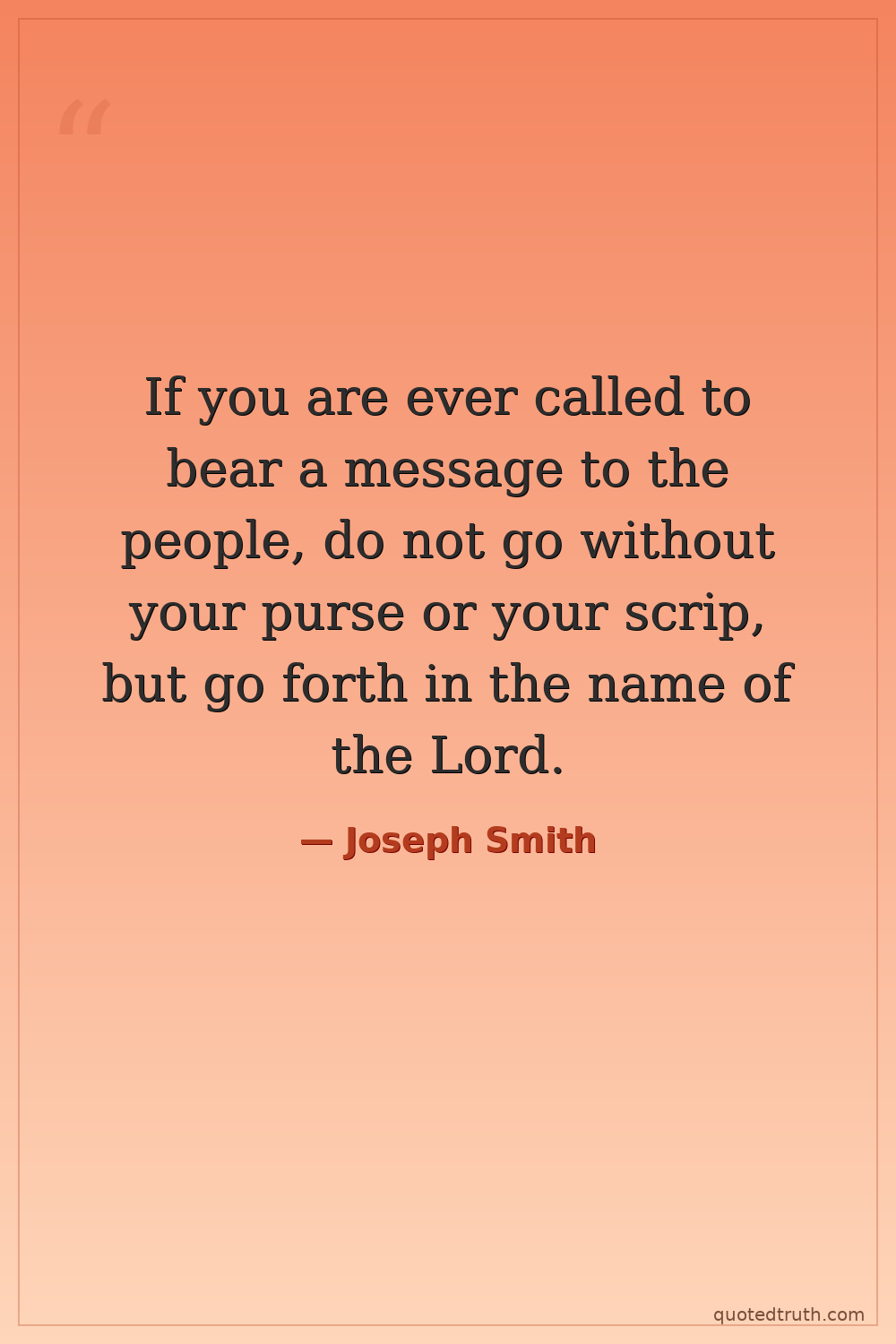
If you are ever called to bear a message to the people, do not go without your purse or your scrip, but go forth in the name of the Lord.
If you are ever called to bear a message to the people, do not go without your purse or your scrip, but go forth in the name of the Lord.
Click any product to generate a realistic preview. Up to 3 at a time.
* Initial load can take up to 90 seconds — revising the preview in another color is nearly instant.
"I have a testimony to lay before you, my testimony is that I am a prophet of God; and I know it; and I tell you in the name of Jesus Christ that I am a prophet."
"I have a testimony that the Book of Mormon is true, and I know that God lives."
"If a man marry a wife by my word, which is the word of the Lord, and by the new and everlasting covenant, and it is sealed unto them by the Holy Spirit of promise, according to the ordinances of my Ho…"
"God himself was once as we are now, and is an exalted man, and sits enthroned in yonder heavens! That is the great secret. If the vail was rent today, and the great God who holds this world in its orb…"
"I am a man of truth, and I will speak the truth at all times."
Found in 1 providers: grok
1 source checked
When called to spread a message or preach, go out practically equipped—bring money and provisions—while acting under divine authority. Don't be reckless or naive about material needs when doing sacred work. Effective mission requires both spiritual grounding and practical readiness. The combination of worldly preparation and sacred purpose reflects a mature understanding of how spiritual callings actually function in the physical world.
Joseph Smith founded the Church of Jesus Christ of Latter-day Saints in 1830 and immediately began organizing missionary work across America and Europe. Known as a pragmatic leader who built physical communities—Kirtland, Nauvoo—alongside spiritual institutions, Smith understood that sacred missions required real-world resources. This instruction mirrors his broader leadership pattern: pair divine authority with material preparedness to make religious work sustainable and effective.
The 1830s–1840s saw explosive growth of frontier religion during the Second Great Awakening. Early LDS missionaries traveled thousands of miles across rough American terrain and sailed to Britain with minimal infrastructure. Without reliable roads, banking, or communication systems, being underprepared could mean stranded preachers, failed missions, or genuine danger. Smith's counsel to go equipped reflected hard practical lessons from actual missionary expeditions of this era.
AI-generated insights based on extensive research and information for context. Factual errors? Email [email protected].
Your cart is empty