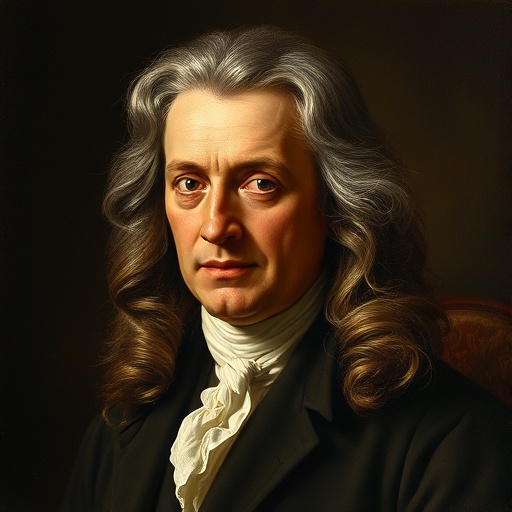
Isaac Newton — "If I am anything, which I highly doubt, it is due to hard work."
If I am anything, which I highly doubt, it is due to hard work.
If I am anything, which I highly doubt, it is due to hard work.
Click any product to generate a realistic preview. Up to 3 at a time.
* Initial load can take up to 90 seconds — revising the preview in another color is nearly instant.
"Truth is the offspring of silence and meditation."
"Plato is my friend, Aristotle is my friend, but my greatest friend is truth."
"If I have done the public any service, it is due to my patient thought."
"I shall not mingle conjectures with certainties."
"The light which comes from the sun, and from all fire, consists of all the primary colours mixed together."
Found in 1 providers: grok
1 source checked
The speaker expresses genuine doubt about their own worth or talent, crediting any achievement entirely to sustained effort rather than innate ability. It rejects the notion of natural genius as the source of accomplishment, instead placing all weight on disciplined, persistent labor. The self-deprecating uncertainty—'which I highly doubt'—makes the work-ethic claim more striking than a simple boast about diligence would be.
Newton was intensely self-effacing despite inventing calculus, formulating laws of motion and universal gravitation, and transforming optics. He famously compared himself to a boy finding pebbles while a vast ocean of truth lay undiscovered. He worked obsessively during the 1665–66 plague years, often neglecting food and sleep, and spent two decades refining the Principia Mathematica. His documented humility about innate ability, against extraordinary output, makes this sentiment wholly consistent with his recorded character.
Newton lived through the Scientific Revolution, when Aristotelian authority was collapsing and natural philosophy had no formal profession or guaranteed status. Protestant Reformation thinking—particularly Calvinist strains—had elevated diligent labor as a moral and godly virtue, not merely a means to an end. Patronage culture rewarded sustained output over birthright talent. In this environment, attributing achievement to hard work rather than divine gift or noble inheritance carried genuine theological and social weight.
AI-generated insights based on extensive research and information for context. Factual errors? Email [email protected].
Your cart is empty