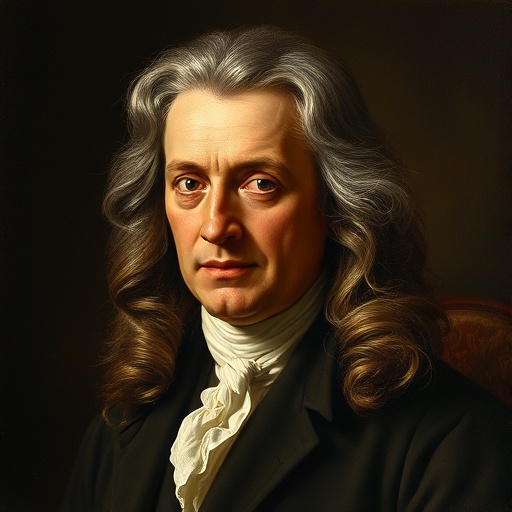
Isaac Newton — "Truth is the offspring of silence and meditation."
Truth is the offspring of silence and meditation.
Truth is the offspring of silence and meditation.
Click any product to generate a realistic preview. Up to 3 at a time.
* Initial load can take up to 90 seconds — revising the preview in another color is nearly instant.
"Can it be by accident that all birds beasts and men have their right side and left side alike shaped (except in their bowels) and just two eyes and no more on either side the face & just two ears on e…"
"I have studied these things – you have not."
"The greatest challenges to the truth of the Holy Scriptures are not the work of infidels, but of professing Christians."
"The most beautiful order of the planets and comets could not have arisen without the design and dominion of an intelligent and powerful Being."
"Oh, Diamond! Diamond! thou little knowest what mischief thou hast done!"
Found in 2 providers: grok,deepseek
2 sources checked
Genuine understanding cannot be forced through noise or debate. Real insight emerges only from sustained, undistracted thinking — when you step away from the chaos, sit with a problem in stillness, and let your mind work through it fully. Truth is not found in argument or spectacle; it surfaces when you create space for deep reflection, free from the interruptions and assumptions that cloud clear thinking.
Newton's greatest breakthroughs — calculus, the laws of motion, his theory of gravity — emerged during the 1665–1666 plague years when he retreated alone to Woolsthorpe Manor, away from Cambridge entirely. He was famously solitary, secretive, and obsessive, rarely publishing and often working in isolation for years. This quote is essentially a description of his own method: not collaboration or debate, but relentless private contemplation.
In Newton's era, the dominant path to truth was scholastic disputation and deference to classical texts — Aristotle, Scripture, institutional authority. The Scientific Revolution was actively challenging this, but the culture still prized loud public argument over quiet individual inquiry. Newton's framing of silence as the source of truth was subtly radical, elevating solitary empirical reasoning at a moment when Enlightenment thought was beginning to displace tradition with observation and reflection.
AI-generated insights based on extensive research and information for context. Factual errors? Email [email protected].
Your cart is empty