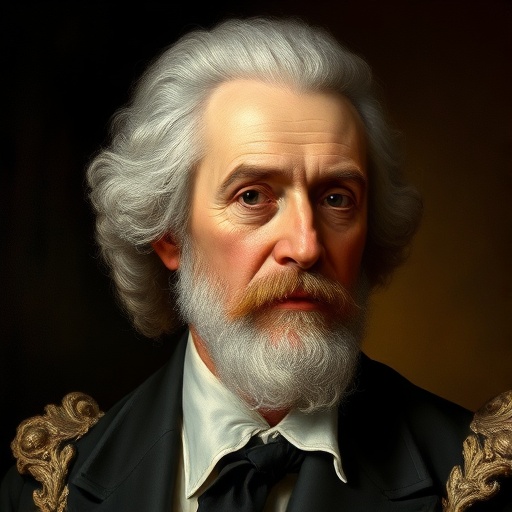
Antoine Lavoisier — "It is not often that a man has the opportunity to be useful to his fellow citize…"
It is not often that a man has the opportunity to be useful to his fellow citizens without any personal risk.
It is not often that a man has the opportunity to be useful to his fellow citizens without any personal risk.
Click any product to generate a realistic preview. Up to 3 at a time.
* Initial load can take up to 90 seconds — revising the preview in another color is nearly instant.
"It took them only an instant to cut off that head, but France may not produce another like it in a century."
"The universe is a machine, and we are its engineers."
"The chemist, like the artist, must have a vivid imagination, but it must be controlled by reason."
"I shall be happy if my work contributes to the progress of the sciences, and to the well-being of mankind."
"I have no other ambition than to serve humanity."
Found in 1 providers: grok
1 source checked
Lavoisier observes that genuine chances to help others without putting yourself in danger are rare. Most meaningful contributions to society demand sacrifice, exposure, or hardship from the giver. When a safe opportunity to do real good appears, it should be recognized as unusual and seized. The remark gently reminds readers that civic usefulness usually carries a cost, so risk-free service is a privilege, not the norm.
Lavoisier lived this tension: he funded his chemistry through the Ferme Generale tax-collection company, a profitable but politically dangerous role. He served on commissions reforming French agriculture, gunpowder, weights, and measures—often unpaid public work. Ultimately his tax-farming connection cost him his head on the guillotine in 1794, proving usefulness rarely came risk-free. The quote reads as the reflection of a man who repeatedly weighed civic duty against personal exposure.
Late eighteenth-century France was convulsed by Enlightenment reform and revolutionary upheaval. Scientists were expected to apply reason to public problems—agriculture, sanitation, munitions, the metric system—while the collapsing monarchy and rising Jacobin tribunals made any association with the old regime perilous. Useful citizenship could mean royal commissions one year and the guillotine the next, so a chance to serve without risk was genuinely exceptional in Lavoisier's volatile world.
AI-generated insights based on extensive research and information for context. Factual errors? Email [email protected].
Your cart is empty