Wright Brothers (Orville & Wilbur) — "The greatest value of our experiments has been their negative results."
The greatest value of our experiments has been their negative results.
The greatest value of our experiments has been their negative results.
Click any product to generate a realistic preview. Up to 3 at a time.
* Initial load can take up to 90 seconds — revising the preview in another color is nearly instant.
"We could not understand why the calculation of Lilienthal and others were so much in error."
"No one can appreciate the work and worry it cost us to build our first machine."
"The machine is a success and we are well pleased with it."
"The machine is a living thing, and must be treated as such."
"I believe that my course in sending our Kitty Hawk machine to a foreign museum is the only way of correcting the history of the flying machine, which by false and misleading statements has been perver…"
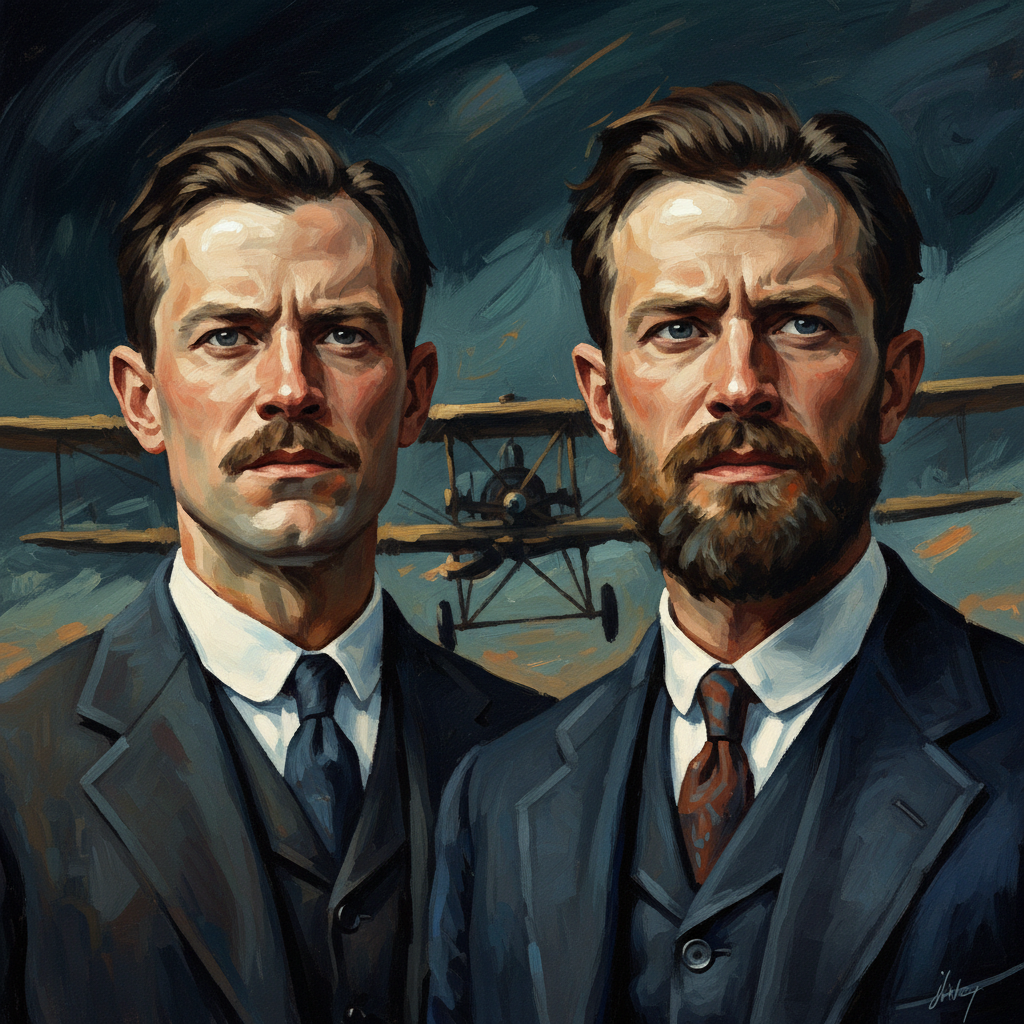
American aviation pioneers who achieved the first sustained powered controlled airplane flight at Kitty Hawk, NC, on December 17, 1903. Closely associated with Octave Chanute (their gliding mentor and aeronautical correspondent). For an intellectual contrast, see Samuel Pierpont Langley, Smithsonian Institution Secretary and government-funded aviation researcher — Langley's Aerodrome crashed twice into the Potomac in October-December 1903 with $50,000 of War Department funding; the Wright Brothers' bicycle-shop empiricism beat Langley's institutional Big Science by 9 days. The most-cited example in engineering history of empirical-tinkerer beating institution-funded credentialism.
Found in 1 providers: grok
1 source checked
Failed experiments — ones that don't work as expected — carry more practical worth than successes. A negative result definitively eliminates one possibility, giving you certain knowledge about what won't work. That certainty is rare and powerful: it narrows the search space for what will work and prevents wasted repetition. Understanding failure as data rather than defeat transforms experimentation from a gamble into a systematic method for closing in on truth.
The Wrights spent years testing wing shapes, propellers, and control systems — most attempts failing. Their 1901 glider performed far below predictions, forcing them to distrust Lilienthal's lift data and build their own wind tunnel, testing over 200 airfoil designs. Each failure gave them accurate, firsthand data competitors lacked. That disciplined accumulation of negative results — knowing exactly what didn't work — gave them the precise engineering foundation that produced the 1903 Flyer.
In the early 1900s, aviation was littered with high-profile failures. Samuel Langley's government-funded Aerodrome crashed into the Potomac twice in late 1903 — weeks before Kitty Hawk — and was publicly humiliated. Most experimenters abandoned flight after similar setbacks. Science itself was still formalizing empirical rigor as a discipline. Against this backdrop, treating each failed attempt as useful data rather than embarrassing defeat was a disciplined, counterintuitive stance that defined the Wrights' edge over rivals.
AI-generated insights based on extensive research and information for context. Factual errors? Email [email protected].
Your cart is empty