What it means
Orville Wright is defending his decision to send the original 1903 Kitty Hawk Flyer to a museum in England rather than keep it in America. He argues this drastic step is the only way to force an honest historical record, because the Smithsonian has been publishing distorted claims about who truly invented the airplane, and he refuses to let that falsification stand unchallenged on American soil.
Relevance to Wright Brothers (Orville & Wilbur)
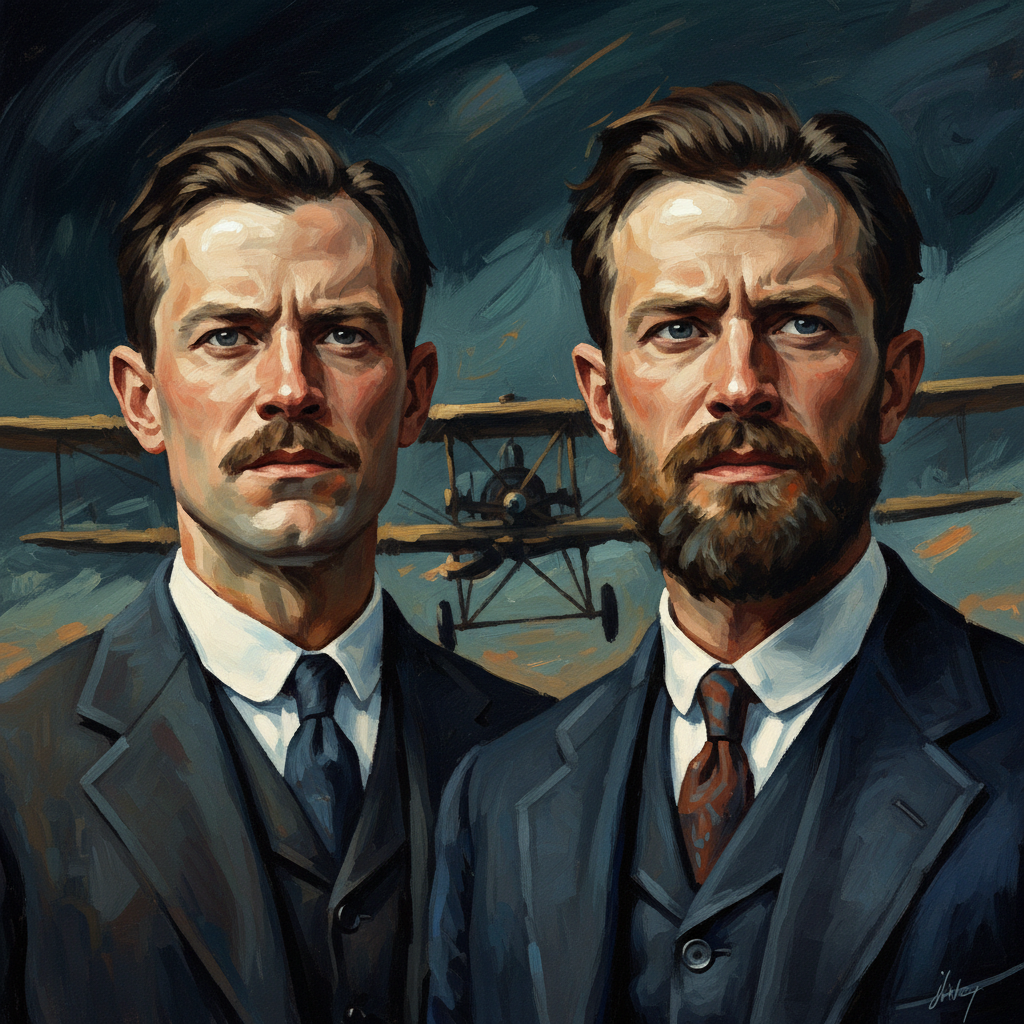
This reflects Orville's decades-long feud with the Smithsonian, which credited Samuel Langley's Aerodrome as the first machine 'capable' of flight, minimizing the Wrights' 1903 achievement. Fiercely protective of their legacy after Wilbur's 1912 death, Orville shipped the Flyer to London's Science Museum in 1928. It stayed abroad until 1948, embodying the brothers' meticulous, evidence-driven character and Orville's stubborn insistence on documented truth over institutional prestige.
The era
In the early 20th century, the Smithsonian held enormous authority as America's official arbiter of scientific history. Aviation was a young, fiercely contested field where national pride and patent battles shaped reputations. Secretary Charles Walcott promoted Langley, the Smithsonian's former chief, to elevate the institution. With no internet or independent archives, museum labels effectively wrote history, making Orville's exile of the Flyer a rare public protest against establishment gatekeeping during aviation's formative decades.
AI-generated insights based on extensive research and information for context. Factual errors? Email [email protected].