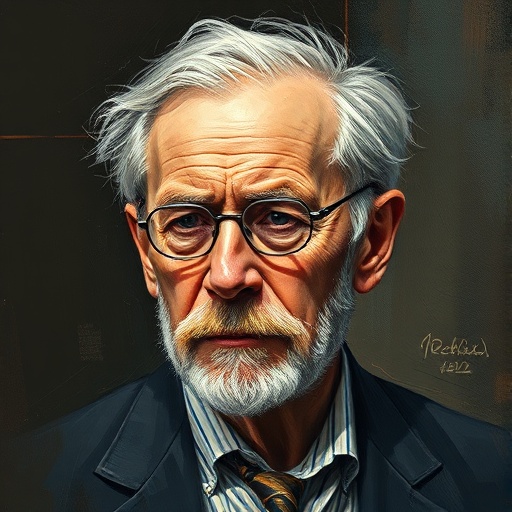
Erwin Schrodinger — "The greatest American art form is the comic strip."
The greatest American art form is the comic strip.
The greatest American art form is the comic strip.
Click any product to generate a realistic preview. Up to 3 at a time.
* Initial load can take up to 90 seconds — revising the preview in another color is nearly instant.
"The world is not to be understood by reason alone. It is also to be understood by intuition and feeling."
"The world is a construct of our sensations, perceptions, memories. It is convenient to regard it as existing objectively. But it is not a logical necessity."
"The world is not 'out there' independent of our consciousness. It is a construction of our minds."
"But the truth is that we are not living in a world of objects, but in a world of events."
"Needless to say, taken literally, this is just as absurd. For an adult organism the energy content is as stationary as the material content. Since, surely, any calorie is worth as much as any other ca…"
Austrian physicist who shared the 1933 Nobel for the wave equation that bears his name and the famous cat thought-experiment. Closely associated with Werner Heisenberg (matrix-mechanics rival who reached the same physics by different math) and Albert Einstein (his pen-pal on quantum interpretation). For an intellectual contrast, see Niels Bohr, Danish physicist and architect of the Copenhagen interpretation — Schrödinger's cat thought-experiment was specifically designed to ridicule Bohr's 'observer-dependent reality' reading of quantum mechanics — Schrödinger thought the Copenhagen interpretation was absurd; the cat was meant as reductio ad absurdum.
Found in 1 providers: grok
1 source checked
The quote argues that the American comic strip—newspaper funnies like Krazy Kat or Peanuts—is the United States' greatest and most original contribution to visual art. It deliberately elevates a mass-produced, working-class medium above painting or sculpture, claiming democracy's truest art emerges not in galleries but in daily newspapers, blending words and sequential images into a uniquely American storytelling form accessible to everyone.
Schrödinger was Austrian-born but engaged deeply with Western culture beyond physics, living across Europe during America's cultural rise. As author of 'What Is Life?'—bridging biology and quantum physics—he consistently found profound meaning in unexpected places. His famous cat paradox located deep philosophical weight inside an everyday thought experiment. Championing a dismissed popular medium as genuine high art mirrors his scientific instinct for revealing hidden significance where others see only the ordinary.
Schrödinger's active decades (1920s–1960s) coincided with the comic strip's golden age, when strips like Krazy Kat and Li'l Abner reached tens of millions daily. Post-WWII intellectual culture sharply divided 'high art' from mass media, with Abstract Expressionism dominating serious discourse. European intellectuals routinely dismissed American popular forms. Declaring comics the greatest American art was a deliberate provocation, challenging cultural elitism precisely as television and mass print were fundamentally reshaping what art could be.
AI-generated insights based on extensive research and information for context. Factual errors? Email [email protected].
Your cart is empty