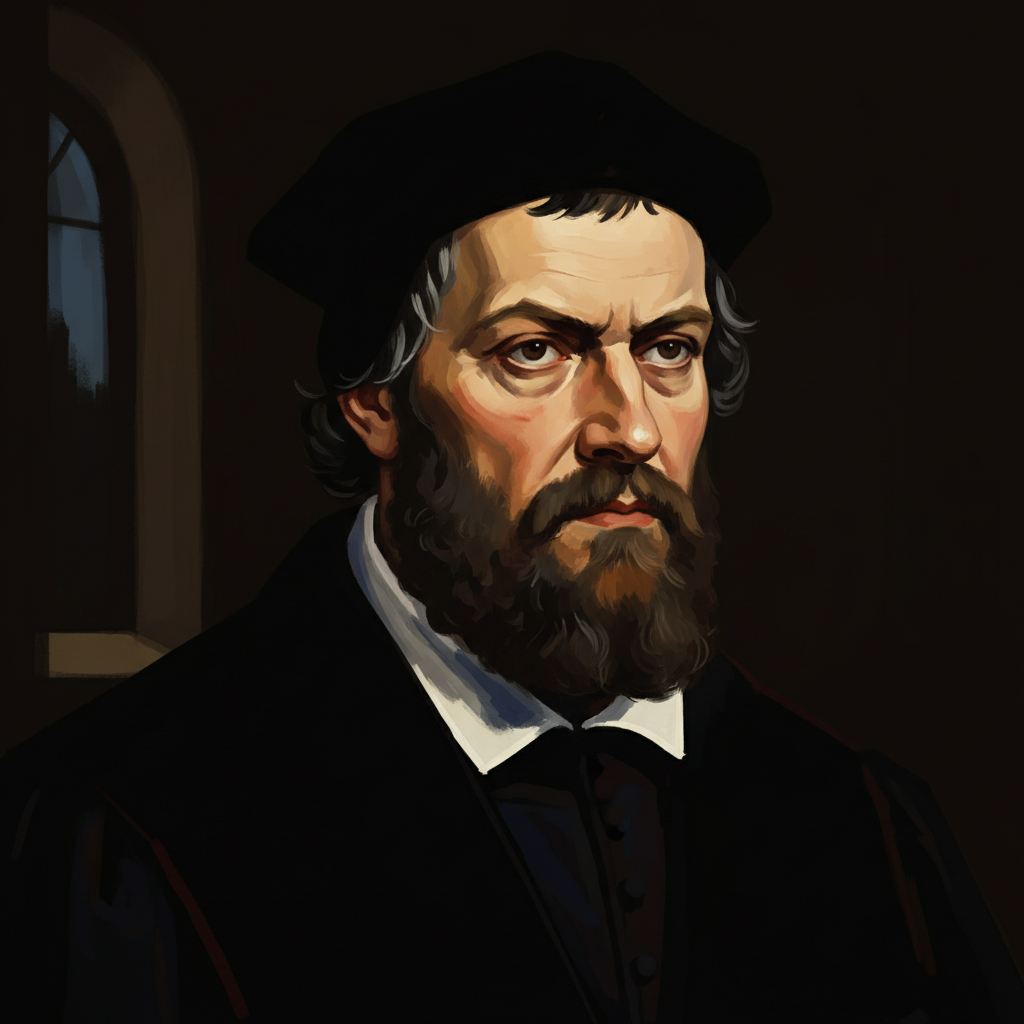
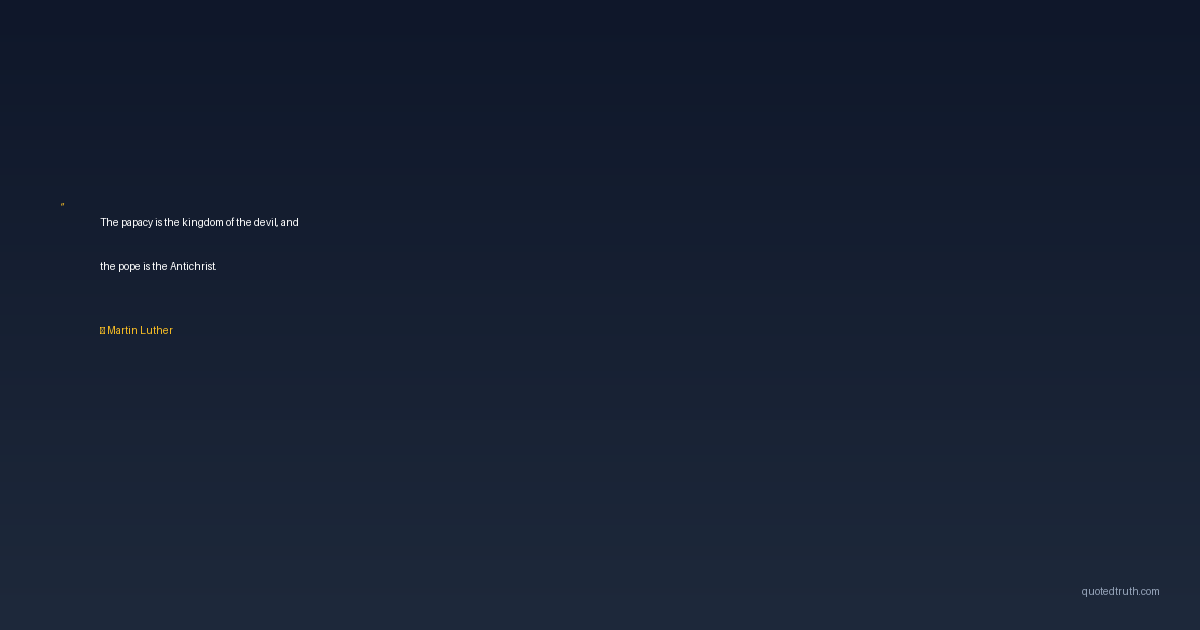
Martin Luther — "The papacy is the kingdom of the devil, and the pope is the Antichrist."
The papacy is the kingdom of the devil, and the pope is the Antichrist.
The papacy is the kingdom of the devil, and the pope is the Antichrist.
Click any product to generate a realistic preview. Up to 3 at a time.
* Initial load can take up to 90 seconds — revising the preview in another color is nearly instant.
"We consider EVERYTHING allowable against the deception and depravity of the papal antichrist."
"The word and work of God is quite clear, namely, that women were made to be either wives or prostitutes."
"I would have been a saint if I had remained in the monastery, but I was forced to become a devil."
"Secondly, their homes also should be razed and destroyed. For they pursue the same aims in them as in their synagogues. Instead they might be lodged under a roof or in a barn, like the gypsies, in ord…"
"The best way to drive out the devil, if he will not yield to texts of Scripture, is to jeer and flout him, for he cannot bear scorn."
German theologian whose 95 Theses (1517) launched the Protestant Reformation and broke the Catholic Church's monopoly on Western Christianity. Closely associated with Philipp Melanchthon (Lutheran systematizer) and John Calvin (later Reformer who built on Luther's break). For an intellectual contrast, see Pope Leo X, Renaissance pope (1513-1521) — Leo X's indulgence sales triggered Luther's break and Leo excommunicated him in 1521 — Luther's entire Reformation is structured as a direct answer to the indulgence-funded Vatican Leo represented.
Found in 1 providers: gemini
1 source checked
Luther declares the institution of the papacy itself to be satanic in origin and function, and identifies the reigning pope as the Antichrist foretold in scripture. He is not criticizing a single corrupt official but condemning the entire hierarchical system of Roman Catholic authority as a spiritual enemy actively working against God, deceiving believers, and usurping divine power through its claims to rule over Christendom.
Luther, an Augustinian monk and theology professor at Wittenberg, launched the Reformation with his 95 Theses in 1517 attacking indulgence sales. After excommunication by Pope Leo X in 1521, he radicalized, translating the Bible into German and rejecting papal authority entirely. His identification of the pope as Antichrist became a defining Protestant doctrine, shaping Lutheran confessions and fueling decades of religious warfare across Europe.
The early sixteenth century saw the Roman Church at peak wealth and political power, funding St. Peter's Basilica through aggressive indulgence campaigns that outraged German laity. The printing press allowed Luther's pamphlets to spread faster than Rome could suppress them. Holy Roman Emperor Charles V faced fractured loyalties, peasant revolts, and Ottoman invasions, while apocalyptic expectations ran high, making accusations of Antichrist resonate powerfully with a population primed for end-times thinking.
AI-generated insights based on extensive research and information for context. Factual errors? Email [email protected].
Your cart is empty