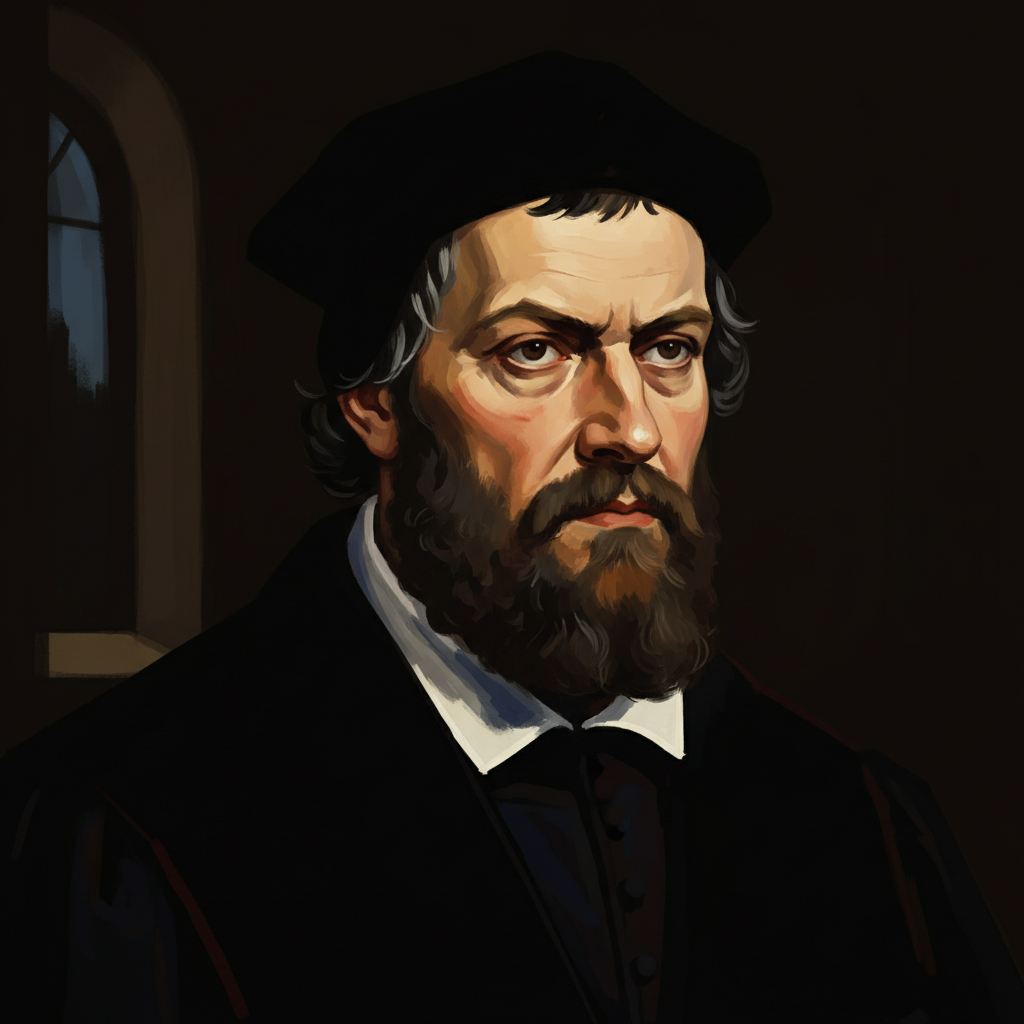
Martin Luther — "I would have been a saint if I had remained in the monastery, but I was forced t…"
I would have been a saint if I had remained in the monastery, but I was forced to become a devil.
I would have been a saint if I had remained in the monastery, but I was forced to become a devil.
Click any product to generate a realistic preview. Up to 3 at a time.
* Initial load can take up to 90 seconds — revising the preview in another color is nearly instant.
"Sleep is a most excellent thing, for it makes us forget all the miseries of life."
"I have no pleasure in any man who despises music. It is no invention of ours: it is the gift of God."
"Sixthly, they ought to be deprived of the opportunity to practice usury, and all their cash and treasure of silver and gold should be taken from them and put aside for safekeeping."
"I confess that I am a man, and that I have erred."
"I resist the devil, and often it is with a fart that I chase him away. When he tempts me with silly sins I say, 'Devil, yesterday I broke wind too. Have you written it down on your list?'"
German theologian whose 95 Theses (1517) launched the Protestant Reformation and broke the Catholic Church's monopoly on Western Christianity. Closely associated with Philipp Melanchthon (Lutheran systematizer) and John Calvin (later Reformer who built on Luther's break). For an intellectual contrast, see Pope Leo X, Renaissance pope (1513-1521) — Leo X's indulgence sales triggered Luther's break and Leo excommunicated him in 1521 — Luther's entire Reformation is structured as a direct answer to the indulgence-funded Vatican Leo represented.
Found in 1 providers: grok
1 source checked
Luther is saying that staying in the sheltered, disciplined life of a monk would have kept him pious and morally clean, but circumstances pulled him into a brutal, worldly fight that forced him to act harshly, argue fiercely, and behave in ways monks are not supposed to. The conflict corrupted his gentler self. He frames public battle as spiritually costly, implying his enemies, not his choice, turned him into something fierce.
Luther entered the Augustinian monastery in 1505 seeking salvation through strict observance, but after posting the Ninety-Five Theses in 1517 he was hurled into polemics, excommunication, and the Diet of Worms. His writings grew savage, attacking the Pope, peasants, and Jews in brutal language. This line captures his self-awareness: the quiet monk who loved Scripture was transformed by the Reformation fight into a combative, rage-prone public figure.
In early-modern Europe, monastic life was still seen as the surest path to holiness, while public theological disputes were fought with printed pamphlets, insults, and threats of burning. The 1520s Reformation collapsed the old unity of Western Christendom, and reformers faced imperial bans, peasant revolts, and constant polemical warfare. Restraint was impossible; survival required ferocity. Luther's era rewarded sharp tongues and punished silence, making his transformation from cloistered monk to public combatant almost inevitable.
AI-generated insights based on extensive research and information for context. Factual errors? Email [email protected].
Your cart is empty