Carl Linnaeus — "Homo Sapiens. Diurnus; varians cultura, loco. Europaeus albus, Asiaticus luridus…"
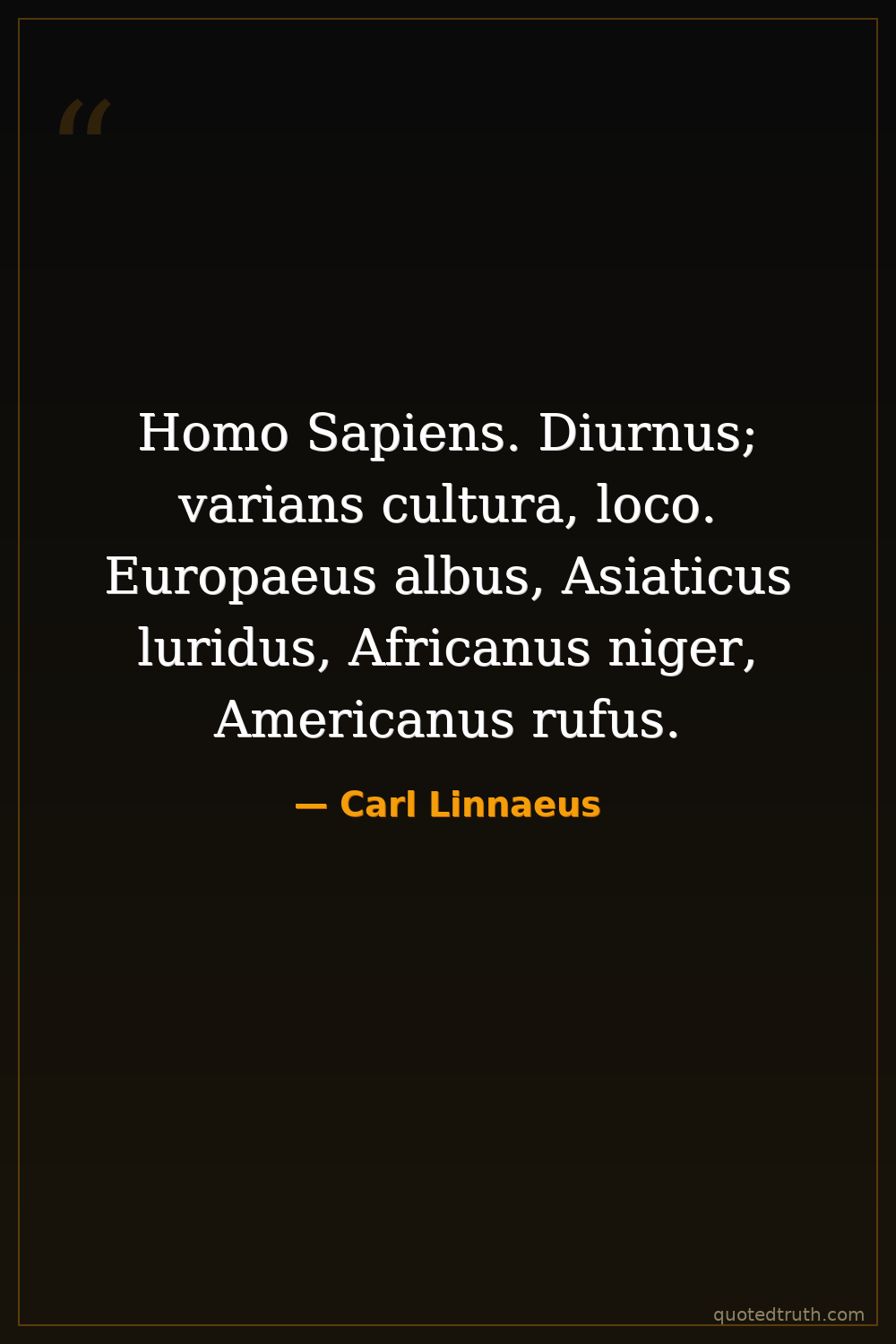
Homo Sapiens. Diurnus; varians cultura, loco. Europaeus albus, Asiaticus luridus, Africanus niger, Americanus rufus.
Homo Sapiens. Diurnus; varians cultura, loco. Europaeus albus, Asiaticus luridus, Africanus niger, Americanus rufus.
Click any product to generate a realistic preview. Up to 3 at a time.
* Initial load can take up to 90 seconds — revising the preview in another color is nearly instant.
"I was born to be a botanist, and I have never regretted my choice."
"If I have been of any service to the world, it is due to my love of animals and plants."
"The more I study plants, the more I believe in God."
"The purpose of science is to know the works of God."
"The system of nature is a mirror of God's wisdom."
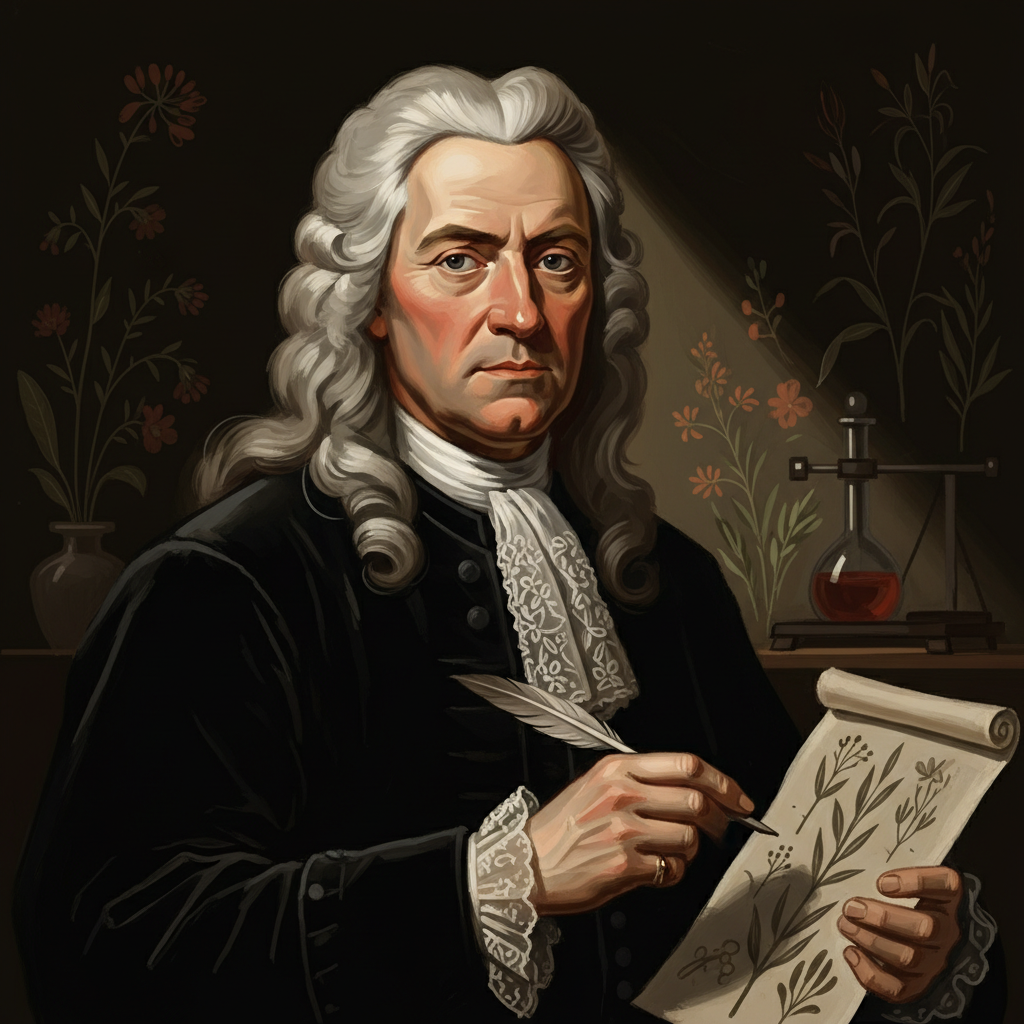
Swedish botanist and the father of modern taxonomy whose Systema Naturae (1735) introduced binomial nomenclature for naming all species. Closely associated with Joseph Banks (British naturalist who carried Linnaean classification on Cook's voyages). For an intellectual contrast, see Comte de Buffon, French naturalist and Histoire Naturelle author (1749-1788) — Buffon explicitly attacked Linnaean fixed-categories taxonomy as artificial and rejected the binomial system; his gradualist, environment-shaped natural history was the explicit alternative. Anticipates the fixed-species-vs-evolution debate Darwin would later resolve.
From his 'Systema Naturae', classifying human varieties based on geography and perceived characteristics. (Note: The full controversial descriptions of each 'variety' are extensive and not easily condensed into a single 'shocking' quote, but this introductory classification is foundational to the controversy.)
Date: 1758 (10th edition of Systema Naturae)
ShockingFound in 1 providers: gemini
1 source checked
This quote formally classifies humans as a single diurnal species varying by geography and culture, then assigns skin-color labels to four continental groups: European (white), Asian (pale/yellow), African (black), and American (red). In modern terms, it acknowledges human geographic variation while encoding those differences in a racial taxonomy — a framework now rejected by science, which recognizes skin color as a superficial trait reflecting UV adaptation, not a meaningful basis for subspecies classification.
Linnaeus built his career on imposing order onto nature through binomial nomenclature and hierarchical classification — applied here to humanity itself. His placement of Homo sapiens within the animal kingdom was scientifically bold; his continental racial subdivisions reflected his era's assumptions. The varians cultura loco framing shows his genuine interest in environment shaping variation, consistent with his broader naturalist view that geography determines organism characteristics — a precursor to later ecological thinking, though his racial stereotyping went beyond observable taxonomy.
Linnaeus published this in 1758, during the height of the transatlantic slave trade and European colonial expansion across the Americas, Africa, and Asia. The Enlightenment demanded rational classification of all nature, and European powers had economic incentives to establish hierarchies among peoples. Naturalists were receiving specimens and accounts from colonized territories, and the impulse to catalog these findings scientifically gave racial taxonomy a veneer of objectivity that would inform centuries of institutionalized racism.
AI-generated insights based on extensive research and information for context. Factual errors? Email [email protected].
Your cart is empty