Martin Luther — "I am more afraid of my own heart than of the pope and all his cardinals. I have …"
I am more afraid of my own heart than of the pope and all his cardinals. I have within me the great pope, Self.
I am more afraid of my own heart than of the pope and all his cardinals. I have within me the great pope, Self.
Click any product to generate a realistic preview. Up to 3 at a time.
* Initial load can take up to 90 seconds — revising the preview in another color is nearly instant.
"To gather with God's people in united adoration of the Father is as necessary to the Christian life as prayer."
"A man who has no wife is only half a man."
"If I had to do it all over again, I would still burn the pope’s bull."
"I would not give my faith for all the world's goods."
"The more a man is skilled in the Scriptures, the more he is tempted."
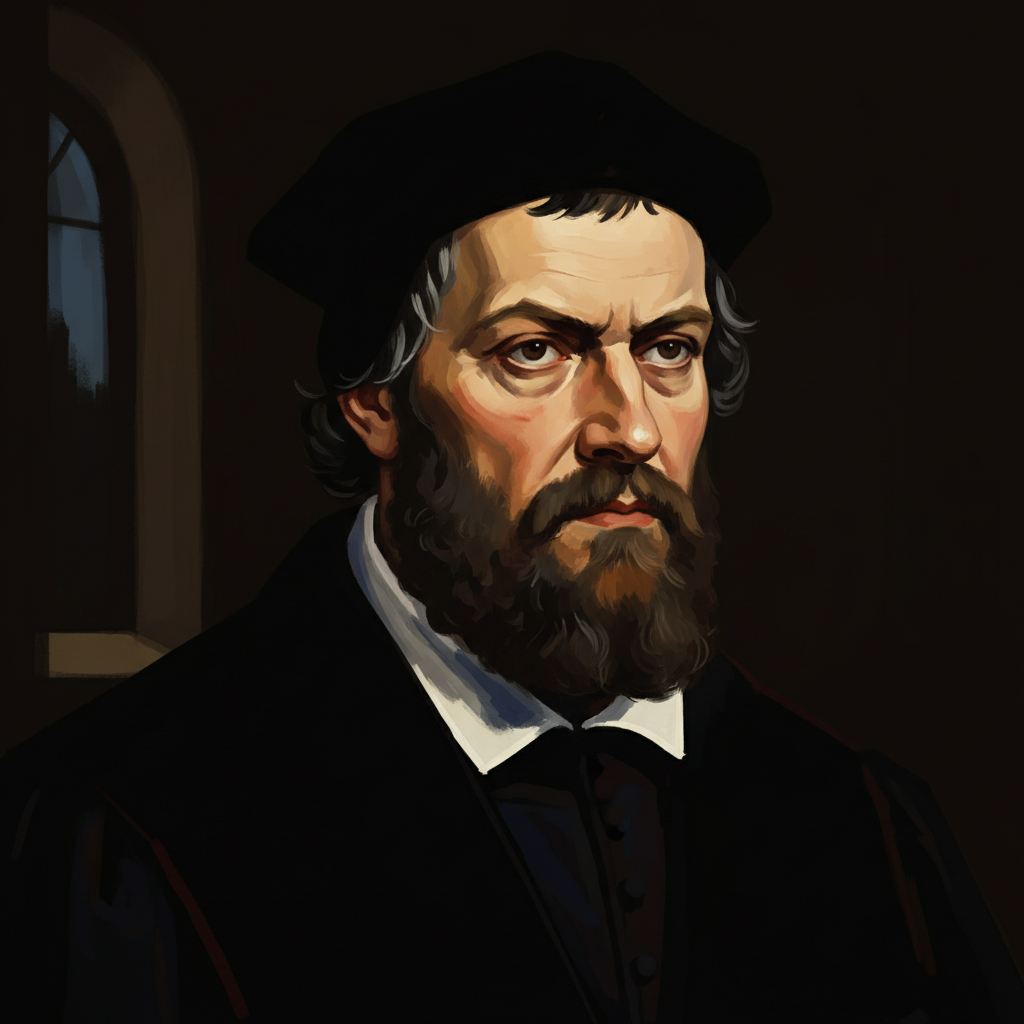
German theologian whose 95 Theses (1517) launched the Protestant Reformation and broke the Catholic Church's monopoly on Western Christianity. Closely associated with Philipp Melanchthon (Lutheran systematizer) and John Calvin (later Reformer who built on Luther's break). For an intellectual contrast, see Pope Leo X, Renaissance pope (1513-1521) — Leo X's indulgence sales triggered Luther's break and Leo excommunicated him in 1521 — Luther's entire Reformation is structured as a direct answer to the indulgence-funded Vatican Leo represented.
Found in 2 providers: gemini,grok
2 sources checked
The speaker admits that his own inner self—his pride, ego, and selfish impulses—poses a greater danger to him than any powerful external enemy. Institutions and authorities can be resisted, but the corrupting voice inside one's own mind follows everywhere and cannot be escaped. He names this inner tyrant 'Self,' suggesting that personal vanity and self-interest rule over us more absolutely than any outside ruler ever could.
Luther spent his career defying Rome, yet here he confesses his real adversary is internal. As an Augustinian monk obsessed with sin and grace, he wrestled constantly with scrupulosity and self-doubt. His theology of simul justus et peccator—simultaneously righteous and sinner—grew from this exact awareness. Even while branding the pope the Antichrist, he insisted no reformer was pure; the human heart itself needed reforming before any institution could be.
In the early 1500s, the pope commanded immense political and spiritual power across Europe, and challenging him meant excommunication, exile, or death. Luther's 1517 Ninety-Five Theses ignited the Reformation, fracturing Christendom. Amid this turmoil of indulgences, peasant revolts, and printing-press pamphlet wars, Luther's emphasis on inward sinfulness countered the era's obsession with external religious performance—rituals, relics, and papal authority—by relocating the true battleground inside the individual conscience.
AI-generated insights based on extensive research and information for context. Factual errors? Email [email protected].
Your cart is empty