What it means
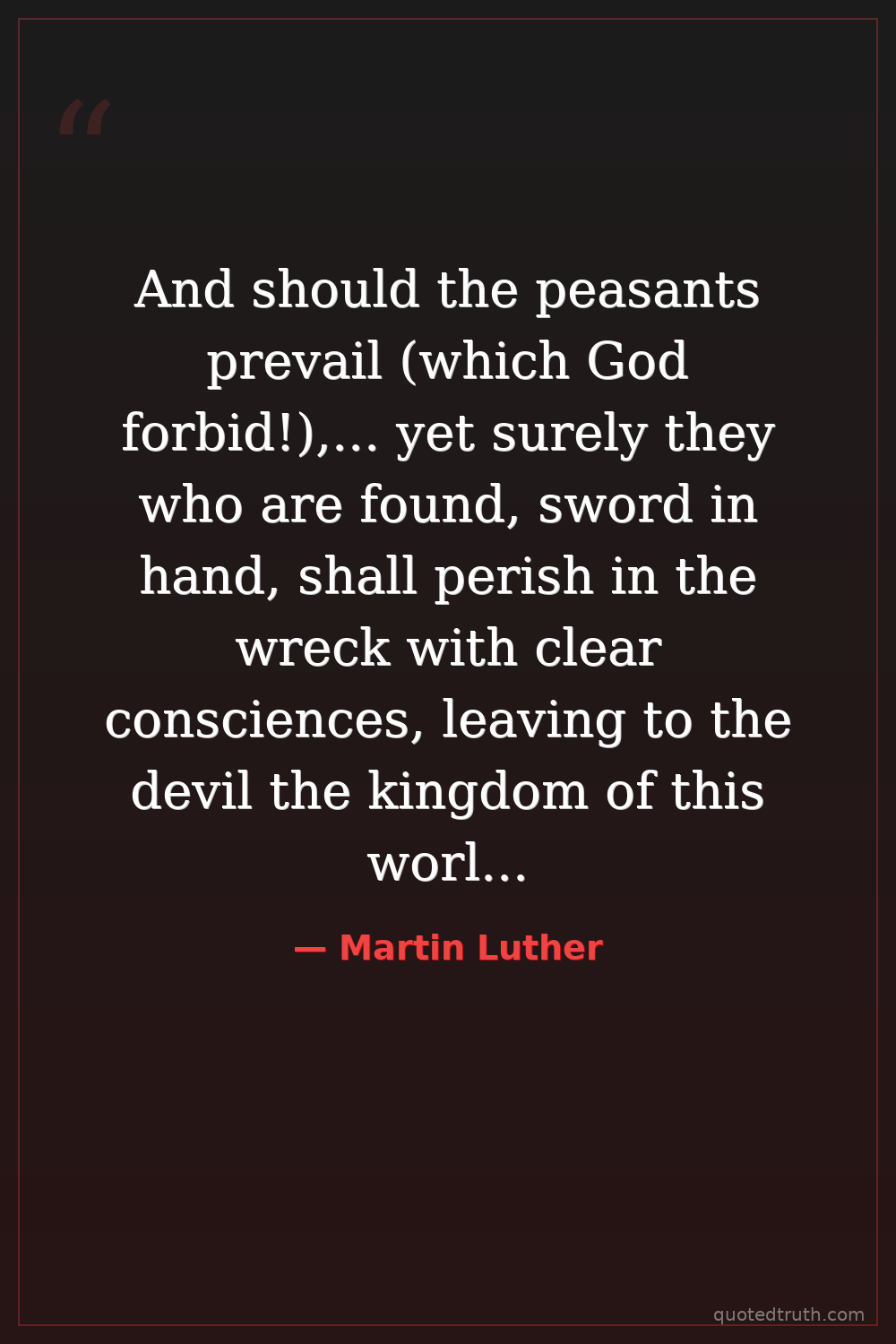
Luther tells rulers that if peasant rebels win, those who died fighting them die with clean consciences, trading earthly defeat for heavenly reward. He argues these times are so extreme that a prince can secure salvation faster by killing rebels than ordinary people can by praying. Violent suppression of revolt becomes, paradoxically, a shortcut to God's kingdom.
Relevance to Martin Luther
Luther wrote this in 1525's 'Against the Murderous, Thieving Hordes of Peasants,' urging German princes to crush the Peasants' War. Though he launched the Reformation by defying authority in 1517, he fiercely defended secular rulers against social revolt. He believed earthly government was divinely ordained to wield the sword, separating spiritual freedom from political order—a distinction that shaped Lutheran political theology for centuries.
The era
The 1524-1525 German Peasants' War saw roughly 300,000 peasants revolt against feudal lords, partly inspired by Reformation rhetoric about Christian freedom. Around 100,000 were slaughtered. Luther, needing princely protection for his reform movement, sided decisively with the nobility. The early modern era blurred religious and political authority, and Luther's pamphlet helped cement the alliance between Protestantism and territorial princes that defined post-Reformation Germany.
AI-generated insights based on extensive research and information for context. Factual errors? Email [email protected].