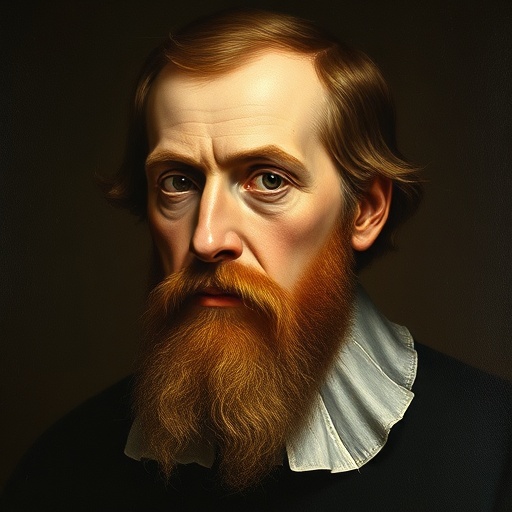
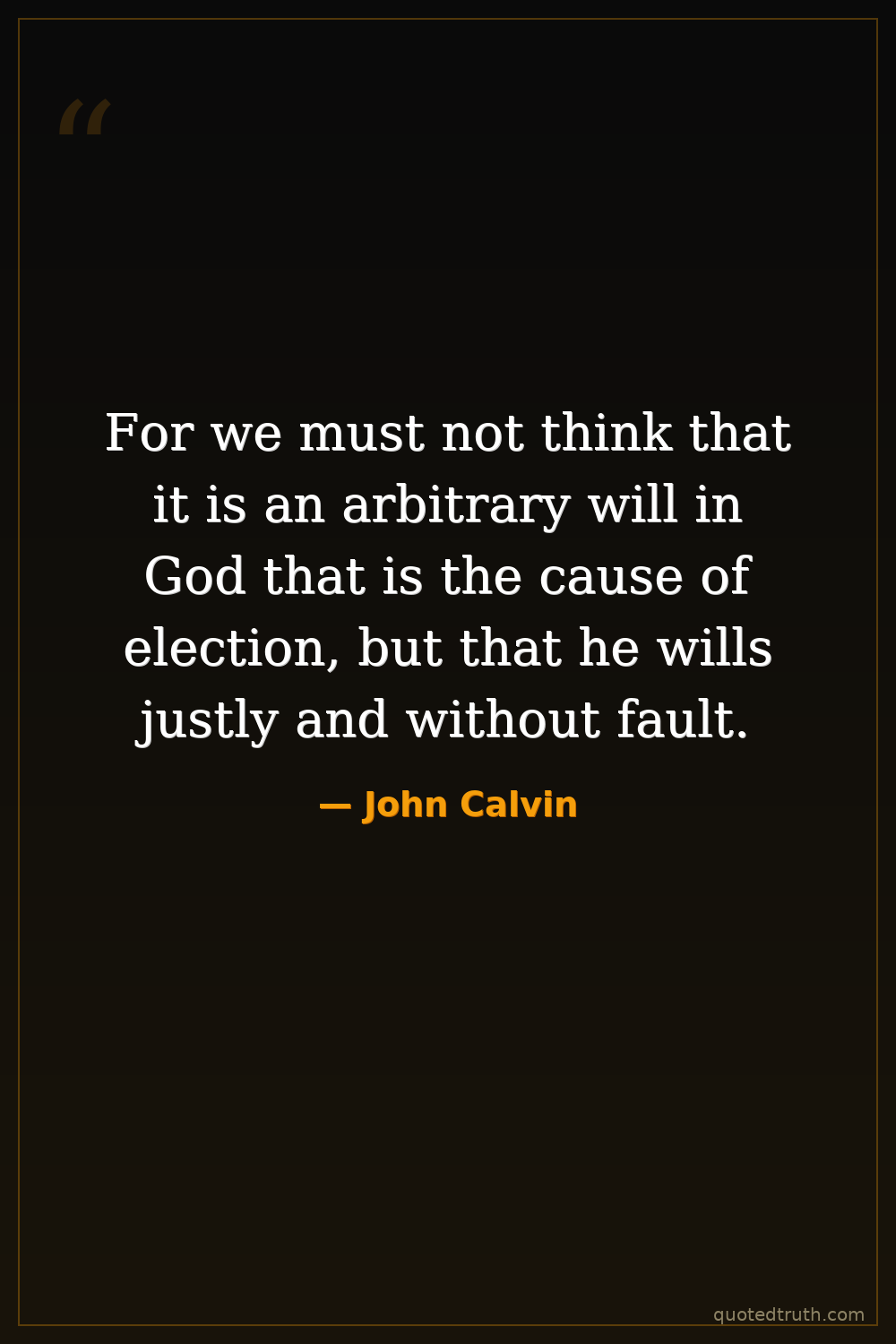
John Calvin — "For we must not think that it is an arbitrary will in God that is the cause of e…"
For we must not think that it is an arbitrary will in God that is the cause of election, but that he wills justly and without fault.
For we must not think that it is an arbitrary will in God that is the cause of election, but that he wills justly and without fault.
Click any product to generate a realistic preview. Up to 3 at a time.
* Initial load can take up to 90 seconds — revising the preview in another color is nearly instant.
"We call predestination God's eternal decree, by which he compacted with himself what he willed to become of each man. For all are not created in equal condition; rather, eternal life is foreordained f…"
"We are not our own; we are God's."
"I consider looseness with words no less of a defect than looseness of the bowels."
"The true knowledge of God consists in acknowledging him as our Father and Lord."
"The elect are vessels of mercy, and the reprobate are vessels of wrath."
French theologian whose Institutes of the Christian Religion (1536) systematized Protestant Reformed doctrine, including predestination. Closely associated with Martin Luther (Reformation founder, Calvin's predecessor). For an intellectual contrast, see Jacobus Arminius, Dutch Reformed theologian (1560-1609) — Arminius's rejection of strict double-predestination founded Arminianism — the theological tradition modern Methodism, most evangelicalism, and Pentecostalism descend from. The Calvinist-Arminian debate has divided Protestantism for 400 years.
Found in 1 providers: grok
1 source checked
Calvin argues that God's election of certain souls to salvation isn't capricious or random. Divine choosing operates according to God's perfect justice, not arbitrary preference. The distinction matters: God remains fully sovereign in choosing, yet that sovereignty is inherently righteous. Calvin separates divine freedom from divine randomness — God doesn't elect capriciously but acts from a will that is by nature just and without moral defect.
Calvin's doctrine of double predestination — God eternally elects some to salvation, others to damnation — made him a lightning rod. Critics charged his God was a tyrant making arbitrary decisions. Calvin, a meticulous lawyer-turned-theologian who governed Geneva with systematic rigor, spent enormous effort in his Institutes defending predestination as rooted in God's inscrutable yet perfectly just nature, not whim. This quote directly answers that accusation, reflecting his lifelong mission to reconcile sovereignty with righteousness.
The 16th-century Reformation shattered medieval Christendom's unified soteriology. Luther's break with Rome ignited fierce debates about salvation, grace, and free will — Erasmus and Luther clashed directly in 1524-1525. Calvin wrote amid Catholic counter-reform and Protestant infighting, both sides accusing the other of distorting God's nature. Predestination scandalized contemporaries who expected human merit to factor into salvation. Defending a just God who nonetheless elects sovereignly required precise theological argument, not mere assertion.
AI-generated insights based on extensive research and information for context. Factual errors? Email [email protected].
Your cart is empty