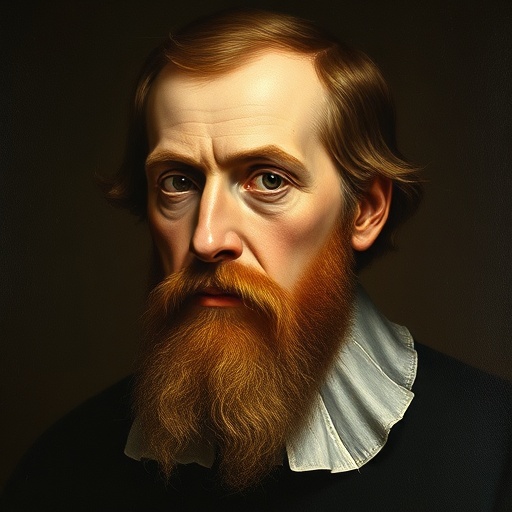
John Calvin — "We are not our own; we belong to God."
We are not our own; we belong to God.
We are not our own; we belong to God.
Click any product to generate a realistic preview. Up to 3 at a time.
* Initial load can take up to 90 seconds — revising the preview in another color is nearly instant.
"We are not called to be popular, but to be faithful."
"God's election is not of him that willeth, nor of him that runneth, but of God that sheweth mercy."
"We are never so much ourselves as when we are in Christ."
"Man's chief end is to glorify God and to enjoy him forever."
"The will of God is the supreme rule of righteousness."
French theologian whose Institutes of the Christian Religion (1536) systematized Protestant Reformed doctrine, including predestination. Closely associated with Martin Luther (Reformation founder, Calvin's predecessor). For an intellectual contrast, see Jacobus Arminius, Dutch Reformed theologian (1560-1609) — Arminius's rejection of strict double-predestination founded Arminianism — the theological tradition modern Methodism, most evangelicalism, and Pentecostalism descend from. The Calvinist-Arminian debate has divided Protestantism for 400 years.
Found in 1 providers: grok
1 source checked
Human life is not self-owned. This rejects the idea that people are autonomous agents living for their own goals, comfort, or ambition. Existence itself carries an obligation — we are accountable to something greater than ourselves. Personal reputation, pleasure, and self-interest are not ultimate guides. Life has a purpose assigned from outside the self, demanding surrender of ego and self-direction. We are stewards, not owners, of our time, bodies, and choices.
Calvin built his entire theology around God's absolute sovereignty — predestination, election, and total human dependence on divine grace. When William Farel pressured him to remain in Geneva in 1536, Calvin abandoned his preference for quiet scholarship, believing refusal would defy God's call. His Institutes of the Christian Religion systematized exactly this logic: human will and desire are subordinate to God's purposes. He governed Geneva accordingly, treating civic law as inseparable from obedience to God.
The 16th-century Reformation shattered centuries of Catholic institutional authority, forcing Europeans to rethink who commanded ultimate loyalty. Renaissance humanism simultaneously elevated individual reason and human dignity, creating direct tension with religious submission. Calvin wrote as Protestant and Catholic armies clashed across Europe in brutal wars of religion. Asserting that humans belong to God — not to pope, king, or their own reason — was both a theological anchor and a politically explosive rejection of emerging secular individualism.
AI-generated insights based on extensive research and information for context. Factual errors? Email [email protected].
Your cart is empty