Mahavira — "Do not kill. Do not lie. Do not steal. Do not be unchaste. Do not possess anythi…"
Do not kill. Do not lie. Do not steal. Do not be unchaste. Do not possess anything.
Do not kill. Do not lie. Do not steal. Do not be unchaste. Do not possess anything.
Click any product to generate a realistic preview. Up to 3 at a time.
* Initial load can take up to 90 seconds — revising the preview in another color is nearly instant.
"Do not be led by the senses, but lead the senses."
"The true nature of the soul is bliss."
"Truth is the very nature of the soul."
"The body is a temporary abode of the soul."
"Renunciation is the key to eternal happiness."
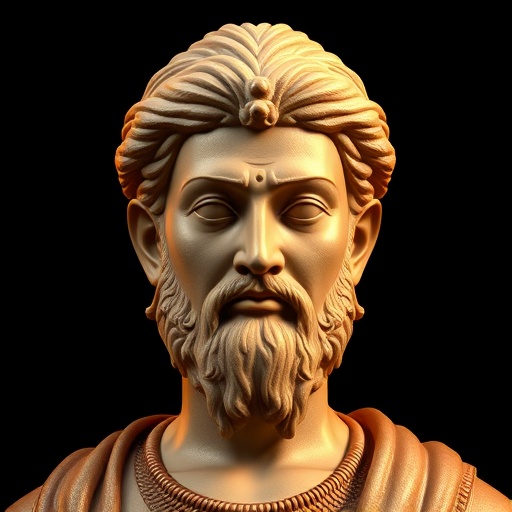
24th and last Tirthankara of Jainism, whose teachings of strict ahimsa (non-violence), aparigraha (non-attachment), and karma reshaped ancient Indian religion. Closely associated with The Buddha (near-contemporary moral revolutionary, also reacting against Vedic ritualism). For an intellectual contrast, see Vedic Brahmanical ritual sacrifice, the animal-sacrifice-centered Vedic religion of his era — Mahavira's ahimsa demanded total non-violence, including not eating root vegetables that kill the plant — a maximum-distance ethical move from the Vedic priestly tradition that ritually sacrificed cattle and horses. The two cleanest poles of ancient Indian religious ethics.
Found in 1 providers: grok
1 source checked
This lists five absolute ethical prohibitions that form a complete moral code: no violence against any living being, no deception, no theft, no sexual impurity, no accumulation of possessions. Together they describe a life that causes zero harm — through action, word, or desire — and claims nothing for the self. It's an entire ethical system compressed into five commands, each targeting a distinct way humans damage or exploit the world around them.
These are literally the Five Great Vows — Pancha Mahavrata — that Mahavira lived before he taught them. Born a Kshatriya prince in 599 BCE, he renounced wealth and family at 30, spent 12 years as a naked wandering ascetic, and filtered water to avoid killing microorganisms. He owned nothing, touched nothing he hadn't been offered, and remained celibate throughout. This quote is his autobiography compressed into five imperatives.
Mahavira lived in 6th-century BCE northeastern India during the Axial Age. Vedic sacrifice required animal killing to appease gods; caste hierarchy legitimized exploitation of lower orders; rising merchant wealth made possession a social virtue; regional kingdoms waged constant war. Each of Mahavira's five prohibitions directly challenged a normalized practice: killing for religion, dishonesty in trade, theft through power, sexual domination, and wealth accumulation. His vows were not personal piety — they were a systematic rejection of his civilization's operating assumptions.
AI-generated insights based on extensive research and information for context. Factual errors? Email [email protected].
Your cart is empty