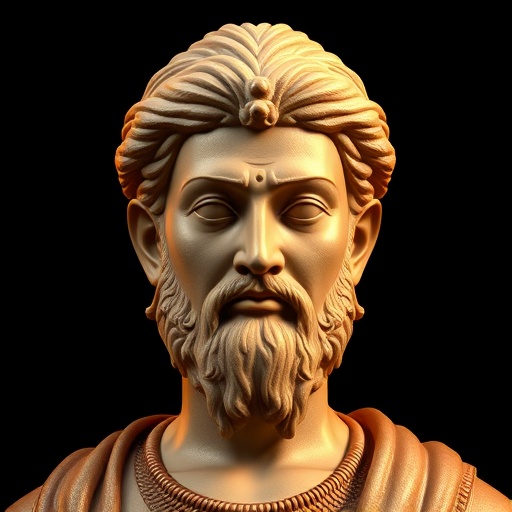
Mahavira — "The world is full of illusion, and the truth is hidden."
The world is full of illusion, and the truth is hidden.
The world is full of illusion, and the truth is hidden.
Click any product to generate a realistic preview. Up to 3 at a time.
* Initial load can take up to 90 seconds — revising the preview in another color is nearly instant.
"Control of the senses is the highest form of self-control."
"He who knows one, knows all."
"All souls are equal and alike and possess the same nature and qualities."
"All things are impermanent, and the soul is eternal."
"The greatest wealth is health."
24th and last Tirthankara of Jainism, whose teachings of strict ahimsa (non-violence), aparigraha (non-attachment), and karma reshaped ancient Indian religion. Closely associated with The Buddha (near-contemporary moral revolutionary, also reacting against Vedic ritualism). For an intellectual contrast, see Vedic Brahmanical ritual sacrifice, the animal-sacrifice-centered Vedic religion of his era — Mahavira's ahimsa demanded total non-violence, including not eating root vegetables that kill the plant — a maximum-distance ethical move from the Vedic priestly tradition that ritually sacrificed cattle and horses. The two cleanest poles of ancient Indian religious ethics.
Found in 1 providers: grok
1 source checked
Reality as we experience it through senses and attachment is distorted and incomplete. Our desires, emotions, and limited perception create a false picture of existence, masking the true nature of the soul and the universe. Only through disciplined inquiry, detachment, and inner clarity can a person see past this distortion to grasp what genuinely is — the unchanging truth beneath appearances.
Mahavira abandoned his Kshatriya noble life at 30, wandering naked for 12 years to achieve Kevala Jnana — complete omniscient knowledge. His entire path was built on stripping away illusion: material comfort, ego, attachment, even clothing. Jain epistemology through anekantavada formally recognizes that every partial viewpoint distorts truth. This quote is inseparable from his lived practice of radical renunciation to reach what he believed was unobstructed reality.
Mahavira lived in 6th–5th century BCE India during the Shramana movement's peak challenge to Vedic Brahminical authority. A priestly class controlled religious truth through ritual and caste hierarchy. His assertion that worldly appearances are illusory directly rebuked the established order's claim that Vedic rites, sacrifices, and social status reflected cosmic truth, positioning inner renunciation and personal discipline as the only genuine path to knowledge.
AI-generated insights based on extensive research and information for context. Factual errors? Email [email protected].
Your cart is empty