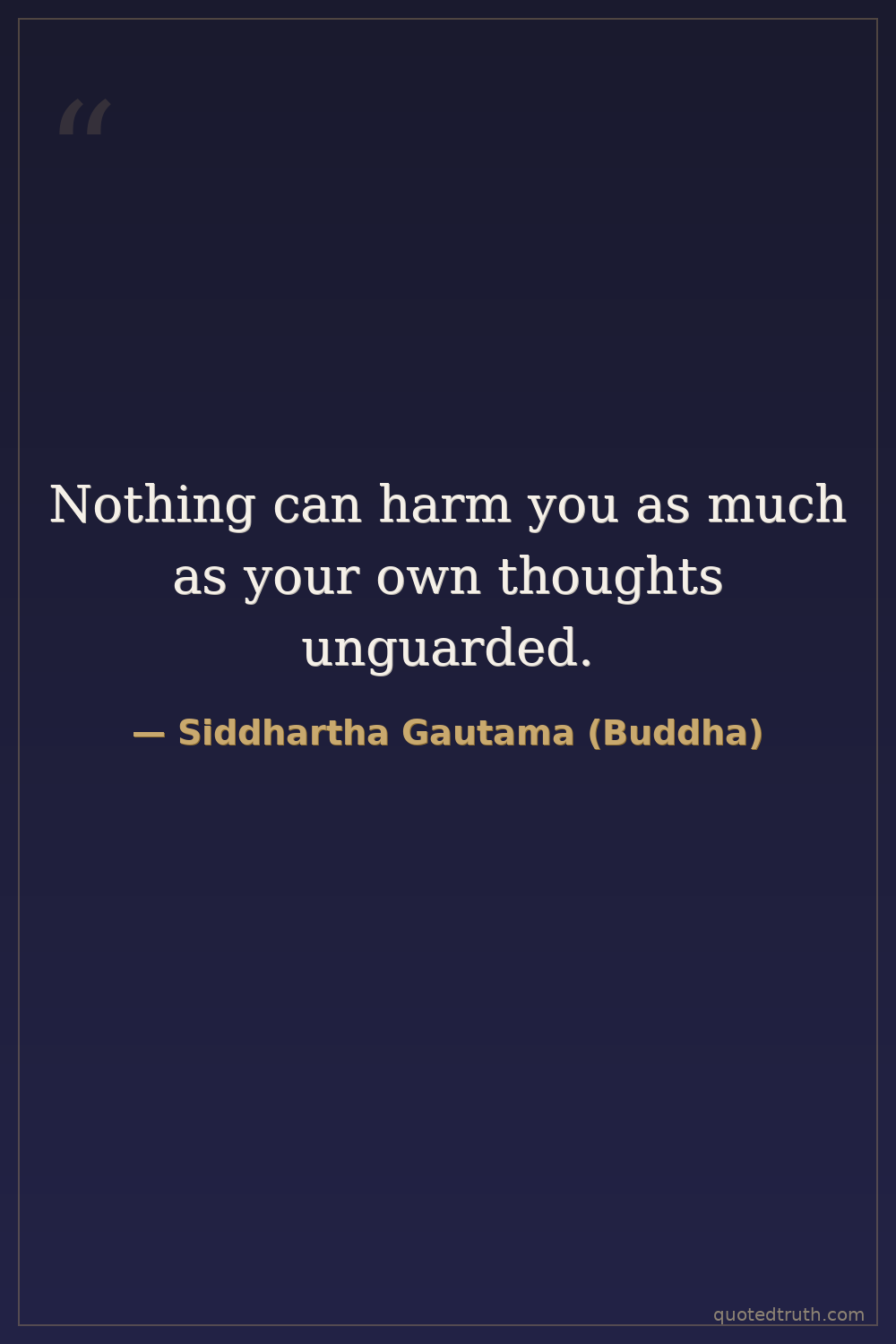
Siddhartha Gautama (Buddha) — "Nothing can harm you as much as your own thoughts unguarded."
Nothing can harm you as much as your own thoughts unguarded.
Nothing can harm you as much as your own thoughts unguarded.
Click any product to generate a realistic preview. Up to 3 at a time.
* Initial load can take up to 90 seconds — revising the preview in another color is nearly instant.
"Much though he recites the sacred texts, but acts not accordingly, that heedless man is like a cowherd who only counts the cows of others."
"He who has renounced all violence towards all living beings, weak or strong, who neither kills nor causes others to kill — him I call a holy man."
"Do not overrate what you have received, nor envy others. He who envies others does not obtain peace of mind."
"Chaos is inherent in all compounded things. Strive on with diligence."
"Just as a bee, without harming the flower, its color or its fragrance, takes a little nectar and flies away, so too should the sage wander in a village."
Found in 1 providers: gemini
1 source checked
Your worst damage usually comes from inside your own head, not from outside events. When you let thoughts run without attention, they spiral into anger, fear, craving, and self-criticism that wound you more than any external attack could. Guarding your mind means noticing thoughts as they arise, questioning them, and choosing which ones to feed. Left unchecked, the mind becomes the sharpest weapon turned against its owner.
The Buddha built his entire path around training the mind. After leaving his palace and confronting suffering, he concluded that craving and deluded thinking, not outside circumstances, cause human pain. His Eightfold Path includes Right Mindfulness and Right Concentration precisely to guard mental activity. He taught that a disciplined mind brings more benefit than a helpful relative, while an untamed mind does worse harm than an enemy, echoing this exact warning directly.
In 5th-century BCE northern India, the Vedic Brahmin tradition emphasized external rituals, sacrifices, and caste duties to secure good outcomes. The Buddha emerged during the Shramana movement, when wandering ascetics questioned this ritualism and turned attention inward toward liberation through personal insight. His focus on mental discipline over sacrificial offerings was radical, shifting responsibility for suffering from gods and priests to each individual's own untrained thinking patterns and cultivated awareness.
AI-generated insights based on extensive research and information for context. Factual errors? Email [email protected].
Your cart is empty