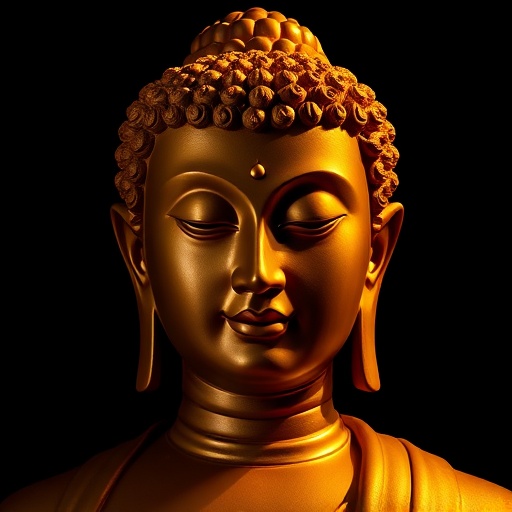
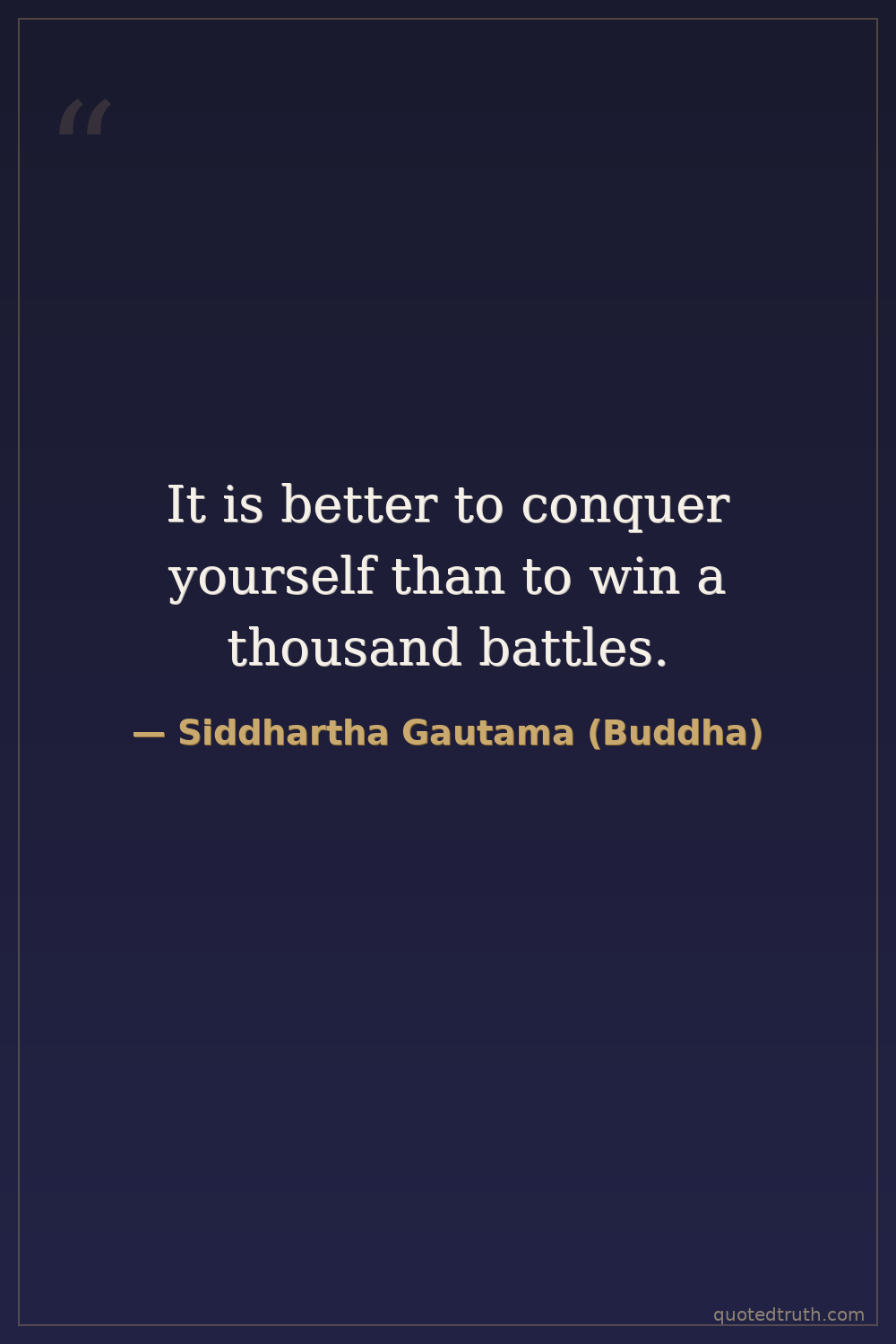
Siddhartha Gautama (Buddha) — "It is better to conquer yourself than to win a thousand battles."
It is better to conquer yourself than to win a thousand battles.
It is better to conquer yourself than to win a thousand battles.
Click any product to generate a realistic preview. Up to 3 at a time.
* Initial load can take up to 90 seconds — revising the preview in another color is nearly instant.
"Should a seeker not find a friend, wiser or better than himself, let him rather walk alone; there is no fellowship with fools."
"A jug fills drop by drop."
"To enjoy good health, to bring true happiness to one's family, to bring peace to all, one must first discipline and control one's own mind. If a man can control his mind he can find the way to Enlight…"
"Whatever a foe may do to a foe, or a hater to a hater, a wrongly directed mind will do us greater mischief."
"The greatest prayer is patience."
Found in 1 providers: gemini
1 source checked
Mastering your own mind, impulses, and desires is a greater achievement than any external victory. Defeating enemies, accumulating power, or winning disputes looks impressive, but those wins are temporary and often hollow. Real, lasting triumph comes from governing your own anger, craving, fear, and ego. Without inner control, outward success keeps slipping away because the same inner weaknesses keep creating new problems. Self-mastery is the only victory that cannot be taken from you.
Gautama abandoned his royal inheritance, where literal battlefield conquest was a prince's expected path, and chose instead the inward work of meditation under the Bodhi tree. His awakening was framed as defeating Mara, the personification of desire and fear, not a human army. His core teaching, the Eightfold Path, centers on training the mind through ethical conduct, concentration, and wisdom, making internal self-conquest the entire point of his teaching, biography, and monastic order.
In 5th-century BCE northern India, small kingdoms like Magadha and Kosala were aggressively consolidating territory through warfare, and kshatriya warrior culture glorified battlefield glory. At the same time, the shramana movement produced wandering ascetics questioning Vedic ritual, caste, and violence. Gautama's statement directly inverts the dominant warrior ethic of his society, aligning with contemporaries like Mahavira who also prized inner discipline and non-harm, and offering a radical alternative to kings obsessed with conquest.
AI-generated insights based on extensive research and information for context. Factual errors? Email [email protected].
Your cart is empty