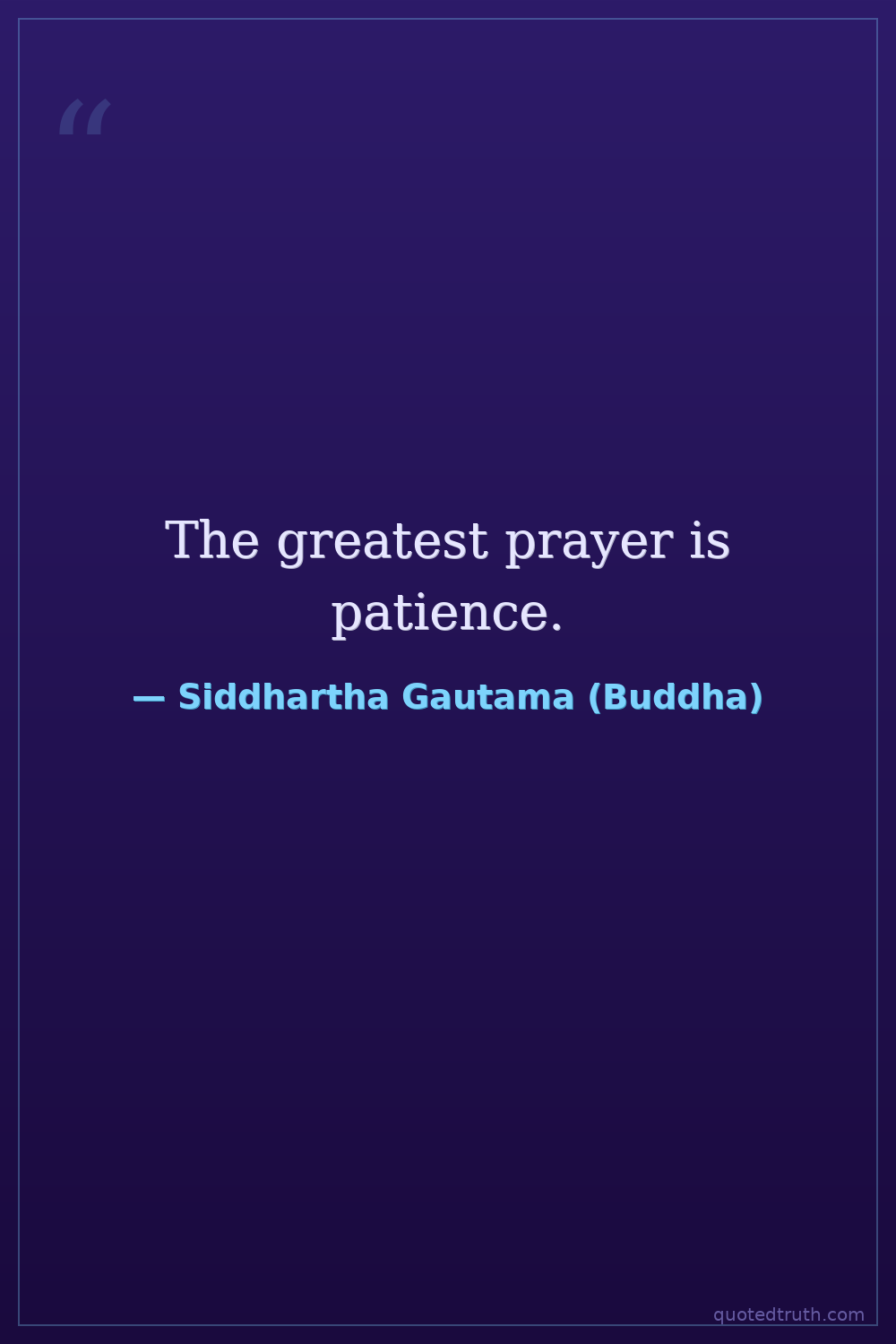
Siddhartha Gautama (Buddha) — "The greatest prayer is patience."
The greatest prayer is patience.
The greatest prayer is patience.
Click any product to generate a realistic preview. Up to 3 at a time.
* Initial load can take up to 90 seconds — revising the preview in another color is nearly instant.
"It is in the nature of things that joy arises in a person free from remorse."
"The wise ones who are intent on meditation, who delight in the peace of renunciation, such mindful ones, perfect in wisdom, collect like bees the nectar of flowers."
"Where self is, truth is not. Where truth is, self is not."
"An insincere and evil friend is more to be feared than a wild beast; a wild beast may wound your body, but an evil friend will wound your mind."
"The wise ones who are intent on meditation, who delight in the peace of renunciation, such mindful ones, perfect in right understanding, cast off the net of Māra."
Attributed, often cited in various Buddhist texts and teachings.
Date: c. 5th century BCE
BiblicalFound in 1 providers: grok
1 source checked
Patience outweighs any ritual plea to a higher power. Real spiritual work is not asking for outcomes but enduring what is, without resistance or complaint. When you remain calm through delay, frustration, or suffering, you are practicing something deeper than words. Rather than begging for change, you develop the steady mind that lets change unfold. Patience itself becomes the offering, the discipline, and the transformation all at once.
The Buddha spent six years pursuing enlightenment through extreme austerities before discovering the Middle Way, and then sat beneath the Bodhi tree resolved not to rise until he understood suffering. His entire awakening hinged on patient endurance rather than petition to gods. Buddhism rejects prayer-based salvation, teaching instead that liberation comes through disciplined inner cultivation. Patience (khanti) is one of the ten paramitas, perfections a bodhisattva must master on the long path to buddhahood.
In 5th-century BCE India, Vedic religion centered on elaborate Brahmin rituals, sacrificial offerings, and Sanskrit prayers intended to influence gods and secure favorable rebirth. Priests monopolized spiritual access through memorized mantras. The Buddha arose alongside other shramana reformers like Mahavira, challenging this transactional model by teaching that liberation came from personal ethical and mental discipline, not caste-based ceremony. Elevating patience above prayer was a direct rebuke of the ritual economy dominating religious life then.
AI-generated insights based on extensive research and information for context. Factual errors? Email [email protected].
Your cart is empty