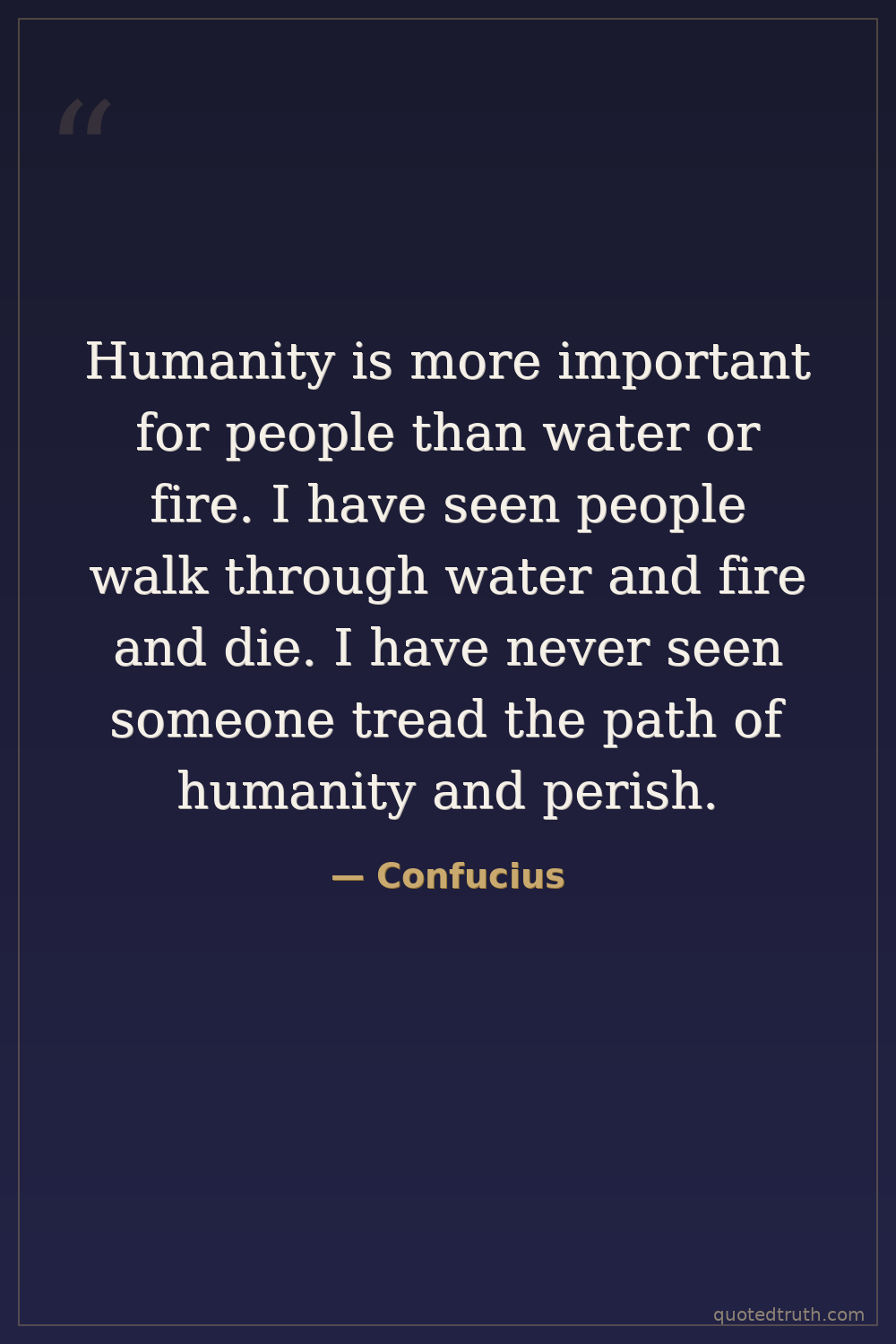
Confucius — "Humanity is more important for people than water or fire. I have seen people wal…"

Humanity is more important for people than water or fire. I have seen people walk through water and fire and die. I have never seen someone tread the path of humanity and perish.
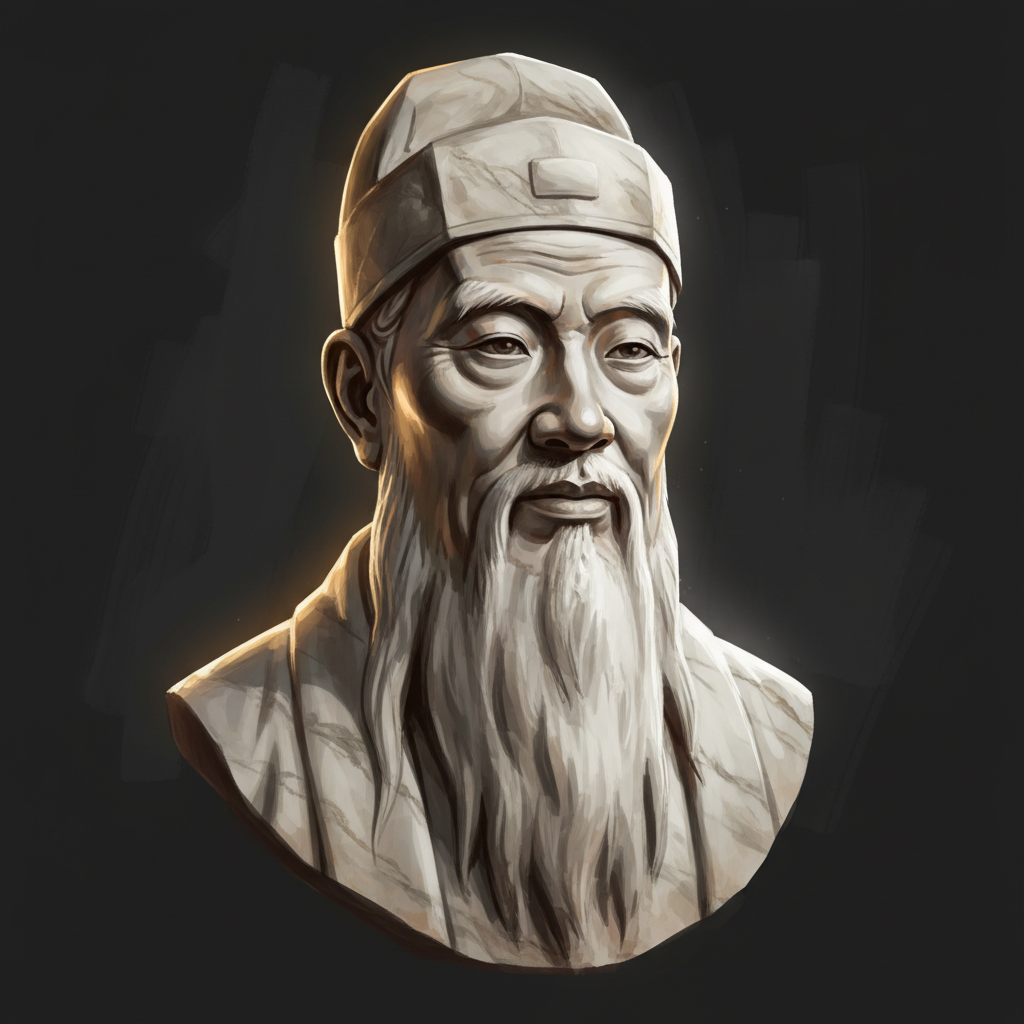
Confucius — Confucius Ancient · Chinese philosopher, founder of Confucianism

Get This Quote & Author's Image Illustrated On:

Click any product to generate a realistic preview. Up to 3 at a time.
* Initial load can take up to 90 seconds — revising the preview in another color is nearly instant.

Kitchen

Apparel

Other

About Confucius (551-479 BCE)

Chinese philosopher and teacher whose teachings (compiled by his students in the Analects) became the foundational ethical framework of East Asian civilization for 2,500 years. Closely associated with Mencius (his most-influential follower a century later). For an intellectual contrast, see Laozi, near-contemporary Chinese sage and Tao Te Ching author — Confucius systematized social order through ritual and family hierarchy; Laozi's Taoist effortless-action philosophy argued such systems were the disease, not the cure. The two founding poles of Chinese moral philosophy — every East Asian moral tradition since has positioned itself between them.

The standard scholarly entry points to Confucius's work: Philip J. Ivanhoe (Georgetown, Chinese philosophy) — Confucian Moral Self Cultivation (2000); Edward Slingerland (UBC, Asian Studies) — Effortless Action: Wu-wei as Conceptual Metaphor (2003); Tu Weiming (Harvard, Confucian scholar) — Confucian Thought: Selfhood as Creative Transformation (1985). These are the works graduate seminars cite when teaching Confucius.

Details

From a teaching on the supreme value of humanity

Date: c. 551-479 BCE

Philosophical

Verification

Unverifiable

Found in 1 providers: gemini

1 source checked

Understanding this quote

What it means

Confucius argues that moral goodness and compassion toward others matter more to human life than even the basic elements we depend on for survival. People can be killed by crossing rivers or fires, but no one is destroyed by living ethically and treating others with kindness. Practicing humanity carries no fatal risk, only benefit, making it the safest and most essential pursuit anyone can commit to.

Relevance to Confucius

Confucius built his entire philosophy around ren, usually translated as humaneness or benevolence, treating it as the highest virtue a person could cultivate. As a traveling teacher and former minor official in the state of Lu, he spent decades urging rulers and students to practice moral self-cultivation over pursuing power or wealth. This saying captures his signature move: elevating ethical character above material necessities, reflecting his belief that virtue shapes a worthwhile life.

The era

Confucius lived during the late Spring and Autumn period, roughly 551 to 479 BCE, when the Zhou dynasty was fragmenting and warring states competed through force and shifting alliances. Ordinary people faced famine, conscription, and violence, while rulers often ignored moral obligations. Against this backdrop of political collapse and social disorder, Confucius offered humaneness as the missing foundation for stable government and peaceful community, arguing character mattered more than military or material strength.

AI-generated insights based on extensive research and information for context. Factual errors? Email [email protected].
Your Cart

Your cart is empty