What it means
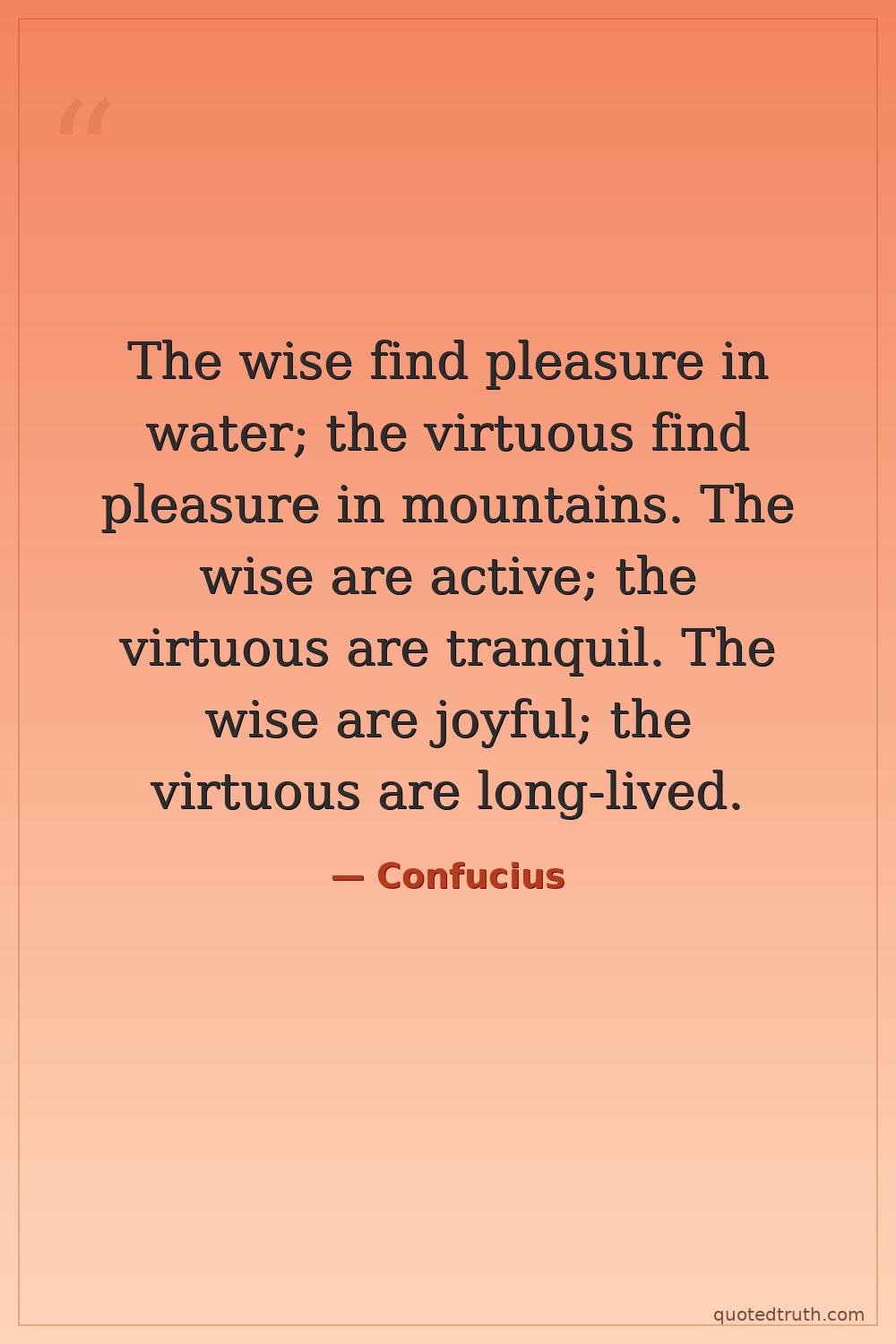
This saying contrasts two personality types and the different satisfactions each finds in nature. Clever, energetic people are drawn to water because it moves, shifts, and mirrors their restless curiosity. People grounded in moral character prefer mountains because they are steady, silent, and enduring. Intelligence brings bursts of delight through discovery and action, while virtue brings a calmer, steadier happiness that lasts across a whole lifetime.
Relevance to Confucius
Confucius spent his life sorting human types and pairing each with its proper path, and this line captures his habit of teaching through vivid opposites. As a traveling advisor to rulers, he valued both sharp intellect and settled moral depth, but he prized the virtuous person above the merely clever. His belief that character outlasts quick talent shows directly in the closing image of long life belonging to the tranquil, mountain-loving sage.
The era
During the late Spring and Autumn period around 500 BCE, Chinese states were fracturing into constant warfare, and rulers hunted for brilliant strategists who could outmaneuver rivals. Confucius pushed back against this obsession with cleverness by arguing that lasting social order required leaders of steady virtue, not just quick wits. Landscape imagery carried weight in that era because mountains and rivers were sites of ritual and cosmic order, so pairing character types with them gave moral teaching visible anchors.
AI-generated insights based on extensive research and information for context. Factual errors? Email [email protected].