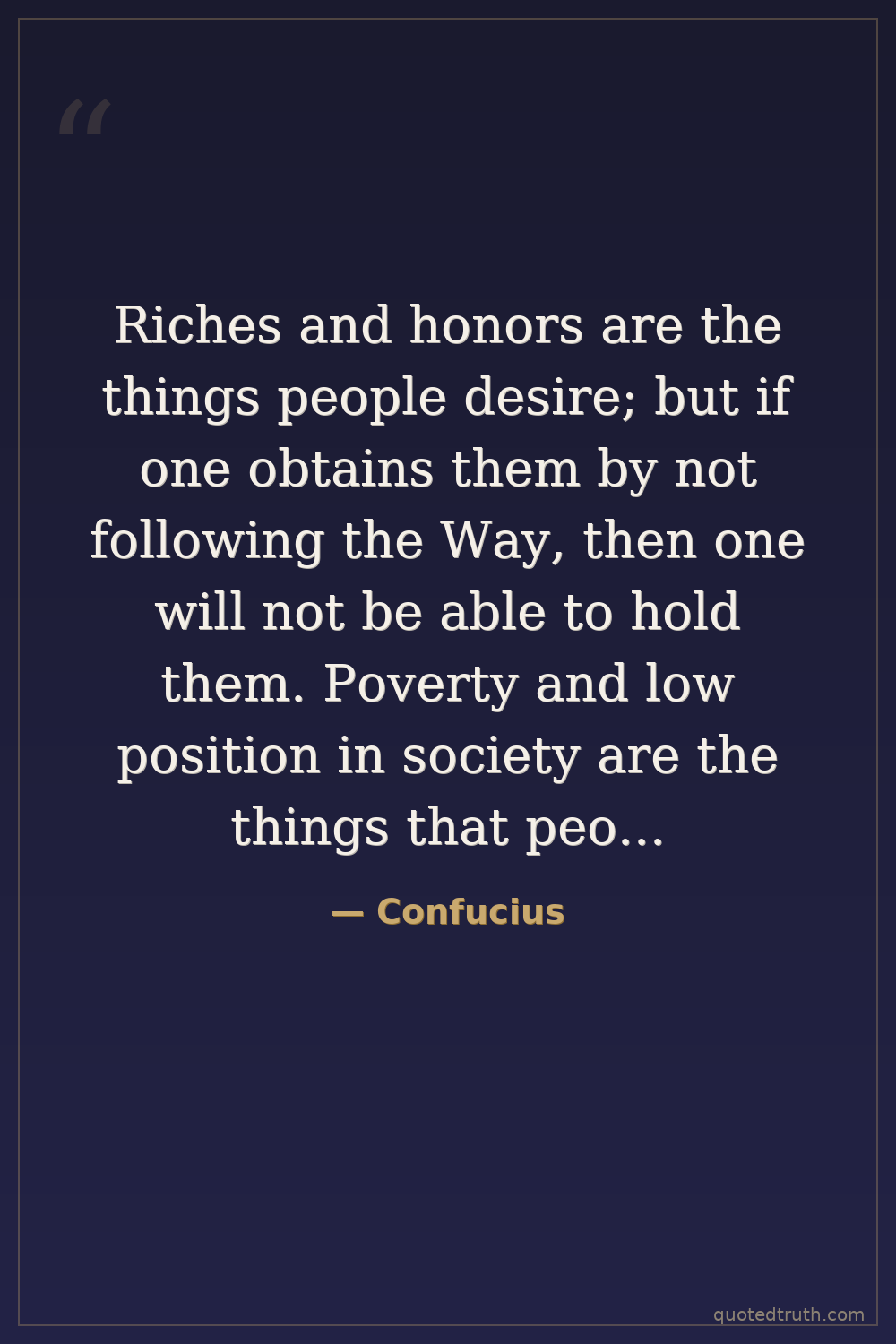
Confucius — "Riches and honors are the things people desire; but if one obtains them by not f…"

Riches and honors are the things people desire; but if one obtains them by not following the Way, then one will not be able to hold them. Poverty and low position in society are the things that people hate; but if one can avoid them only by not following the Way, then one should not avoid them.
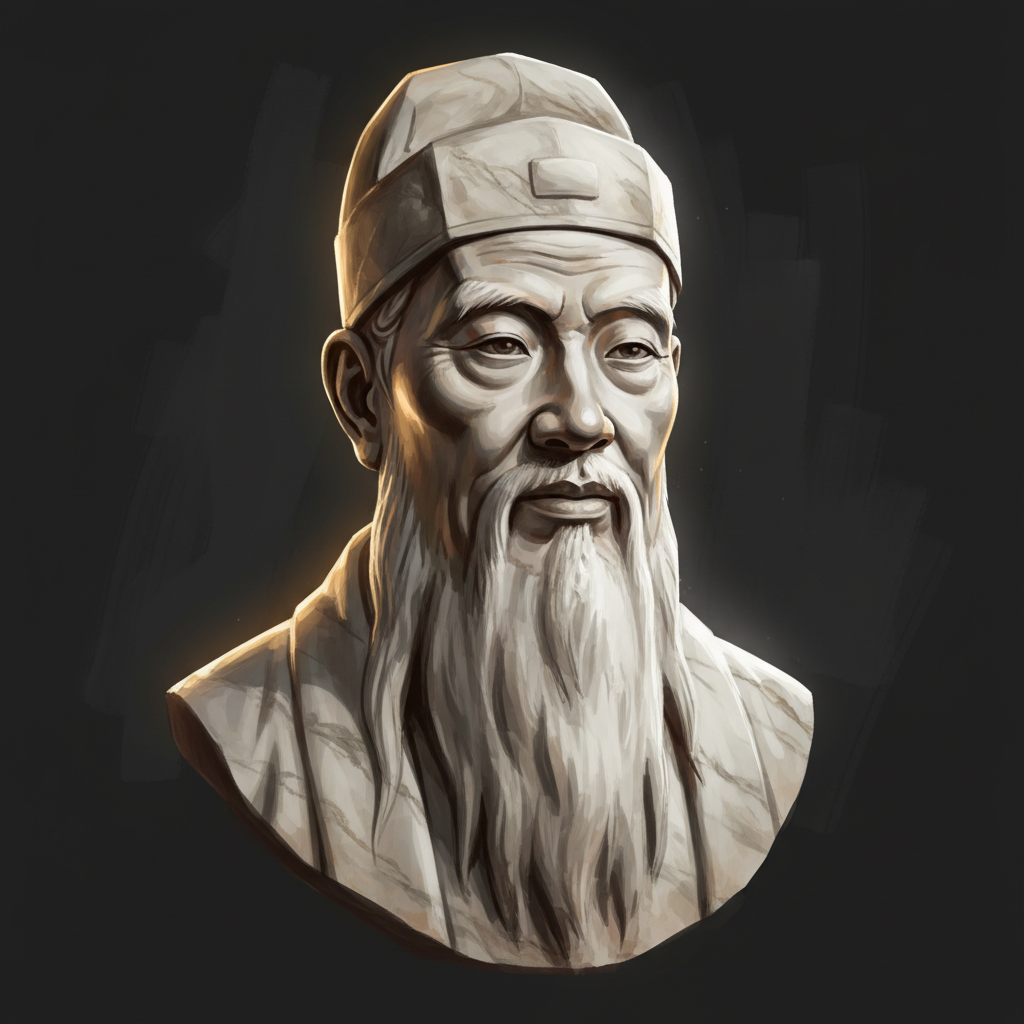
Confucius — Confucius Ancient · Chinese philosopher, founder of Confucianism

Get This Quote & Author's Image Illustrated On:

Click any product to generate a realistic preview. Up to 3 at a time.
* Initial load can take up to 90 seconds — revising the preview in another color is nearly instant.

Kitchen

Apparel

Other

About Confucius (551-479 BCE)

Chinese philosopher and teacher whose teachings (compiled by his students in the Analects) became the foundational ethical framework of East Asian civilization for 2,500 years. Closely associated with Mencius (his most-influential follower a century later). For an intellectual contrast, see Laozi, near-contemporary Chinese sage and Tao Te Ching author — Confucius systematized social order through ritual and family hierarchy; Laozi's Taoist effortless-action philosophy argued such systems were the disease, not the cure. The two founding poles of Chinese moral philosophy — every East Asian moral tradition since has positioned itself between them.

The standard scholarly entry points to Confucius's work: Philip J. Ivanhoe (Georgetown, Chinese philosophy) — Confucian Moral Self Cultivation (2000); Edward Slingerland (UBC, Asian Studies) — Effortless Action: Wu-wei as Conceptual Metaphor (2003); Tu Weiming (Harvard, Confucian scholar) — Confucian Thought: Selfhood as Creative Transformation (1985). These are the works graduate seminars cite when teaching Confucius.

Details

From a teaching on wealth, poverty, and the Way

Date: c. 551-479 BCE

Philosophical

Verification

Unverifiable

Found in 1 providers: gemini

1 source checked

Understanding this quote

What it means

Wealth and status are universally wanted, but grabbing them through dishonest or unethical means is self-defeating because what you gain unjustly cannot be held onto. Likewise, poverty and low social standing are universally disliked, yet you should not escape them by abandoning your principles. Integrity matters more than outcomes. The moral path determines whether success is legitimate and whether hardship is worth enduring, regardless of what most people prefer.

Relevance to Confucius

Confucius made moral cultivation the center of his teaching, insisting that a junzi (exemplary person) pursue righteousness over personal advantage. He spent years traveling between states seeking a ruler who would adopt ethical governance, repeatedly refusing lucrative posts under corrupt leaders. He often lived in genuine poverty, famously praising his disciple Yan Hui for contentment on a bowl of rice. This quote embodies his lifelong conviction that the Way outranks comfort, wealth, or reputation.

The era

Confucius lived during the late Spring and Autumn period (551-479 BCE), when Zhou dynasty authority had collapsed and rival states fought constantly. Ambitious officials climbed through flattery, bribery, and betrayal, while peasants suffered crushing taxes and warfare. Social mobility tempted scholars to serve any patron who paid. Against this backdrop of moral chaos, Confucius's insistence that wealth and poverty be measured against the Way was a radical critique of an age where ends routinely justified means.

AI-generated insights based on extensive research and information for context. Factual errors? Email [email protected].
Your Cart

Your cart is empty