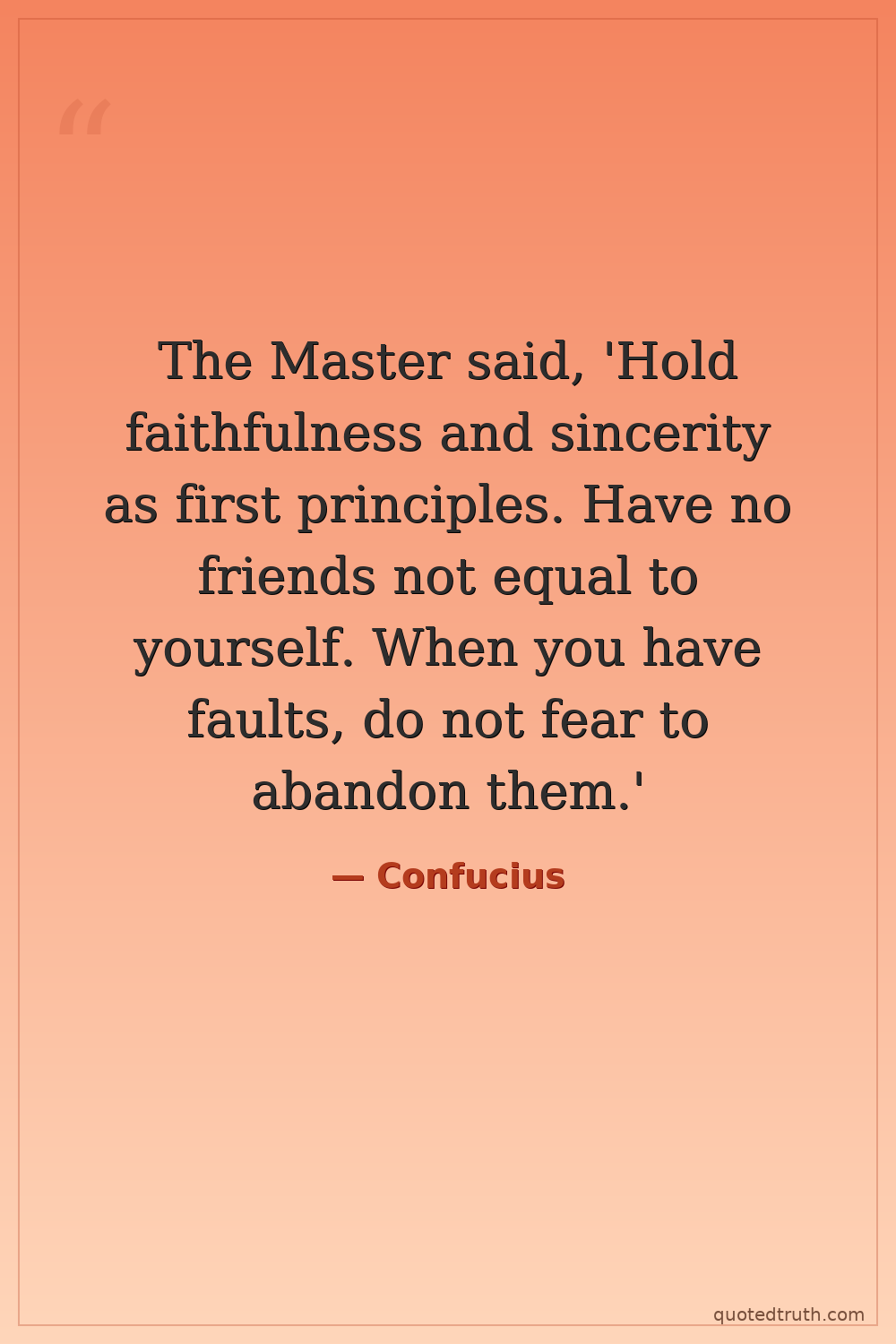
Confucius — "The Master said, 'Hold faithfulness and sincerity as first principles. Have no f…"

The Master said, 'Hold faithfulness and sincerity as first principles. Have no friends not equal to yourself. When you have faults, do not fear to abandon them.'
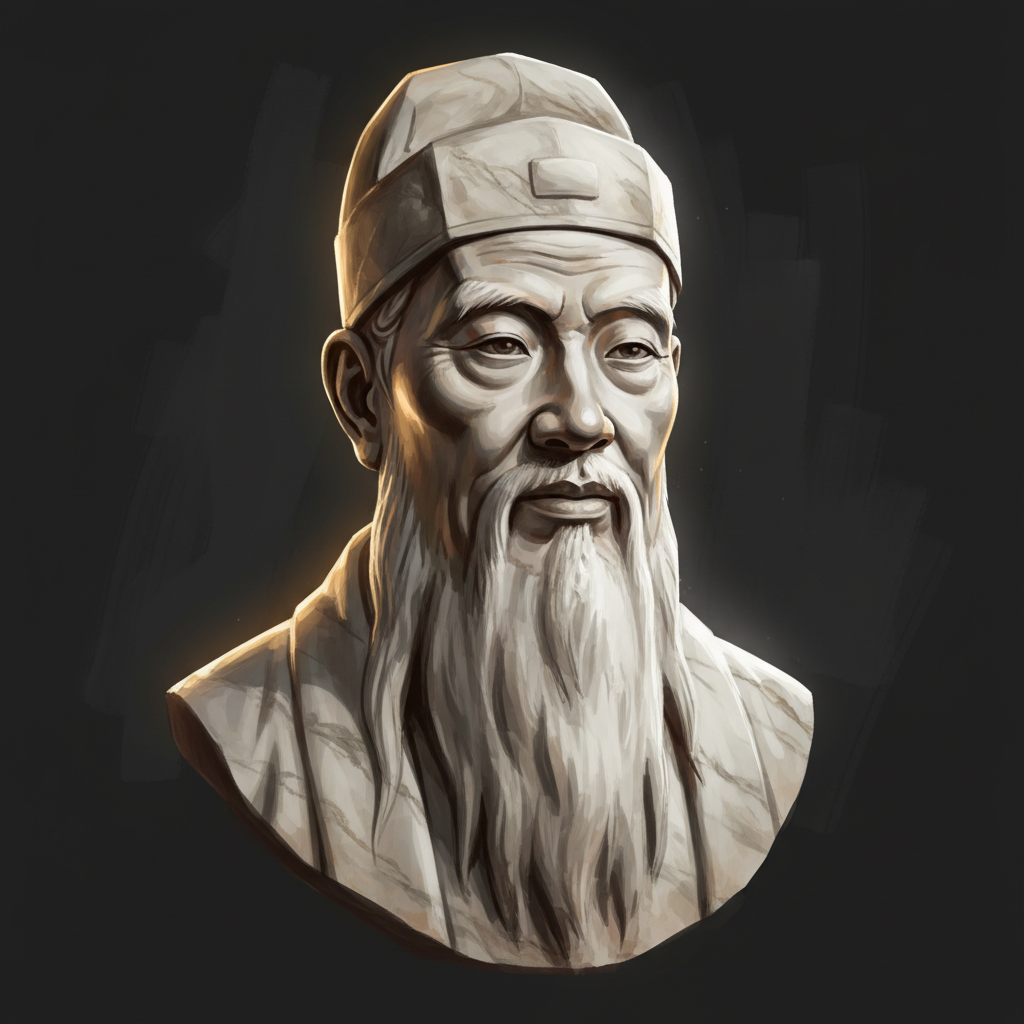
Confucius — Confucius Ancient · Chinese philosopher, founder of Confucianism

Get This Quote & Author's Image Illustrated On:

Click any product to generate a realistic preview. Up to 3 at a time.
* Initial load can take up to 90 seconds — revising the preview in another color is nearly instant.

Kitchen

Apparel

Other

About Confucius (551-479 BCE)

Chinese philosopher and teacher whose teachings (compiled by his students in the Analects) became the foundational ethical framework of East Asian civilization for 2,500 years. Closely associated with Mencius (his most-influential follower a century later). For an intellectual contrast, see Laozi, near-contemporary Chinese sage and Tao Te Ching author — Confucius systematized social order through ritual and family hierarchy; Laozi's Taoist effortless-action philosophy argued such systems were the disease, not the cure. The two founding poles of Chinese moral philosophy — every East Asian moral tradition since has positioned itself between them.

The standard scholarly entry points to Confucius's work: Philip J. Ivanhoe (Georgetown, Chinese philosophy) — Confucian Moral Self Cultivation (2000); Edward Slingerland (UBC, Asian Studies) — Effortless Action: Wu-wei as Conceptual Metaphor (2003); Tu Weiming (Harvard, Confucian scholar) — Confucian Thought: Selfhood as Creative Transformation (1985). These are the works graduate seminars cite when teaching Confucius.
Details

Analects, Book IX, Chapter 24

Date: c. 5th century BCE

Life & Aging

Verification

Confirmed

Found in 2 providers: grok,gemini

2 sources checked

Understanding this quote

What it means

Build your character on honesty and reliability above all else. Surround yourself with people whose values and standards push you to grow rather than pull you down. When you recognize your own mistakes or flaws, don't cling to them out of pride or comfort—correct them immediately. Self-improvement requires honest self-assessment, quality relationships, and the courage to change.

Relevance to Confucius

Confucius spent his life teaching moral self-cultivation as the foundation of a well-ordered society. As a traveling teacher who gathered disciples, he emphasized that character is shaped by one's companions and by relentless self-examination. This saying captures his core method: ren (humaneness) built through sincerity, careful association, and willingness to reform oneself whenever shortcomings appear.

The era

Confucius lived during the Spring and Autumn period (551-479 BCE), a time of political fragmentation as the Zhou dynasty weakened and rival states waged constant war. Traditional rituals and social bonds were collapsing. Confucius sought to restore order not through law or force but through personal virtue cultivated from the ground up, making teachings on sincerity and self-correction urgent responses to widespread moral decay.

AI-generated insights based on extensive research and information for context. Factual errors? Email [email protected].

Your Cart

Your cart is empty