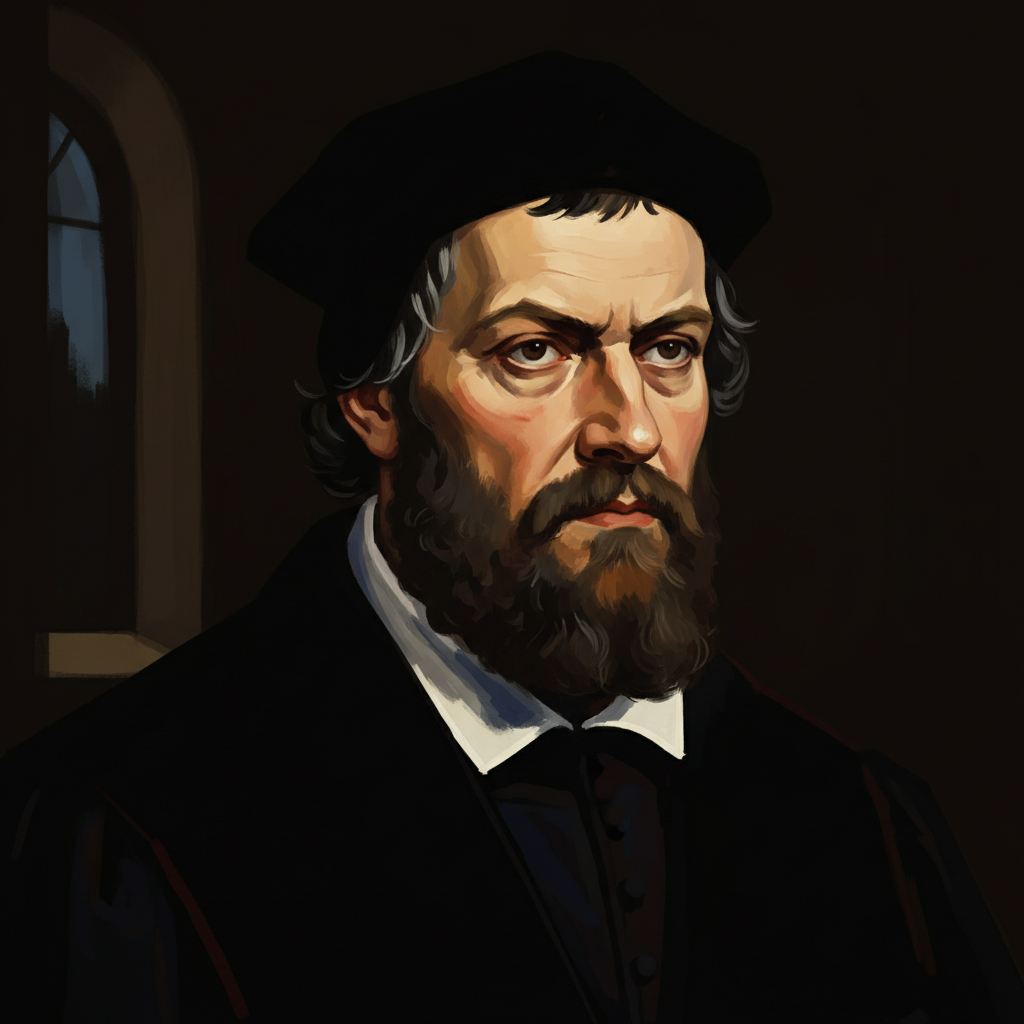
Martin Luther — "Sometimes it is necessary to commit some sin out of hatred and contempt for the …"
Sometimes it is necessary to commit some sin out of hatred and contempt for the Devil.
Sometimes it is necessary to commit some sin out of hatred and contempt for the Devil.
Click any product to generate a realistic preview. Up to 3 at a time.
* Initial load can take up to 90 seconds — revising the preview in another color is nearly instant.
"The greatest blessing of all is to have a good wife."
"To be a Christian without prayer is no more possible than to be alive without breathing."
"The greatest good in marriage is the love of husband and wife."
"Reason is the greatest enemy that faith has; it never comes to the aid of spiritual things, but more frequently than not struggles against the divine Word, treating with contempt all that emanates fro…"
"A man who has no wife is only half a man."
German theologian whose 95 Theses (1517) launched the Protestant Reformation and broke the Catholic Church's monopoly on Western Christianity. Closely associated with Philipp Melanchthon (Lutheran systematizer) and John Calvin (later Reformer who built on Luther's break). For an intellectual contrast, see Pope Leo X, Renaissance pope (1513-1521) — Leo X's indulgence sales triggered Luther's break and Leo excommunicated him in 1521 — Luther's entire Reformation is structured as a direct answer to the indulgence-funded Vatican Leo represented.
Letter to Melanchthon (Sins Boldly), August 1, 1521, often quoted in relation to 'Sin Boldly'
Date: 1521
PhilosophicalFound in 1 providers: gemini
1 source checked
Luther is saying that rigid, scrupulous perfectionism can itself be a spiritual trap. When anxiety about sinning becomes obsessive, it hands the Devil power over you. Deliberately breaking a minor rule, or acting freely despite guilt, breaks that grip and shows defiance toward evil's accusations. The point is not that sin is good, but that excessive moral scrupulosity is a worse bondage than an occasional imperfect act done in confident faith.
Luther famously battled crushing scrupulosity as a monk, confessing for hours and tormented by guilt over trivial faults. His breakthrough was the doctrine of justification by faith alone: righteousness comes through Christ, not anxious perfectionism. He often told melancholic correspondents like Jerome Weller to drink, joke, or ignore pious rules when the Devil weaponized their conscience. This earthy pastoral advice flows directly from his theology that faith, not scrupulous works, defeats spiritual despair.
In early modern Europe around 1520, late medieval Catholicism emphasized penance, indulgences, confession, and meticulous avoidance of sin, which fueled widespread religious anxiety. Monasteries drilled scrupulous self-examination; purgatory loomed large; the Devil was a felt, personal adversary. Luther's Reformation challenged this works-based salvation culture, insisting grace freed consciences from the endless accounting of sins. His blunt, sometimes shocking pastoral counsel was a deliberate rupture from the guilt-driven piety dominating his age.
AI-generated insights based on extensive research and information for context. Factual errors? Email [email protected].
Your cart is empty