What it means
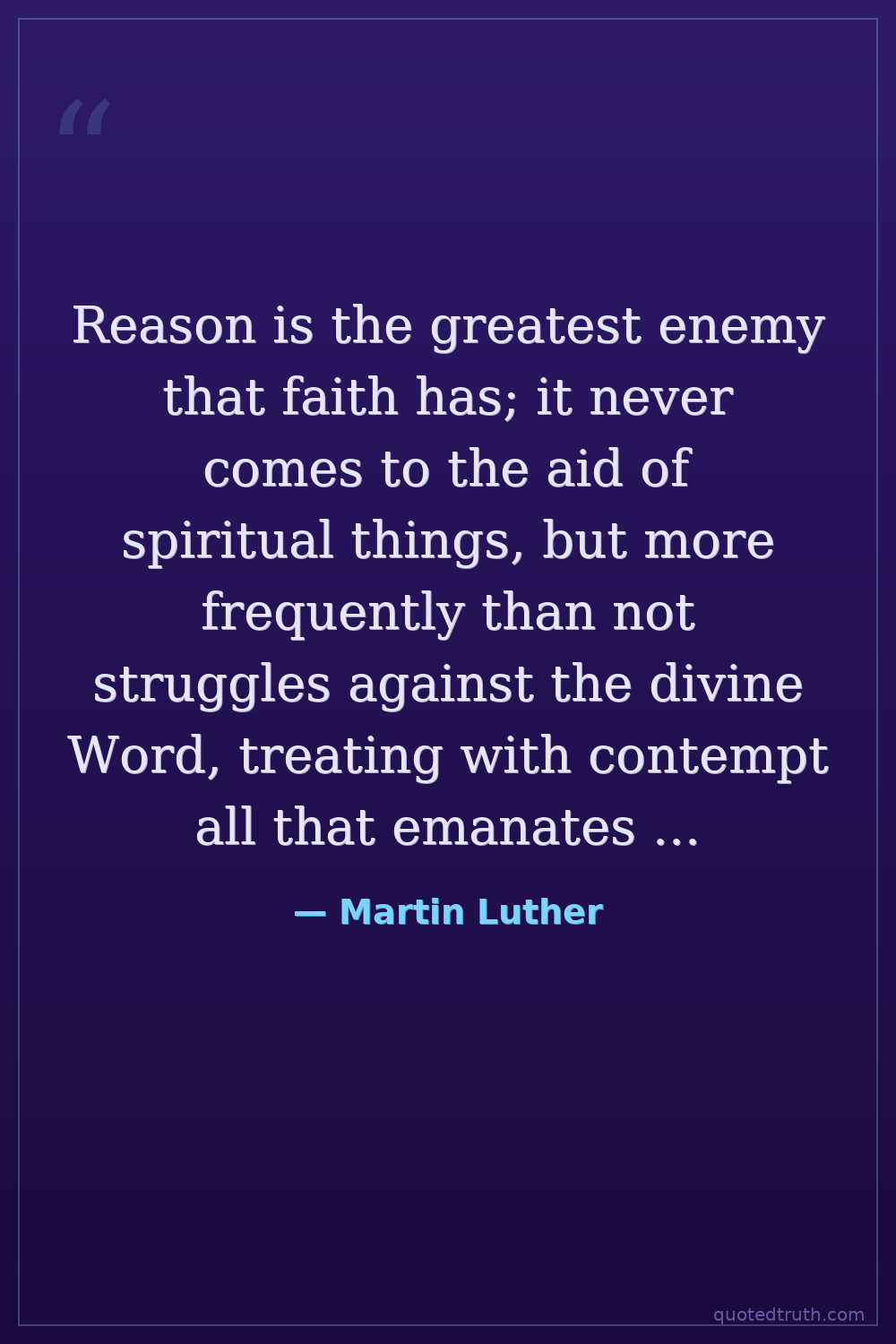
Human reason and logical thinking are the biggest obstacles to religious faith. Rational analysis rarely supports spiritual truths and instead typically fights against the teachings of scripture, dismissing or mocking anything that comes from God. Faith requires trusting divine revelation over what seems logical or provable, because the mind's demand for evidence and coherence will almost always push back against claims that cannot be reasoned out or empirically verified.
Relevance to Martin Luther
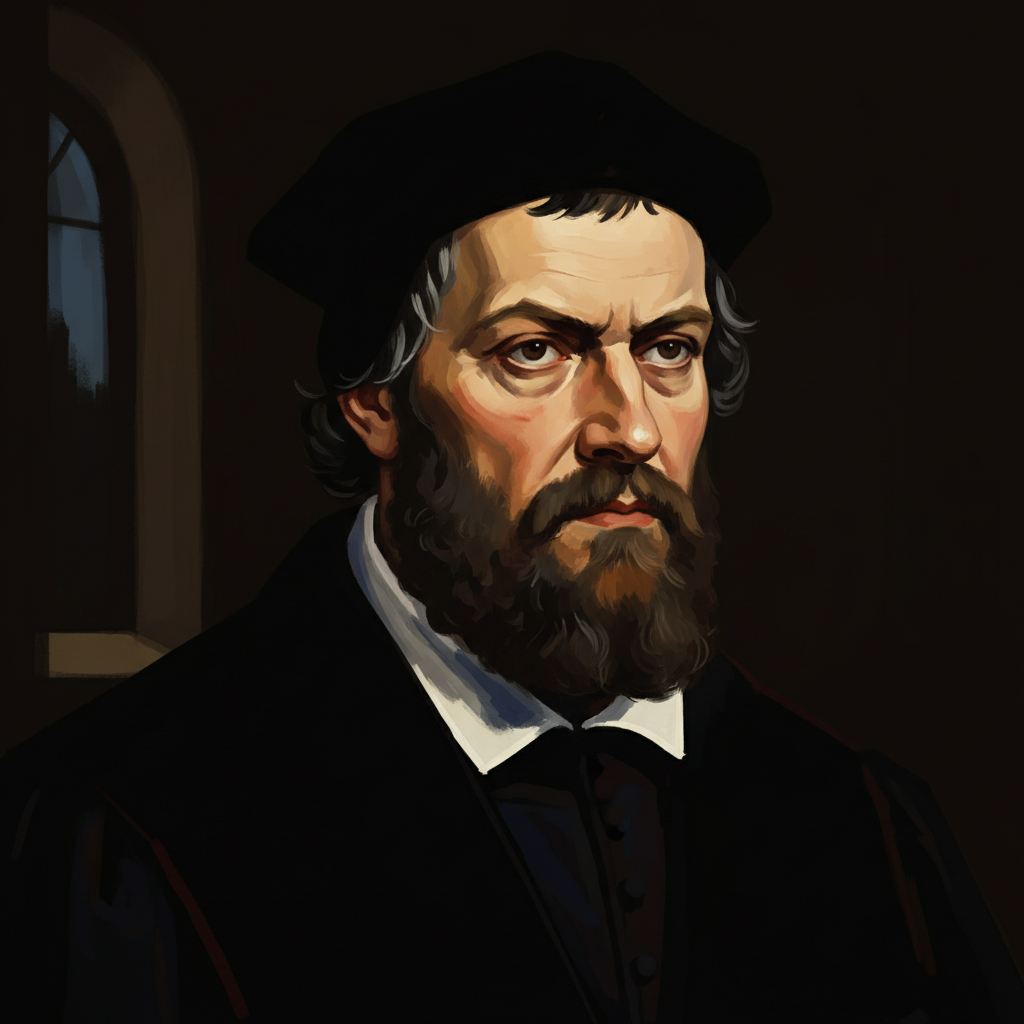
Luther, a former Augustinian monk and theology professor, built the Reformation on 'sola fide'—justification by faith alone, not works or intellect. His break from Rome hinged on accepting scripture's authority over church tradition and scholastic philosophy. Having wrestled personally with doubt and scrupulosity, Luther distrusted Aquinas-style rational theology and famously called reason a 'whore' when it presumed to judge God's word rather than serve it.
The era
In early 1500s Europe, scholasticism dominated universities, fusing Aristotelian logic with Catholic doctrine. Renaissance humanism was elevating classical reasoning, while the printing press spread ideas rapidly. Luther's 1517 Ninety-Five Theses ignited religious upheaval, and thinkers like Erasmus pushed rational reform. Luther pushed back, insisting faith and scripture stood above human philosophy—a stance that shaped Protestant theology and fueled centuries of debate between reason and revelation.
AI-generated insights based on extensive research and information for context. Factual errors? Email [email protected].