What it means
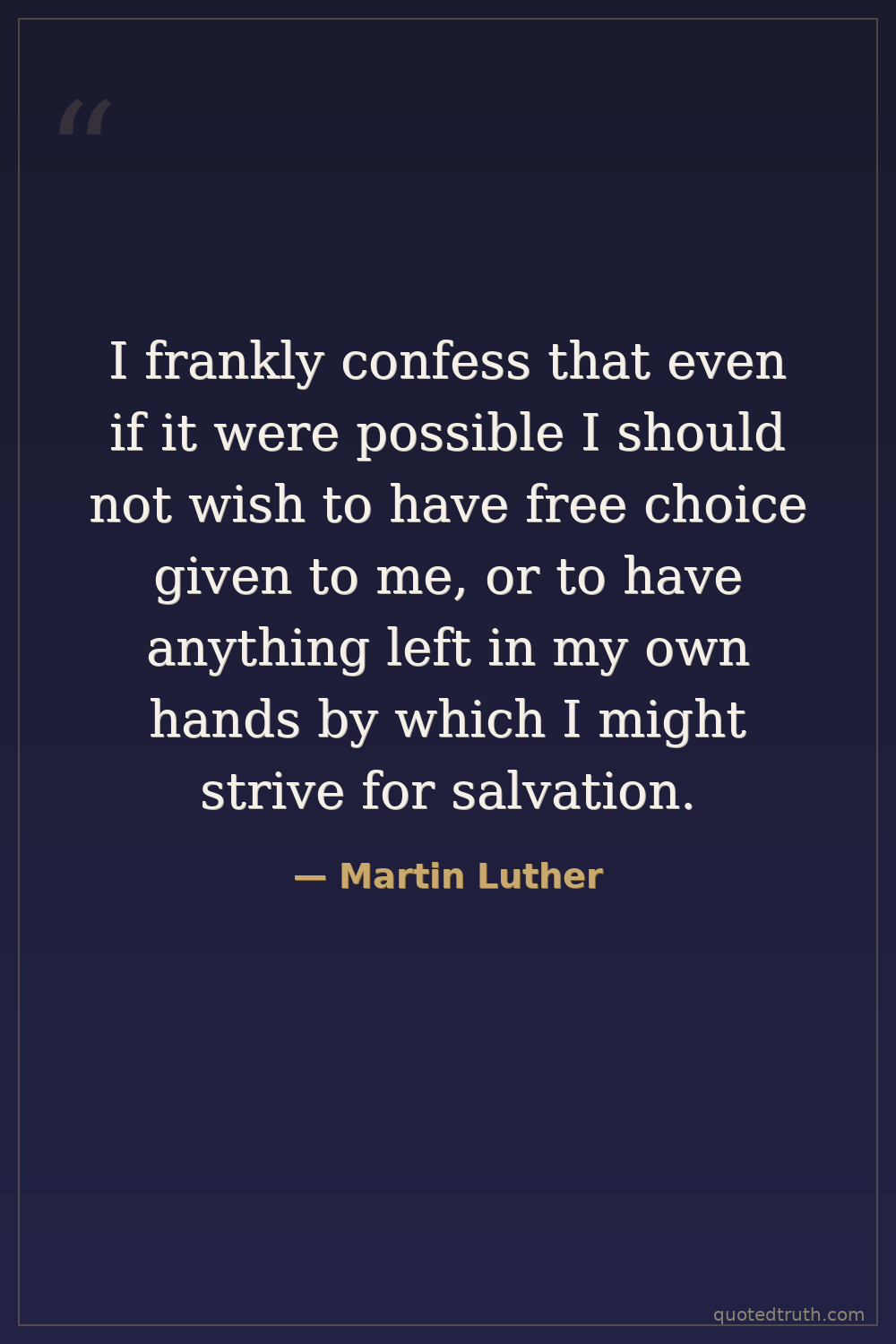
Luther says he would refuse free will even if offered it. Relying on his own choices and efforts to earn salvation terrifies him because he knows he would fail or never feel certain he had done enough. He prefers having nothing in his own hands, trusting salvation entirely to God's grip. Certainty comes from surrender, not self-direction. Control, for him, is a burden, not a gift.
Relevance to Martin Luther
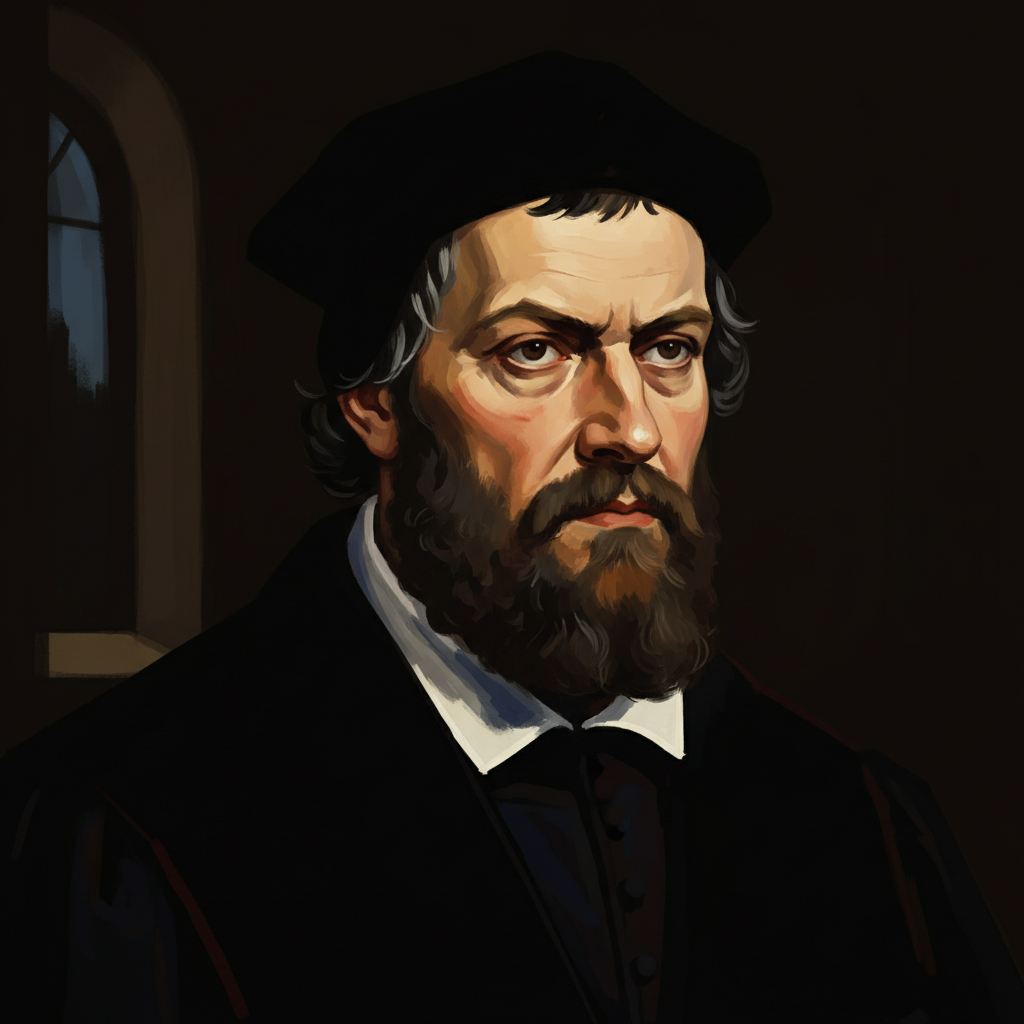
This captures the core of Luther's theology forged through personal torment. As an Augustinian monk, he exhausted himself with confession, fasting, and self-punishment, yet felt no assurance of grace. His 1525 book Bondage of the Will, written against Erasmus, argued humans cannot freely choose salvation. The quote reflects his hard-won peace: rejecting works-righteousness, he anchored everything in sola fide, faith alone, and sola gratia, grace alone.
The era
Early modern Europe was wrestling with late-medieval Catholic teaching that salvation required sacraments, penance, indulgences, and human cooperation with grace. Erasmus and humanists championed free will and moral striving. Luther's 1517 Ninety-Five Theses ignited the Reformation, splintering Western Christianity. The printing press spread his pamphlets across German lands, and peasants, princes, and scholars debated whether humans contribute to their own salvation, a question reshaping politics, church authority, and individual conscience.
AI-generated insights based on extensive research and information for context. Factual errors? Email [email protected].