What it means
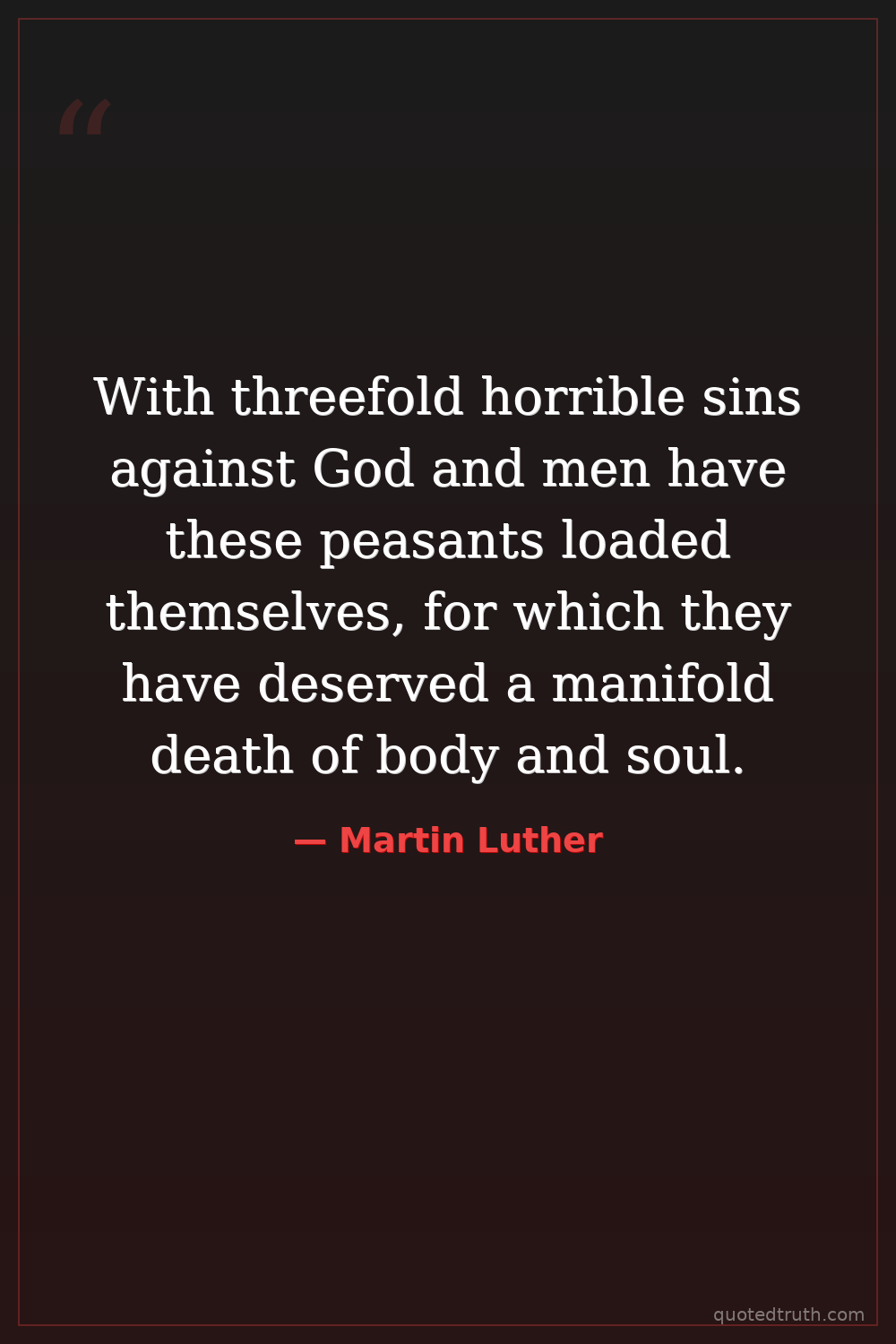
Luther is condemning rebellious peasants as having committed three categories of grave sins against both God and fellow humans. He argues their crimes are so severe that a single death penalty is insufficient—they deserve repeated punishment affecting both their physical bodies and eternal souls. It's an uncompromising call for harsh retribution, framing the rebels as beyond mercy and worthy of total condemnation rather than negotiation or forgiveness.
Relevance to Martin Luther
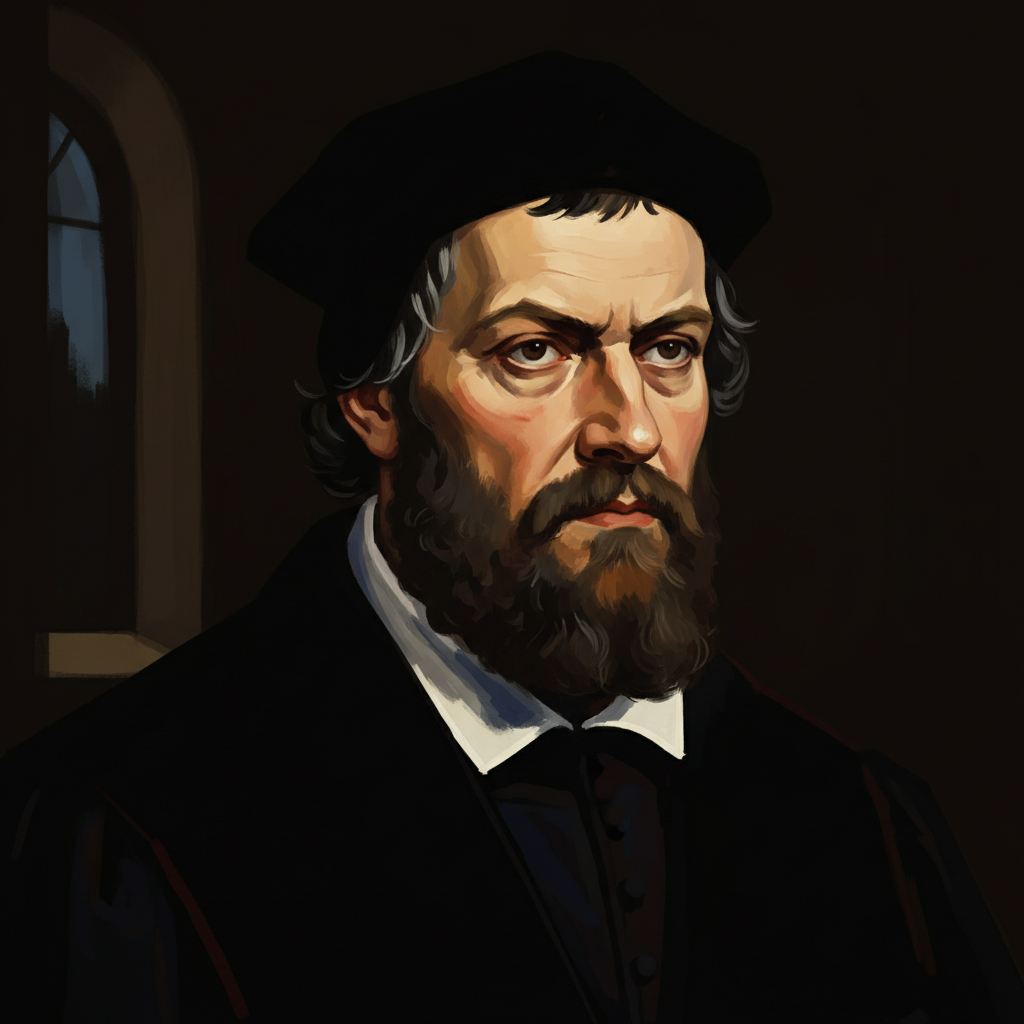
Written during the 1525 German Peasants' War, this reflects Luther's shocking pivot from early sympathy with peasant grievances to brutal denunciation in his pamphlet 'Against the Murderous, Thieving Hordes of Peasants.' Though he launched the Reformation by defying religious authority, Luther upheld secular hierarchy absolutely. His alliance with German princes, who protected him after his excommunication, shaped this stance and revealed his deeply conservative social theology beneath his theological radicalism.
The era
The early modern period saw the 1524-1525 Peasants' War, Europe's largest popular uprising before the French Revolution, where roughly 300,000 peasants revolted citing Reformation ideas about Christian freedom. Around 100,000 were slaughtered by princely armies. Luther's tract encouraged this violent suppression, permanently binding Protestantism to territorial rulers. This cemented the Reformation as a princely movement rather than a populist one, defining European religious-political alignments for centuries.
AI-generated insights based on extensive research and information for context. Factual errors? Email [email protected].