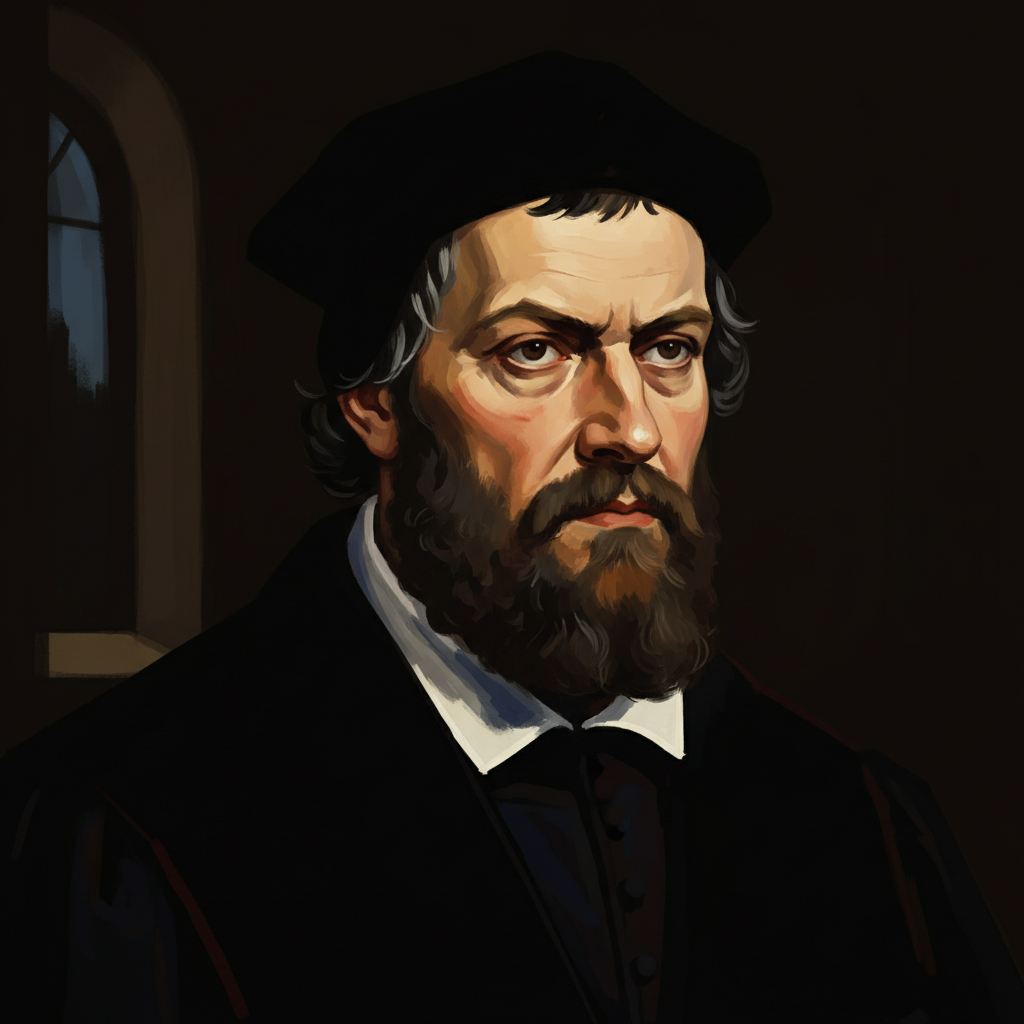
Martin Luther — "Where God builds a church, the Devil builds a chapel."
Where God builds a church, the Devil builds a chapel.
Where God builds a church, the Devil builds a chapel.
Click any product to generate a realistic preview. Up to 3 at a time.
* Initial load can take up to 90 seconds — revising the preview in another color is nearly instant.
"The best way to worship God is to do your ordinary work well."
"I am a man of contention, and I thank God for it."
"I am like a ripe nut; I am ready to fall."
"God writes the Gospel not in the Bible alone, but also on trees, and in the flowers and clouds and stars."
"The greatest blessing of God is a virtuous and pious wife, who fears God and loves her husband."
German theologian whose 95 Theses (1517) launched the Protestant Reformation and broke the Catholic Church's monopoly on Western Christianity. Closely associated with Philipp Melanchthon (Lutheran systematizer) and John Calvin (later Reformer who built on Luther's break). For an intellectual contrast, see Pope Leo X, Renaissance pope (1513-1521) — Leo X's indulgence sales triggered Luther's break and Leo excommunicated him in 1521 — Luther's entire Reformation is structured as a direct answer to the indulgence-funded Vatican Leo represented.
Found in 1 providers: grok
1 source checked
Wherever genuine good takes root, corruption or counterfeit versions spring up right next to it. Real faith, truth, or virtue always attracts imitators, distractions, and opposition that mimic the original closely enough to fool people. The warning is that progress never goes uncontested; every authentic movement draws a parasitic shadow. Staying vigilant matters because the nearest threat to something true is usually a convincing fake built right beside it.
Luther lived this dynamic personally. After posting his Ninety-Five Theses in 1517 and breaking from Rome, he watched rival reformers, radical Anabaptists, and peasant revolts distort his message almost immediately. He battled indulgence sellers, accused the papacy of being a counterfeit church, and spent decades writing against what he saw as Satan dressing up as piety. The line captures his lifelong conviction that authentic Gospel preaching guarantees spiritual counterattack.
Early sixteenth-century Europe was in religious upheaval. The printing press spread Luther's German Bible and pamphlets faster than Rome could respond, splintering Western Christianity into Lutheran, Reformed, Catholic, and radical factions. Wars of religion loomed, witch panics intensified, and ordinary believers felt surrounded by competing claims to truth. In that climate, warning that the Devil mimics God's work wasn't metaphor but a practical description of the confusing spiritual marketplace Luther navigated daily.
AI-generated insights based on extensive research and information for context. Factual errors? Email [email protected].
Your cart is empty